
Tenerife Overhauls Waste Management with Circular Economy Strategy
Tenerife is transitioning to a circular economy model by investing 55 million euros into upgrading the Arico Environmental Complex to enhance waste recovery, biogas energy production, and sustainable innovation.
Tenerife is transforming its waste management system, moving away from traditional disposal toward a circular economy model. The Tenerife Island Council (Cabildo) is focusing on upgrading technology at the Arico Environmental Complex rather than expanding the site, a necessary choice given the island’s limited land.
Supported by a 55-million-euro investment as part of a larger 474-million-euro contract with UTE Nivaria, the project aims to improve material recovery and energy efficiency across the 443-hectare facility. A key part of this strategy is biogas production: the plant captures gases from organic waste to generate 3.6 megawatts of electricity. This powers the facility’s own operations and provides enough surplus energy to supply 8,000 households.
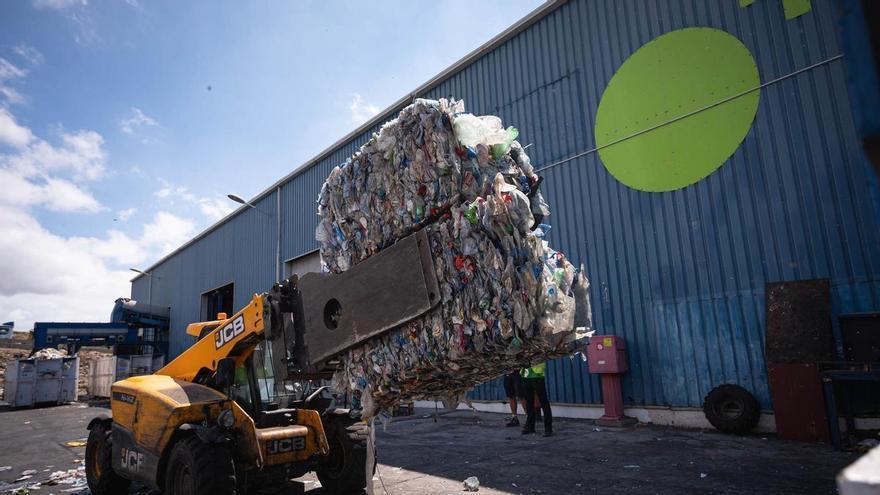
The system relies on a tightly coordinated network. The Arico complex works alongside transfer plants in La Guancha and Arona to process over 500,000 tons of waste each year. Managing this flow requires a daily operation involving nearly 500 workers and 100 vehicles, which officials say is essential for the island’s waste management to function reliably.
The Cabildo is also positioning Tenerife as a hub for innovation. By partnering with the Technological and Renewable Energy Institute, the University of La Laguna, and the Volcanological Institute of the Canary Islands, the island is testing new solutions—such as drone-based emission monitoring, specialized fertilizers, and solar energy systems. A 10-million-euro budget is dedicated to this research, allowing the island to develop sustainable solutions ahead of industry trends.
Public engagement is also a priority under the "Tenerife+Sostenible" initiative. Efforts to encourage better recycling are showing results: the collection of organic waste has jumped from 162 tons in 2020 to over 2,500 tons last year, and the island’s network of "Clean Points" now serves 339,000 users. Through educational programs and apps like Truec@, the authorities are promoting the European waste hierarchy, which prioritizes reducing and reusing materials. Ultimately, Tenerife aims to turn its waste management system into a resource recovery industry, proving that efficiency comes from the seamless coordination of all its parts.