
Tenerife Opens Consultation for Canary Islands Tech Hub at ITER
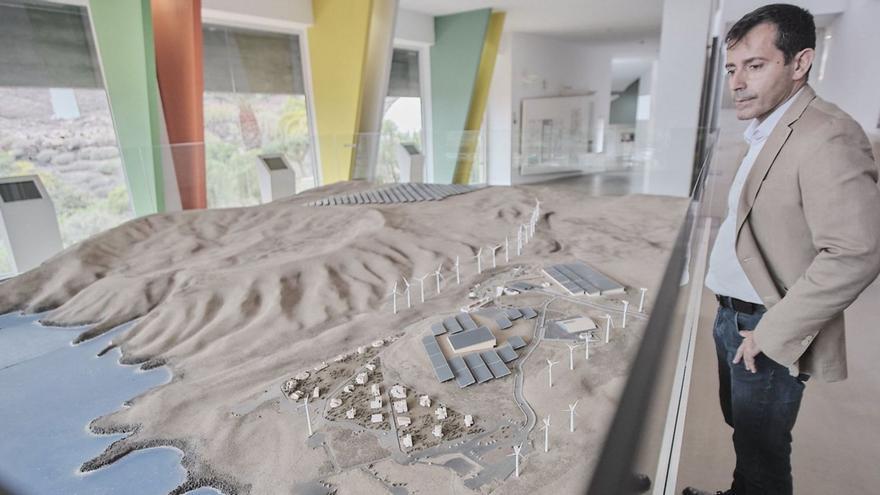
The Tenerife Island Council has initiated a public consultation on an environmental study to reorganize the ITER site, aiming to establish it as the Canary Islands' main technology hub for research, development, and renewable energy production.
The main technology hub for the Canary Islands will be built at the Technological and Renewable Energies Institute (ITER), an organization run by the Tenerife Island Council. To make this project happen, the urban layout at ITER's Granadilla de Abona site needs to be reorganized. The Official Gazette of the Canary Islands (BOC) has published an announcement, opening a 45-working-day public consultation period for an environmental study. This study confirms the planned changes. This project is a key initiative from the Department of Innovation. It addresses the needs of a growing sector that already employs 15,700 people on Tenerife, according to a new study presented today.
Juan José Martínez, the island councilor responsible for the area, sees this as "a crucial step to properly plan the ITER complex and its current uses." More importantly, he stressed, it will allow for "the development of land for a technology center, research and development (R&D), and renewable energy production facilities."
Last November, the Tenerife Island Council approved a small change to the Tenerife Island Spatial Plan (PIOT) for ITER's industrial park. The goal is to update the plan, reduce the number of plots from 14 to 4 to better suit current renewable energy research and development, and resolve issues concerning the bioclimatic houses and animal center. These facilities had sparked debate over their compatibility with ITER's main work, though the changes were ultimately approved by a majority.
ITER has also signed an agreement with ITG, a technology center in Galicia, as part of its expansion plans. They will work together to create a platform for managing renewable energy storage and generation. This partnership will allow both organizations to combine their expertise in artificial intelligence (AI), advanced monitoring, renewable energies, and energy infrastructure. The aim is to speed up the sector's digital transformation and move towards more efficient and sustainable energy systems.
The new platform will focus on integrating and optimizing energy resources, such as renewable power generation, storage, and flexible loads. It will achieve this using AI algorithms, digital twins, and advanced control tools. Its development will make use of the experimental facilities, energy labs, and microgrid networks that ITER and ITG already run in Tenerife and Galicia.
Juan José Martínez pointed out that out of 15,705 jobs in Research, Development, and Innovation (R&D+i) on Tenerife, "nearly 1,600 have been created in the last two years." He noted that this period aligns with the current island government (CC and PP) and represents "a very significant proportion, over 10%, because we have been promoting these policies on the island under President Rosa Dávila's leadership."
ITER, located in the challenging landscape of southern Tenerife in Granadilla de Abona, covers half a million square meters. It is set to become the largest public scientific laboratory in the entire Macaronesia region. It serves as a hub for innovation, development, and research – the well-known R&D+i equation that drives technological progress and societal advancement.
ITER is a public company, mostly owned by the Island Council. Since 1990, it has focused on researching and developing renewable energy sources, implementing new technologies, and environmental protection. The Institute is organized into key areas: Renewables, Engineering, and Environment. It also has facilities dedicated to sharing its work and research findings.
Tenerife is a leader in R&D+i innovation and employment. In 2025, 51% of the sector's companies in the Canary Islands were based on the island, accounting for 68.5% of all jobs in the field. Island President Rosa Dávila shared these details, joined by Juan José Martínez, the Island Council's Councilor for Research, Innovation, and Development, and José Miguel González, Consulting Director of Corporación 5 and author of the regional study.
In recent years, Tenerife has emerged as the technological hub of the Canary Islands. It's also an attractive environment for new investors, helping to diversify the economy, particularly in areas like the audiovisual sector. While there are still "challenges" for the sector to become more effective and stable, the current work shows impressive growth in both the number of companies and the creation of skilled jobs.
The report indicates that between 2020 and 2025, Tenerife saw a 45.7% rise in R&D companies, bringing the total to 35. This growth solidifies the island's role as a vital center for advancing the knowledge economy and developing innovative projects across different tech fields.
President Rosa Dávila emphasized that "these figures show Tenerife is steadily moving towards a knowledge-based economy." She added that "the growth in sectors like technology and innovation proves the effort being made to boost our island's competitiveness."
"We are committed to staying leaders in R&D+i and creating opportunities for our businesses and professionals," Dávila stated. She stressed that "innovation is key to a more prosperous and sustainable future for Tenerife," concluding: "It is our responsibility to keep driving this transformation."
Jobs in innovation on Tenerife grew by 42% between November 2020 and November 2025, reaching 15,705 workers in the sector. This increase is especially notable in R&D, where Tenerife accounts for 68.5% of all jobs created in the Canary Islands.
The technology sector saw a 26.8% increase, with many new companies focusing on programming, consulting, and information services. Meanwhile, the audiovisual sector also grew significantly, with 53.2% more companies on Tenerife between 2023 and 2025.
Looking at the most prominent sectors, the technology industry has doubled in size since 2012, cementing Tenerife's position as a regional tech hub. The audiovisual sector has also seen continuous growth, reaching 139 companies by 2025, which is 55.1% of the Canary Islands' total.
Councilor Juan José Martínez explained that "these figures show companies' confidence in Tenerife as a good place to develop new ideas." Beyond the positive impact on jobs, Tenerife continues to establish itself as the top destination for innovative projects in the Canary Islands. The island has seen a 31.8% rise in R&D+i companies in recent years, highlighting the vibrancy of Tenerife's business environment.
Martínez also noted that the province of Santa Cruz de Tenerife is "far below" its potential to secure funding from the CDTI (Centre for the Development of Industrial Technology). The CDTI is the main source of national and European funds for innovation. To help local businesses, the Island Council has asked the CDTI to recognize the Tenerife Science and Technology Park (PCTT) as an agency that can provide information and manage funding programs. This would give island companies a "much closer and more connected" point of contact for their projects.
José Miguel González, the report's author, highlighted a 125% increase in Social Security contributions related to R&D+i in recent years.
Despite these advancements, some challenges remain. The chemical and pharmaceutical industry, for example, has seen a slight decline recently. However, the manufacturing sector for machinery, equipment, and vehicles, despite its decline, still holds strategic potential. It could drive industrial modernization on the island, particularly as the region moves towards more sustainable production.