
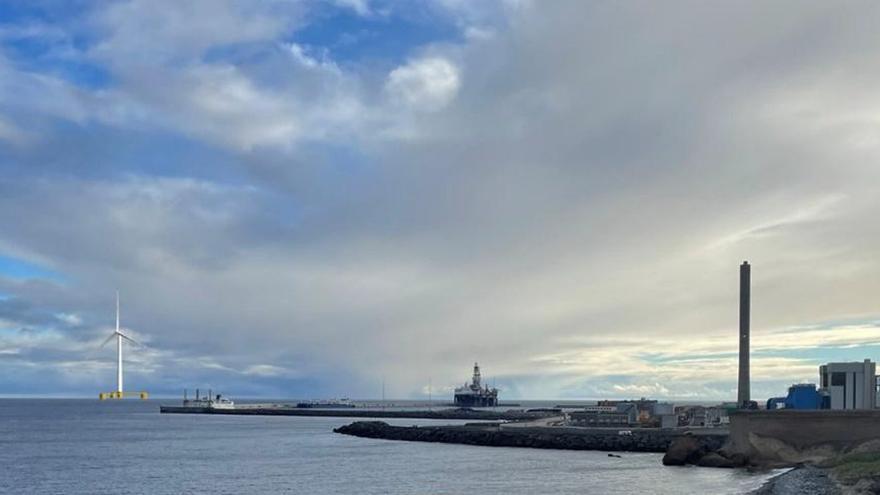
Tenerife Offshore Wind Plans Face Strong Local Opposition
Three offshore wind projects planned for Tenerife's southeast coast, aiming to produce 72.3 megawatts, face strong opposition from local politicians and the fishing community concerned about environmental, visual, and economic impacts on their livelihoods.
The southeast coast of Tenerife is becoming a key area for developing offshore wind energy in the Canary Islands. Three projects – Mencey, Granadilla, and Primavera – are planned for this region. Together, they aim to produce 72.3 megawatts of clean energy for the island.
However, these plans are facing strong opposition from local politicians and, especially, from the fishing community. The projects are located within a 92.10 square kilometer area set aside for this purpose by the Maritime Spatial Planning Plan (POEM). This area stretches along the coasts of Güímar, Fasnia, Arico, and Granadilla de Abona.
The POEM, approved in February 2023, has marked two specific zones for offshore wind farms: TEN1, which is 21.32 square kilometers southeast of Granadilla de Abona, and TEN2, which is 70.78 square kilometers and covers parts of the Arico, Fasnia, and Güímar coasts.
The Primavera project is the newest to be processed. It's currently open for public comment regarding its initial approval and environmental review. This experimental floating wind farm will cost an estimated 40 million euros. It will use W2Power technology and feature a single unit with two wind turbines, each producing about 5.5 megawatts, for a total of 11 megawatts. The company behind it, Primavera Offshore Wind SL, wants to use 1,500 square meters of the Granadilla port waters. Their goal is to provide clean energy to about 19,000 homes and reduce the island's reliance on fossil fuels.
Two other projects are also in development. The Granadilla offshore wind farm, by BlueFloat, plans to generate 50 megawatts. It would be located off the coast of San Miguel de Tajao and Las Maretas in Arico. Meanwhile, Capital Energy is developing the Mencey project, a floating offshore wind farm planned for an area between Porís de Abona and Las Eras, in Arico and Fasnia. This project would cover 11.3 square kilometers and include ten wind turbines, each producing 15 megawatts.
These developments have been met with significant disapproval from local politicians and, particularly, from the fishing sector. The Fishermen's Guild of San Miguel de Tajao voiced its concerns as early as March 2022. They argue that building, occupying space, and operating these wind farms would drastically shrink their fishing grounds. The fishermen have clarified that they are not against renewable energy in general, but they oppose specific projects that they believe will harm their fishing activities.
Local authorities support this stance. Andrés Martínez, the current mayor of Arico, has strongly rejected the offshore wind project. Olivia Delgado, the first deputy mayor, has warned about potential impacts on residents and the natural, social, cultural, and visual environment. Sebastián Martín, a former mayor of Arico, pointed out that the municipality already has over 22% of its land covered by private onshore wind farms, in addition to hosting the island's landfill. He criticized the lack of discussion and agreement in planning these new marine structures. In Fasnia, Mayor Luis Javier González added his concerns about the Mencey project's impact on the protected area of Acantilado de La Hondura. He highlighted the "significant visual impact" and the need to protect this "special environment."