
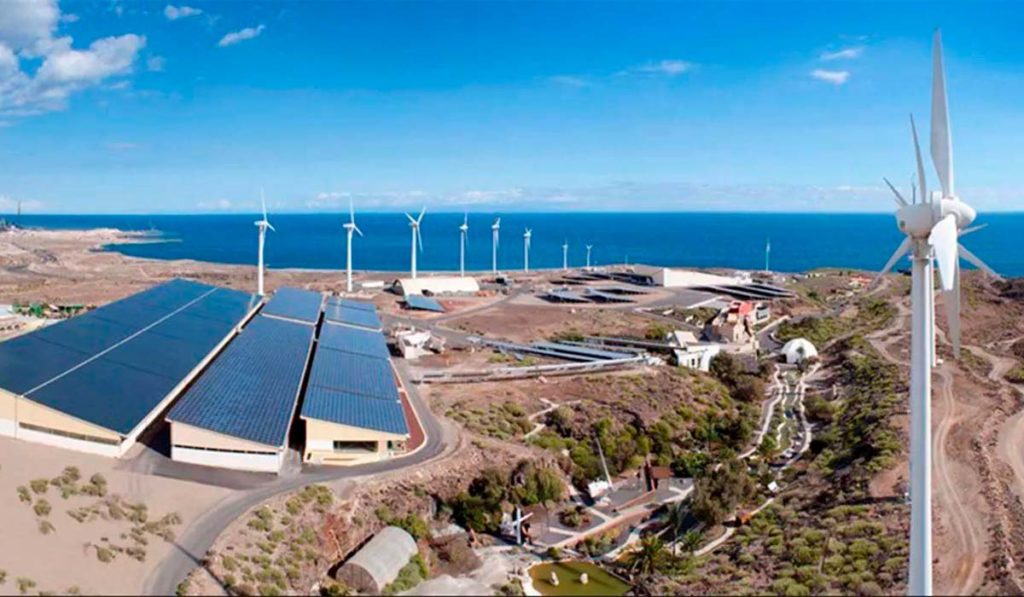
Tenerife Moves to Accelerate Renewable Energy Transition and Grid Upgrades
Tenerife’s government is implementing new strategies, including "Renewable Acceleration Zones" and advanced grid modeling, to overcome infrastructure bottlenecks and meet the island's 2030 decarbonization targets.
Tenerife is at a critical turning point in its transition to clean energy. Following a recent meeting held by the island’s government (the Cabildo), officials are working to break the deadlock currently stalling renewable energy projects—a move essential to meeting the island's 2030 decarbonization goals. President Rosa Dávila met with representatives from the Canary Islands Renewable Energy Association (ACER), the Spanish Photovoltaic Union (UNEF), and the Official Association of Industrial Engineers to address the urgent need to upgrade the electrical grid to support new installations.
Industry experts agree that the challenges go beyond politics. Administrative delays, a lack of grid capacity, and insufficient storage infrastructure are the primary obstacles slowing down investment. To address this, the Cabildo has proposed creating "Renewable Acceleration Zones" to cut through red tape. Meanwhile, industry leaders are advocating for a distributed energy model to avoid the land-use issues often caused by massive wind or solar farms.
The conversation has also expanded to include energy independence and social fairness. ACER has proposed a "TeneForo" initiative, which aims to ensure energy security while also addressing social acceptance and energy poverty. Key strategies include using public rooftops for solar power and promoting local energy communities to make clean energy more accessible to everyone.
To improve grid stability, officials are looking toward advanced technology, specifically the creation of a "digital twin" of the island’s electrical system. With support from the Technological and Renewable Energy Institute (ITER), this tool would allow for precise grid modeling, better planning, and the integration of innovative solutions like agrivoltaics (combining agriculture with solar power). Ultimately, the Cabildo’s roadmap aims to turn Tenerife’s natural energy potential into an economic driver that creates stable jobs while carefully balancing industrial growth with environmental protection.