
Tenerife Military Patrols: Public Support Crucial for Success
Operation Prometheus, a military fire prevention patrol in Tenerife's mountains, successfully concluded its second phase, crediting crucial public support and coordination for deterring arsonists and reducing fire incidents.
The success of military patrols in Tenerife's mountains is largely thanks to the island's residents. This is the main takeaway from military officials involved in Operation Prometheus, who say public support was crucial for the second phase of the mission.
Over three months, from July 1st to September 30th, the operation deployed 92 teams and 2,300 personnel. Their goal was to patrol the island's mid-altitude areas, deterring potential arsonists, especially after the major forest fire in 2023.
This military effort was part of Tenerife's biggest ever plan to prevent and fight forest fires. While the military's part ended in September, the overall fire risk campaign, which began on June 2nd, continued until November 2nd.
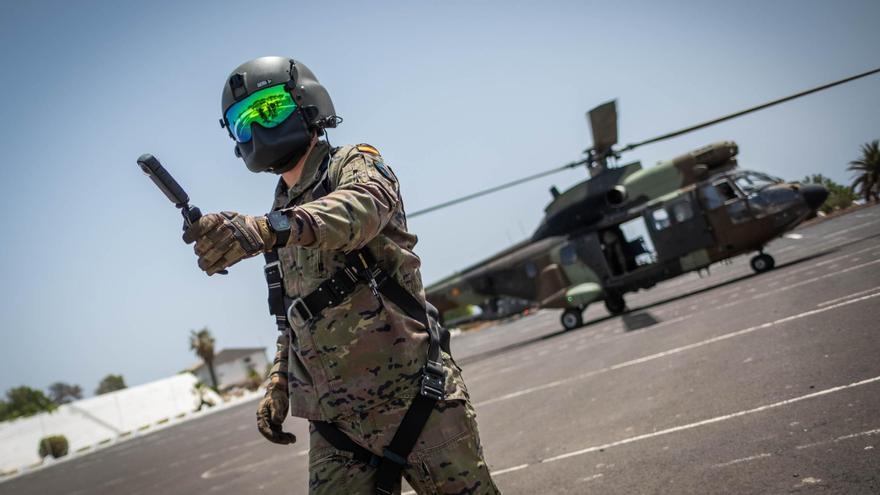
Lieutenant General Julio Salom, head of the Army's Canary Islands Command, emphasized their commitment to "defend life, nature, and continue working together without boasting." He noted that two new helicopters with night vision, based in Los Rodeos, were available but thankfully not needed.
The second phase of Operation Prometheus came about from an agreement signed in March between island president Rosa Dávila and Defense Minister Margarita Robles. This showed their shared dedication to boosting surveillance and protecting Tenerife's natural environment during the critical summer months.
Operation Prometheus involved daily patrols of two people and one vehicle, supported by a coordination team. The first phase of the operation covered 190,000 kilometers and accumulated over 25,000 hours of work, helping to reduce small fires. These positive results continued in this second phase.
Ground patrols focused on areas where urban zones meet forests, as these are highly vulnerable and risky. These units helped spot small fires early, checked alerts, informed emergency services, and provided information to the public.
General Salom recalled the lasting impact of the 2023 fire, noting that people were more vigilant the following year, which often prevents incidents. He added that this second year of the operation has been largely incident-free.
He stressed the importance of staying alert, as problems can arise at any moment. Salom mentioned "Centinela Gallego," a similar operation that served as a model for Prometheus, highlighting that strategies must always be flexible.
Salom praised the "flawless work, day and night" of all personnel under Colonel Cherino. He also noted improved coordination and communication with the Cabildo (Tenerife's island government), allowing them to share experiences. He added that they are now better prepared with telecommunications and alert systems, as they know the terrain well. Patrolling also helps soldiers improve their skills, preparing them for combat while also defending life and nature.
"Everyone contributes here; we all work together with the civilian population," Salom stated. He highlighted that there were no issues with people using picnic areas who were asked to leave due to fire alerts.
Salom reflected that the mere sight of a military uniform or vehicle acted as a deterrent. He predicted that strategies might need to change in the future as people get used to their presence. He hopes the agreement continues, as the collaboration is positive, and soldiers, many of whom are from Tenerife, are proud to serve their homeland.
Colonel Alberto Cherino, acting head of the Canary Islands XVI Brigade, led the operation on the ground. He stressed the importance of coordination and contact with both citizens and Cabildo technicians, ensuring the public knew they were present. He believes "total coordination with the island institution" was key to success.
Cherino shared lessons learned from the previous year, including the need for more preparation time and better training for personnel. He reiterated the mission: to plan and carry out fire prevention through presence, surveillance, and deterrence, working closely with the Cabildo and State Security Forces.
Cherino outlined three main goals for the operation. First, "total contact with citizens," especially those living in rural areas or affected by the 2023 fire. He noted that these residents provide the most valuable information, such as potential arsonist activity or careless behavior in areas with dry pine needles.
Second, "total contact with the Cabildo's technicians," particularly José María Sánchez and Rodrigo Barbadillo, whom he thanked for their flexibility, support, and guidance on what could and could not be done on the ground.
Finally, Cherino emphasized the importance of public visibility. "Deterrence isn't achieved if they don't see us," he explained, noting that without awareness of patrols, the deterrent effect would be lost.
The colonel detailed that this year's operation was similar to the previous one, involving 32 military personnel in weekly shifts, conducting ten daily patrols, day and night. A helicopter patrol, available with 72 hours' notice, was also part of the plan but fortunately wasn't needed.
This air patrol was crucial due to its night flight capability and three-hour flight time, allowing it to cover the entire island multiple times if necessary. Though unused, it significantly strengthened the operation.
Cherino stressed that their responsibility covered the entire island of Tenerife, all 2,000 square kilometers, to prevent even a single hectare from burning. Soldiers mainly patrolled the northern areas, excluding Anaga, the Güímar Valley, and La Esperanza.
Thorough preparation was vital, Cherino reiterated, including training with Seprona (environmental protection service) and forest brigades, as well as reconnaissance of high-risk tracks. He added that soldiers also used the opportunity to improve their first aid, general health, and vehicle recovery skills in challenging mountain terrain.
Cherino highlighted the significance the Ministry of Defense and the Army placed on this operation, noting they were a pilot unit for testing a new mapping and geolocation application. He stated that it was a military operation supporting citizens, and its success hinged on complete coordination with the Cabildo, allowing patrols to be redeployed as needed. He cited an example in El Rosario where a patrol was sent to an incipient fire based on Cabildo instructions, preventing further incidents.
During the three months of the previous operation, there were seven small fires. This year, there was one small fire in San Andrés de los Llanos (El Tanque) and eight incipient fires. Cherino observed that "as time passes, people forget about a large fire like the one in 2023 and start to be less careful, but the trend has been maintained."
Public awareness was also key. The colonel noted that a common issue was people's lack of knowledge about what was permitted or forbidden. He recalled having to extinguish embers left overnight. He stressed the need to keep reminding everyone that a single act of carelessness can cause a massive, uncontrollable fire.
Alberto Cherino reported that patrols covered 150,000 kilometers on Tenerife's tracks and trails, a distance equivalent to about four times around the world by car, and similar to the previous year. He emphasized that this was a huge amount over very difficult terrain, achieved without a single accident.
Patrols also assisted in three traffic accidents, being the first responders to help the injured or direct traffic. They also helped lost individuals, including a woman who was dehydrated after being lost for four and a half hours. They even encountered a potential domestic dispute, which was reported to the police and resolved without further incident. This increased sense of security is very important, Cherino noted.
Alberto Cherino concluded by expressing his satisfaction that there were no conflicts with anyone, either from the military or the public. He believes they must continue this approach and strengthen these ties to further reduce fires year after year.