
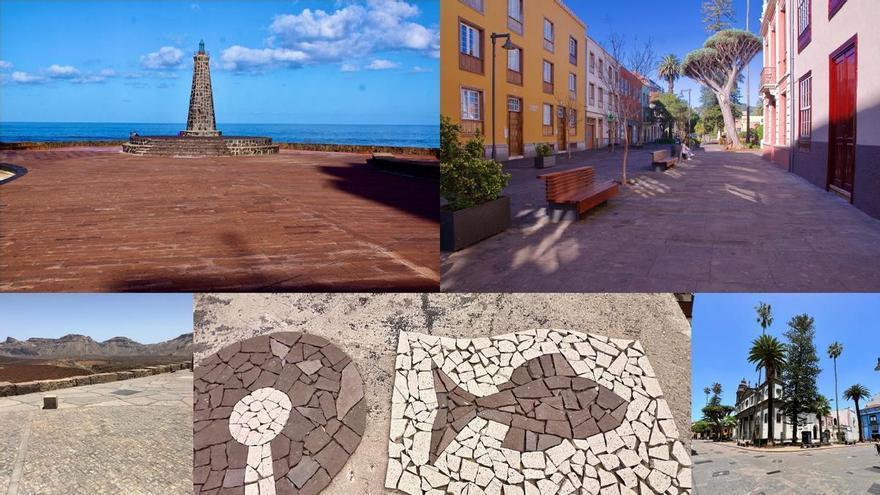
Tenerife Mandates Local Stone for Public Works
Tenerife's government has set a new standard for public construction, mandating 100% local natural stone, particularly Ignimbrite, to boost sustainability and the economy, first seen in a TF-1 motorway project.
Tenerife's island government (Cabildo de Tenerife) has made a big change to how it manages public construction projects. This move sets a new standard for the region's quarrying industry. The new rule was first put into practice on a major project: improving the landscape in damaged areas near the TF-1 motorway, specifically around Mercatenerife.
For this project, the island government insisted on using 100% natural stone sourced entirely from Tenerife. The key technical innovation is the widespread use of Ignimbrite, locally known as Chasnera stone from Arico, which completely replaces foreign materials. Until now, road projects in the Canary Islands typically used only a small amount of local resources, such as Canto Blanco (a volcanic rock from the south of the island). The rest of the stone was imported from international markets like China, Turkey, or Mexico.
The old approach not only led to higher costs due to shipping but also created a significant carbon footprint, which doesn't align with current sustainability goals. The Cabildo's new decision follows European recommendations to use local materials, often called 'kilometer zero' products. This helps reduce the pollution caused by transporting heavy materials across oceans.
This new rule isn't a standalone idea; it's the result of an agreement the Cabildo de Tenerife itself pushed for back in 2014. This pact, supported by the Canarian Federation of Islands (FECAI) and the Canarian Federation of Municipalities (FECAM), urged public bodies to prioritize natural stone from the Canary Islands in their construction tenders.
Experts in the field say using local materials has technical, environmental, and economic benefits. More importantly, it helps maintain the island's unique identity. Volcanic stone is a key part of the Canary Islands' geology and historical buildings, and using it in modern projects helps the landscape look consistent and natural. Furthermore, the stone quarrying and processing industry is one of the few industrial activities that create stable jobs in Tenerife's rural areas, so prioritizing local products injects money directly into the island's economy.
The industry highlights that tourism is vital for the Canary Islands, and the unique architecture and materials are a strategic advantage. Lanzarote is a good example: César Manrique's work there showed how volcanic materials could boost tourism and respect the environment. This serves as a model for Tenerife, especially for highly visible structures like the entrances to the TF-1 motorway.
The Canarian Natural Stone Industry has publicly thanked the Cabildo de Tenerife and the project's technical team. Its representatives hope this project in Mercatenerife will become a model for future work across all the islands. They believe it shows that it's possible to be technically efficient, environmentally responsible, and true to the local identity, and that this approach will become standard for public works throughout the Canary Islands.