
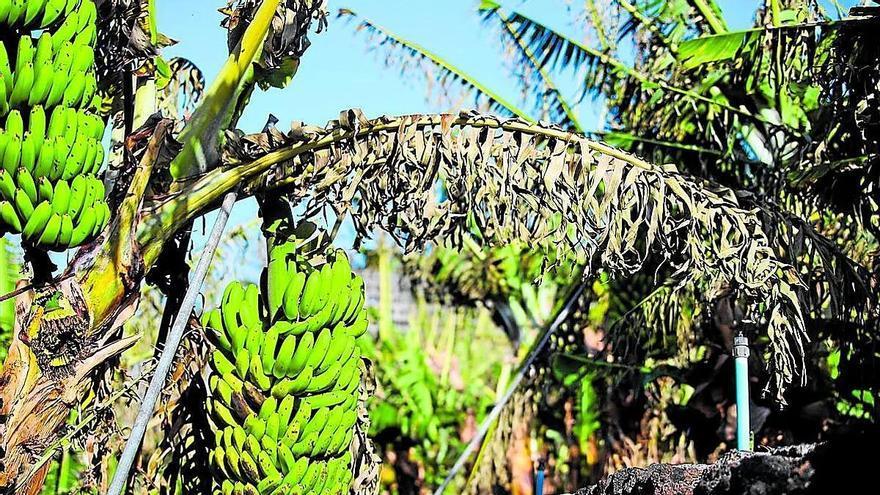
Tenerife Launches Urgent Trials to Combat Spiraling Whitefly Threat to Banana Crops
Tenerife authorities have launched urgent field trials to combat the invasive spiraling whitefly, a polyphagous pest threatening the island's banana industry through sap depletion and fungal growth.
Tenerife’s banana industry is facing a new threat that has prompted local authorities to take urgent action. The Tenerife Island Council (Cabildo de Tenerife) has launched a series of field trials in partnership with the Canary Islands Institute of Agricultural Research (ICIA) and the Association of Banana Producer Organizations (ASPROCAN). Their goal is to develop effective ways to stop the spread of the spiraling whitefly (Aleurodicus dispersus), an insect whose rapid expansion has experts concerned.
This pest is particularly difficult to manage because it is "polyphagous," meaning it feeds on a wide range of plants. While banana plantations are the primary concern, the whitefly can colonize over a hundred different species, including citrus, avocados, and various ornamental plants found in towns and cities. This makes containment especially challenging. Furthermore, the insect’s biology provides it with natural defenses; it lays its eggs in geometric patterns on the undersides of leaves and protects them with waxy secretions that act as a shield against standard pesticides.
The damage caused by the whitefly is twofold. First, the insects suck sap directly from the plants, weakening them and causing leaves to yellow and drop. Second, the insects excrete a sticky substance called honeydew, which encourages the growth of sooty mold. This fungus covers the plant, blocking sunlight and preventing photosynthesis, which ultimately ruins the quality of the fruit.
To address this, experts are testing strategies that go beyond simple chemical sprays. They are currently evaluating a combination of cleaning methods to remove the whitefly’s waxy protective layer, alongside biological controls, such as introducing natural predators and parasites. This comprehensive approach is essential for protecting the islands' banana crops while ensuring that pest management remains environmentally sustainable.