
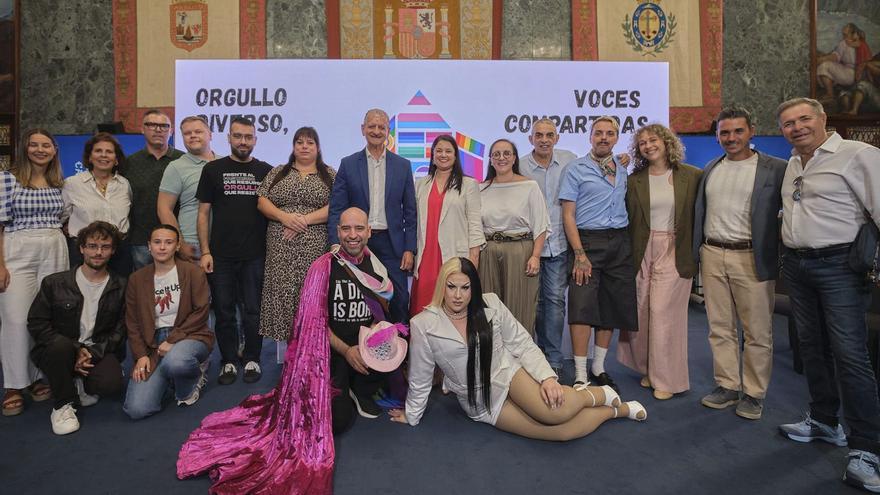
Tenerife Launches Six-Year Strategic Framework to Advance LGTBIQA+ Rights
The Tenerife Island Council has launched a comprehensive six-year strategic framework that integrates LGTBIQA+ equality into its administrative structure through 82 cross-departmental measures and a new permanent advisory board.
The Tenerife Island Council has launched a new strategic framework for LGTBIQA+ diversity, marking a significant shift in how the region manages civil rights. Rather than focusing only on one-off events, this six-year plan integrates equality directly into the island’s administrative structure.
The initiative includes 82 measures coordinated across seven government departments. It uses an "intersectional" approach, acknowledging that factors like age, income, and background all affect how people access their rights. To ensure long-term progress, the Council is establishing a permanent LGTBIQ+ Insular Board to maintain a dialogue between the government and local organizations, while also providing ongoing training for public staff.
The Council is also moving beyond the metropolitan area to bring awareness and cultural events to municipalities including La Laguna, Puerto de la Cruz, La Orotava, Tegueste, Tacoronte, and Guía de Isora. The programming balances celebration—such as The House of Show and Festivalullo 2026—with education and history, featuring exhibitions on local trans history and screenings of the documentary Pink Triangles.
In a notable move, the program will also extend to the Tenerife II Penitentiary Center. By bringing these resources into a space of high vulnerability, the Council aims to promote diversity in areas often left out of mainstream cultural initiatives. Island President Rosa Dávila emphasized that the goal is to build a society where personal freedom is protected from social stigma, while Equality Director Patricia León described the plan as a vital tool for social cohesion.
By combining historical memory, professional training, and public participation, Tenerife is aligning itself with broader European human rights standards. The Council aims to move beyond simply celebrating Pride, instead treating diversity as a core, structural part of a healthy, democratic society.