
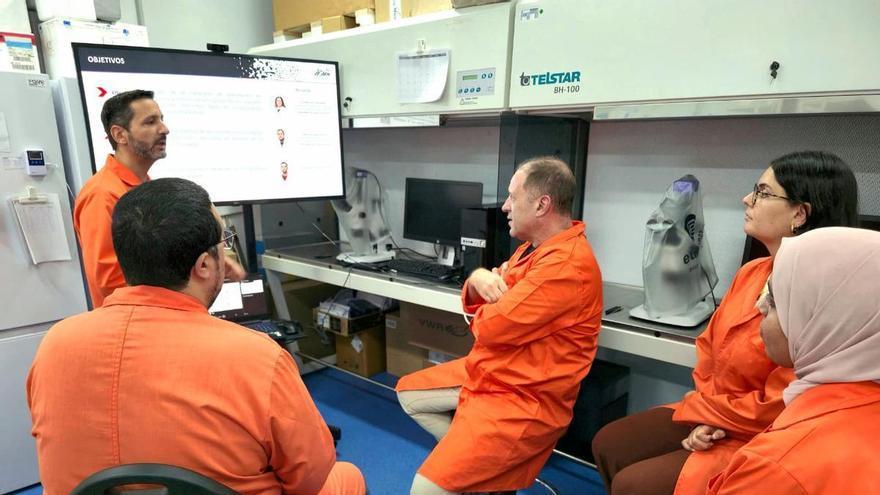
Tenerife Launches PolAR Unit to Combat Microplastic Pollution
The Tenerife Island Council and the University of La Laguna have launched PolAR, a €1.083 million technical unit equipped with advanced laser infrared microscopy to monitor and combat microplastic pollution across the Canary Islands.
The management of plastic pollution in the Canary Islands has reached a new milestone with the launch of PolAR, a specialized technical unit created through a partnership between the Tenerife Island Council and the University of La Laguna (ULL). Backed by a €1.083 million investment running through 2028, the initiative aims to professionalize environmental testing and diagnostics.
The center provides essential technical services to water managers and public authorities, helping them meet increasingly strict European Union water quality regulations. To ensure highly accurate results, the laboratory features a state-of-the-art cleanroom with a controlled atmosphere. This setup prevents cross-contamination from environmental fibers, which is vital for valid scientific analysis.
Led by Professor of Analytical Chemistry Javier Hernández Borges, alongside researchers Cristina Socas Hernández and Adrián M. Afonso Álvarez, the team is using advanced laser infrared microscopy. This technology—the first of its kind in the Canary Islands—automates the identification of plastic types in complex samples like sediments, compost, and wastewater.
The AChem research group is focusing on four key areas. A major priority is studying microplastics in compost, where early tests have found that fibers make up between 46% and 90% of all particles detected. The team is also exploring circular economy solutions, such as whether certain plastic waste can be repurposed to absorb organic pollutants.
The project is already mapping the health of the Tenerife coastline, with samples from four sites—including Playa Grande and El Puertito de Adeje—already analyzed. By bridging the gap between academic research and public policy, PolAR provides the islands with a critical tool to address the growing environmental challenge of plastic persistence in island ecosystems.