
Tenerife Launches Major Reservoir Expansion to Boost Water Reuse and Agriculture
The Tenerife Island Water Council has launched a strategic plan to build six new reservoirs aimed at increasing reclaimed water storage for agriculture and reducing wastewater discharge into the ocean.
Tenerife is reaching a turning point in how it manages its water. At the recent International Congress on Dams and Discharges (BalVert), the Tenerife Island Water Council (Ciatf) unveiled a plan to significantly increase storage for reclaimed water. This initiative aims to support the island’s agricultural sector while addressing the long-standing environmental issue of wastewater being discharged into the ocean.
The strategy involves building six new reservoirs across the island to better balance water supply between the north and south. Blanca Pérez, the Minister of Natural Environment, Sustainability, Security, and Emergencies, explained that the goal is to complete the "integral water cycle." By capturing surplus water from treatment plants—which is currently lost to the sea, particularly when farm demand is low—the island can make much better use of its resources.
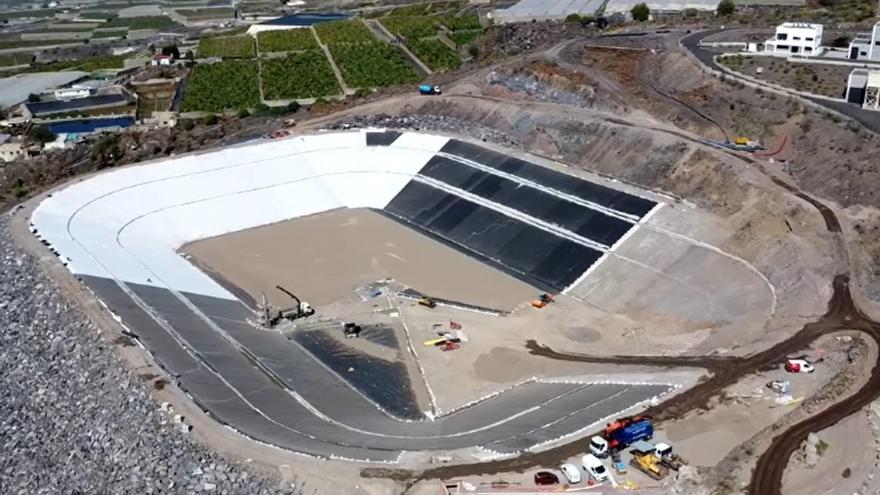
These projects are at various stages of development, from initial planning to active construction. The most immediate project is the Las Charquetas reservoir in Guía de Isora. With an investment of 8.5 million euros, it is expected to open this year and will hold 253,000 cubic meters of water from the western treatment plant.
Other major projects include:
- Arico: A 15.2-million-euro project designed to hold over 137,000 cubic meters. Its final approval depends on an agreement with the state-owned company Acuaes.
- Güímar: Currently in the design phase, this reservoir will store treated water from a regional plant scheduled to open in March 2025.
- Strategic sites: Three additional reservoirs are planned for Las Llanadas (Los Realejos), Pasada del Santo (Santa Úrsula), and Los Corraletes (Tacoronte).
Together, these reservoirs are designed to make Tenerife’s agriculture more resilient to water shortages while finally correcting the island’s historical struggle to effectively treat and reuse wastewater.