
Tenerife Launches Inclusive Employment Unit for Deaf
Tenerife has launched the Inclusive Employment Promotion Unit (UFEI) to help deaf and hard-of-hearing individuals find and maintain employment through personalized support and "Supported Employment" methods.
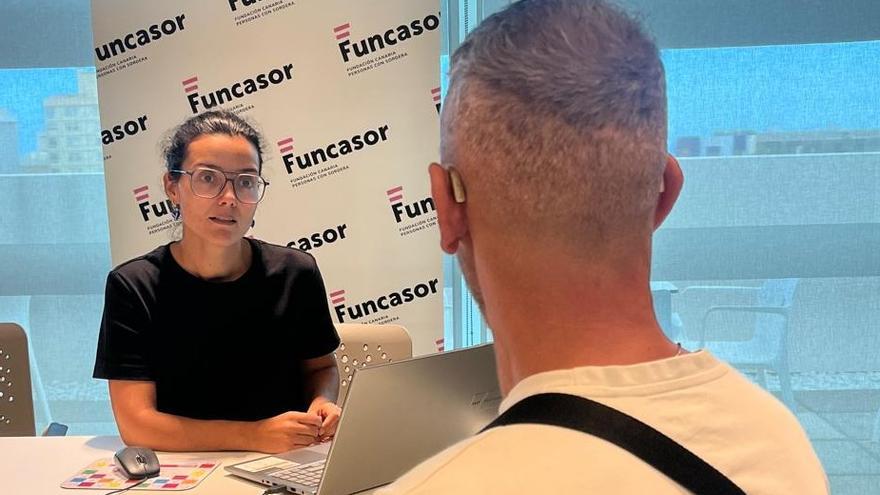
Tenerife now has a special unit called the Inclusive Employment Promotion Unit (UFEI). This unit helps people who are deaf or have hearing problems find jobs. It's part of a bigger project, UFEI Tenerife, run by Funcasor (the Canary Foundation for People with Deafness and their Families). The project gets its money from the Canary Employment Service, which uses funds from Spain's Ministry of Labor and Social Economy. This initiative is a big step forward in helping a group of people who often struggle to get jobs in the regular workforce.
The main goal of UFEI Tenerife is to help people with disabilities, especially those who are deaf or hard of hearing, find and keep jobs. This applies to anyone looking for work or wanting to improve their current job. To do this, they use a method called "Supported Employment." This involves several steps: career advice, training, finding suitable companies, acting as a go-between, helping during the initial job integration, and ongoing support once someone is employed. This method ensures people can get jobs fairly and have the help they need to stay employed successfully.
The program works by creating a "Personalized Integration Pathway" (IPI) for each person. This plan is made together with the participant and considers their unique traits, skills, interests, and their social and family life. This ensures the support is truly tailored to their needs. The plan is also flexible, so goals and actions can be changed as needed, helping people grow personally and professionally. This kind of support is especially vital for deaf individuals, as many workplaces lack communication access and suitable adaptations, making it hard for them to participate equally.
The project believes that having a job is key to fighting social exclusion and building a fairer, more inclusive society. However, even with recent improvements, people with hearing impairments still face many hurdles when trying to join and stay in the job market. These challenges include: few accessible workplaces, a lack of communication help during job interviews, old stereotypes about what they can do professionally, and a general lack of understanding about how to make workplaces more inclusive for them.
To tackle these problems, UFEI Tenerife actively seeks out businesses. They visit companies, offer advice on making workplaces more accessible, raise awareness, share information about helpful resources, and act as a go-between to encourage hiring. Experience proves that with the right support and an inclusive environment, deaf individuals can successfully find and keep jobs. They bring valuable skills to teams and help create more diverse organizations.
Besides helping people find jobs, UFEI Tenerife also provides special support to those already working in regular jobs. This ongoing check-in makes sure workers have what they need to do their jobs independently and effectively. The unit also helps people who want to improve their current employment, giving them tools to move towards a more stable career that matches their goals.
Through this project, Funcasor and the Canary Employment Service are strengthening their dedication to equal opportunities and job inclusion across the Canary Islands. Starting UFEI Tenerife is a clear step towards highlighting the skills of deaf people as capable professionals. It also helps build a job market that is more accessible, diverse, and unified.
This initiative doesn't just meet a clear social need; it also helps educate businesses, government bodies, and the public about how important it is to have workplaces where everyone can participate and grow equally. UFEI Tenerife shows that including everyone in the workforce is achievable when there are enough resources, strong commitment from institutions, and a belief that diversity benefits society and drives progress.