
Tenerife Launches Bid to Become Major European Aerospace Hub
Tenerife is seeking national and European support to transition its economy from astronomical research to a competitive aerospace hub by integrating local facilities into major international innovation networks.
Tenerife is aiming to transform its economy, moving from a hub for astronomical observation to a major player in the aerospace industry. This Friday, the Island Council will vote on a motion—backed by the Canary Coalition and the People’s Party—to elevate the "Tenerife Space Horizon" strategy to national and European levels.
The proposal calls for formal support from the Spanish government and the European Space Agency (ESA) to integrate the island into broader European innovation networks. The goal is to move beyond academic research, ensuring that local facilities like the Technological and Renewable Energy Institute (ITER) and the Science and Technology Park (PCTT) play a key role in major programs like Horizon Europe and ESA BIC incubators.
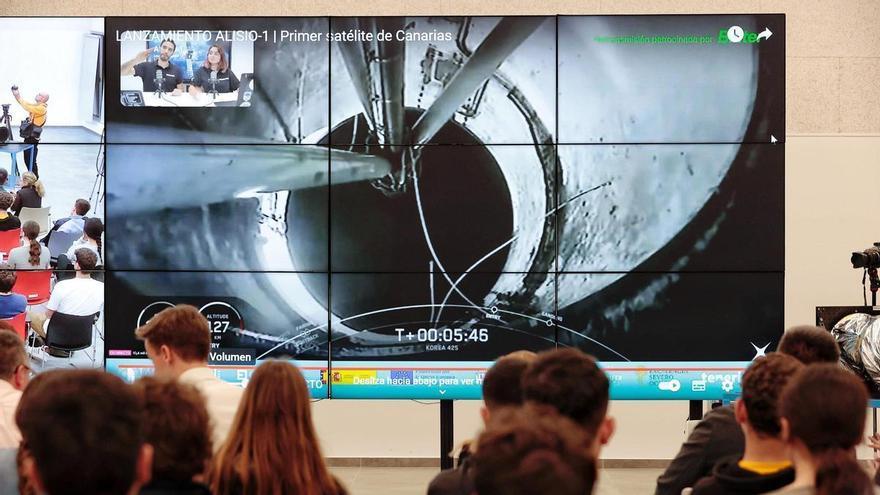
Tenerife is building on a strong technological foundation, including high-performance computing, the "Canary Islands Constellation" satellite project, and the Celeste optical instrumentation project. The council hopes to attract external funding to create a complete aerospace supply chain, covering everything from satellite manufacturing and operations to data processing and commercial services.
The plan is supported by the island’s strategic location between three continents and a recent boost in funding for the PCTT. The Island Council has approved budget increases for 2025 and 2026 to modernize key facilities, alongside a separate 1.3 million euro investment for a new "Clean Room" designed for high-precision technology.
Island President Rosa Dávila noted that high demand for current office and lab space shows strong corporate interest in the island. The upcoming motion proposes public-private partnerships to ensure that research from the Institute of Astrophysics of the Canary Islands (IAC) and the University of La Laguna leads to high-quality jobs and a more diverse local economy.
Ultimately, Tenerife aims to turn its scientific expertise and geographical advantage into a competitive business ecosystem. If approved, this initiative will kick off a search for strategic partners, helping the island establish itself as an Atlantic hub for technology transfer and satellite data.