
Tenerife Launches €500 Million Plan to Revolutionize Water Recycling for Agriculture
Tenerife is investing over 500 million euros into a circular water management model that aims to increase wastewater treatment capacity to 97% and significantly boost water regeneration for agricultural use by 2026.
Tenerife is reaching a turning point in how it manages water, according to Island Council President Rosa Dávila. The local government is moving away from simply treating and disposing of wastewater, shifting instead toward a "circular economy" model that treats recycled water as a vital resource for the island’s farmers.
To support this shift, the council has launched an ambitious investment plan totaling over 500 million euros. This includes 363.99 million euros for ongoing projects and an additional 147.15 million euros through an agreement with the state-owned company ACUAES. The goal is to create a complete water cycle that covers everything from collection and transport to purification and reuse.
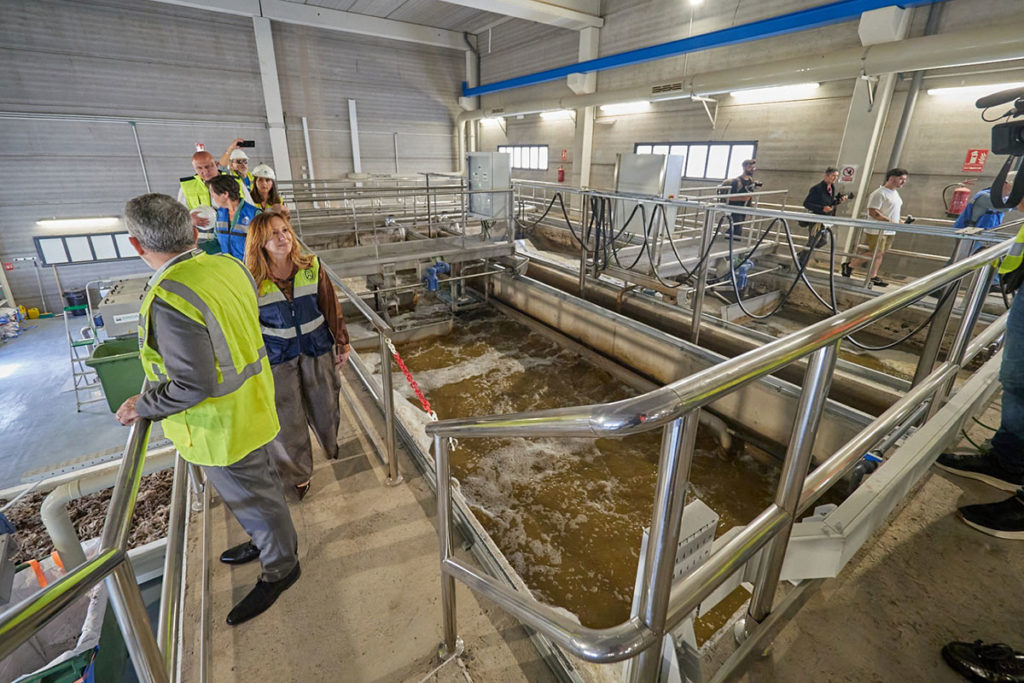
The island is making significant progress in its treatment capacity. In 2023, infrastructure could handle 52% of the island's wastewater; current projects are set to raise that to 86%. Once the Metropolitan and Arona-Este-San Miguel treatment plants are finished, coverage is expected to reach 97%. In terms of volume, daily purification capacity is projected to jump by 65%—from 92,700 cubic meters in 2023 to 152,700 by 2026.
The most important part of this transformation is the increase in water regeneration, which makes treated water safe for agricultural use. By 2026, the island’s capacity to regenerate water will grow by 78%, adding 23 million cubic meters of water annually. Already, the public entity BALTEN distributes more regenerated water than fresh water, making it a cornerstone of Tenerife’s agricultural industry.
Success depends on a complex, interconnected network that links local municipal systems with larger infrastructure managed by the Island Water Council and regional and state authorities. While areas like the northeast and the Adeje-Arona axis are already successfully using regenerated water, other regions are still in the process of upgrading their infrastructure.
Ultimately, the goal is a major upgrade in quality. In 2023, only three of the island’s eight treatment plants were equipped to regenerate water. By 2026, the network will grow to twelve plants, nine of which will be capable of returning water to the production cycle. This will reduce the island's reliance on other water sources and significantly lower the environmental impact on Tenerife’s coastline.