
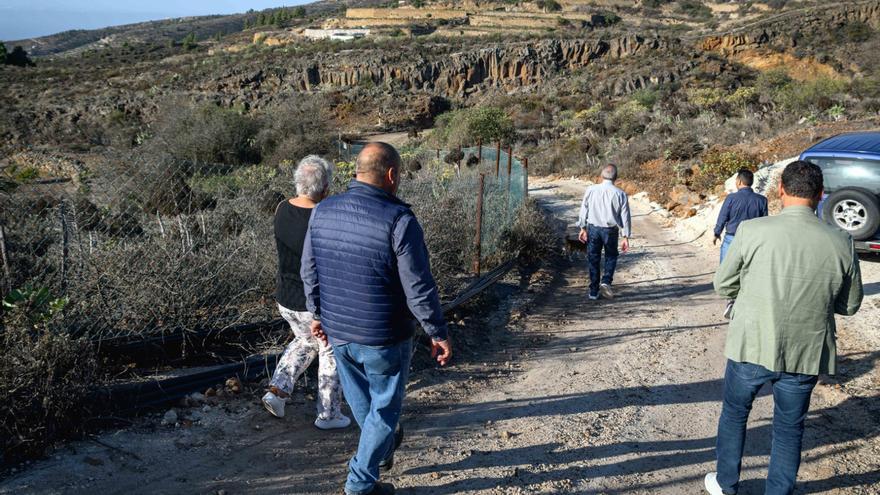
Tenerife Invests €8.4M to Revitalize Rural Roads and Farming
Tenerife's government is investing €8.4 million in the "Agrocaminos Tenerife" program to improve agricultural roads, boost the rural economy, and encourage younger generations to engage in farming.
The "Agrocaminos Tenerife" program aims to improve access to farms and orchards across the island. Launched by the Cabildo (local government) during the 2023-2027 term, it has two main goals: to prevent people from leaving rural areas and to encourage younger generations to get involved in farming.
Valentín González (PP), who heads the Department of Primary Sector, is investing €8,433,060 in the project. This investment reflects a commitment to developing the island's midlands and upgrading agricultural infrastructure.
González explains that the initiative seeks to boost farming and, as a result, revitalize the rural economy. A key part of this is repairing, improving, and modernizing the island's agricultural roads. These roads are essential for supporting farming, connecting communities, and boosting the rural economy.
In short, Agrocaminos is "a strategic commitment by the Cabildo to a more connected, accessible, and sustainable island." Improving agricultural infrastructure is seen as vital for reviving rural life, protecting the landscape, and securing the future of farming in Tenerife.
The program includes 23 projects in 16 municipalities, with some already underway, all focused on improving agricultural roads. González emphasizes that this will not only make access to farms "safer and more efficient" but also "contribute to preserving the landscape, strengthening the farming industry, and enhancing Tenerife's agricultural identity." Place names like La Caleta, La Cumbrita, and Las Llanadas highlight the diverse geography of the island, with its intricate and challenging road network.
So far, four roads have been improved: Fonseca, La Hurtada, Lomo Blanco-Chafarís, and Bardo Viejo. The municipalities benefiting from this initiative include Santa Úrsula, Granadilla de Abona, La Guancha, Fasnia, and others.
For example, the Fonseca road rehabilitation in Santa Úrsula cost €290,141. Similar projects are planned for other roads, including Lomo Soldado, Las Lajitas, and Azabugo, as well as stabilization work on the El Cercadillo and La Traviesa areas.
The Fonseca road, located in a farming area in the northern midlands, was in poor condition, making it difficult to use in bad weather. The improvements will provide better access to over 120 farms in the area, covering thirteen hectares mainly used for vineyards and potato crops.
The AGROcaminos Tenerife Program aims to improve agricultural road infrastructure to promote sustainable development in the farming sector. It also seeks to guarantee access to farming areas, promote social and territorial cohesion in rural areas, encourage the reuse of abandoned farmland, and preserve the landscape and environmental heritage associated with traditional agriculture.
Valentín González states that the program aims to "have a positive impact on the economic, social, and territorial life of the rural environment." He also points out that "road infrastructure is fundamental in slowing down rural depopulation" because "improved connectivity reduces the abandonment of rural areas and facilitates entrepreneurship," which in turn "contributes to facilitating generational change, with the arrival of new entrepreneurs."
This Program is "a commitment to a living and connected rural environment, in which traditional agriculture shares spaces with economic development and environmental conservation."