
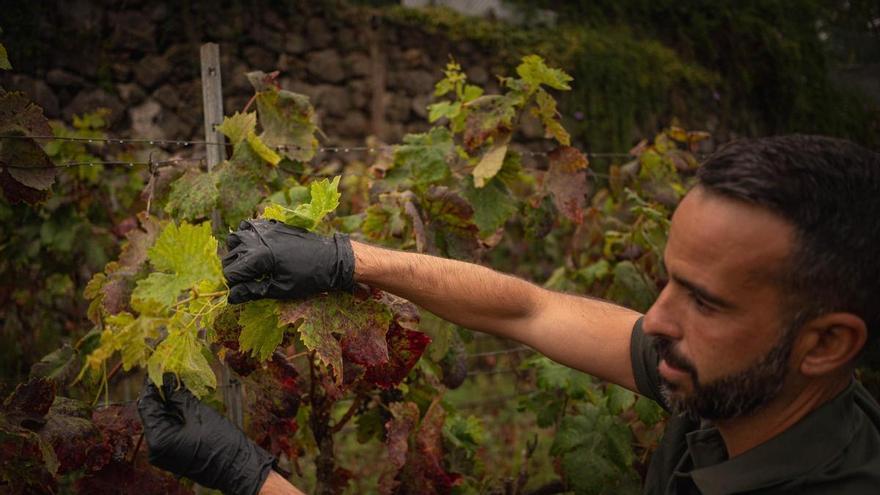
Tenerife Implements Pruning Waste Plan to Combat Phylloxera
Tenerife's regional authorities have implemented a detailed plan, including mandatory pruning waste management, to control the spread of the devastating phylloxera pest in the island's vineyards following recent outbreaks.
Properly managing pruning waste is crucial for controlling phylloxera in Tenerife's vineyards. This pest has historically caused significant economic damage to the island's wine industry. Regional authorities have introduced six measures, and the Cabildo de Tenerife has created a detailed plan for farmers. The main goal is to stop this aphid from spreading, especially after it was found on a farm in Valle de Guerra, La Laguna, last summer.
Phylloxera (Daktulosphaira vitifoliae) is a serious plant pest. It's so dangerous that the European Union has placed it under quarantine because it can devastate vineyards – it nearly wiped out European winemaking in the 19th century. After outbreaks were detected in Tenerife, plant health officials quickly put an urgent set of legal and operational controls into effect last year. These rules apply to everyone involved, including winegrowers, plant nurseries, technicians, and the general public.
The island's plan, based on expert advice, outlines mandatory steps for handling and destroying pruning waste. The priority is to deal with this waste on the farm where it was produced. This helps to limit the movement of plant material, which in turn reduces the risk of the insect spreading.
In specific "demarcated zones" – which currently include the entire Tacoronte Acentejo Designation of Origin (DO), where the initial outbreak occurred – it is forbidden to move pruning waste outside these areas, or to move it at all without explicit permission. Authorized burning is the primary method for managing this waste. If burning is not possible, farmers can request that the waste be taken to an approved collection centre. This service will be carried out by a licensed company, which will collect the waste directly from the farm. To arrange this service, winegrowers can call 610117286.
For "non-demarcated zones" – which include other parts of Tacoronte Acentejo and the remaining six Designations of Origin across Tenerife – it is still forbidden to transfer pruning waste without authorization or between different DOs. Authorized burning is also preferred here, but shredding and composting the waste on the farm are offered as alternatives. Farmers who wish to check if their farm is in a demarcated zone can find this information at https://agp.sitcan.es/filoxera/publico/.
Controlled burning on farms requires specific authorization: from the Cabildo de Tenerife if the plot is in a very high or high forest fire risk zone, or from the corresponding town council if it is in an area without fire risk. In all cases, burning must be carried out following strict safety measures. The protocol also provides detailed instructions for proper composting of pruning waste when this option is chosen. An informative leaflet summarising these mandatory measures is available on the website www.agrocabildo.org. Additionally, informative talks are being organised in different regions of the island, in collaboration with the General Directorate of Agriculture of the Government of the Canary Islands.