
Tenerife Implements Emergency Shuttle Service to Tackle Mesa del Mar Traffic Congestion
The Tacoronte City Council has introduced an emergency shuttle service and resident-only parking permits to alleviate severe traffic congestion in Mesa del Mar caused by ongoing cliff stabilization work.
Managing traffic in Tenerife’s coastal areas has become a major challenge, particularly as fragile infrastructure struggles to cope with peak summer crowds. In Mesa del Mar, the Tacoronte City Council has launched an emergency plan to address the severe congestion that has plagued the area since early July.
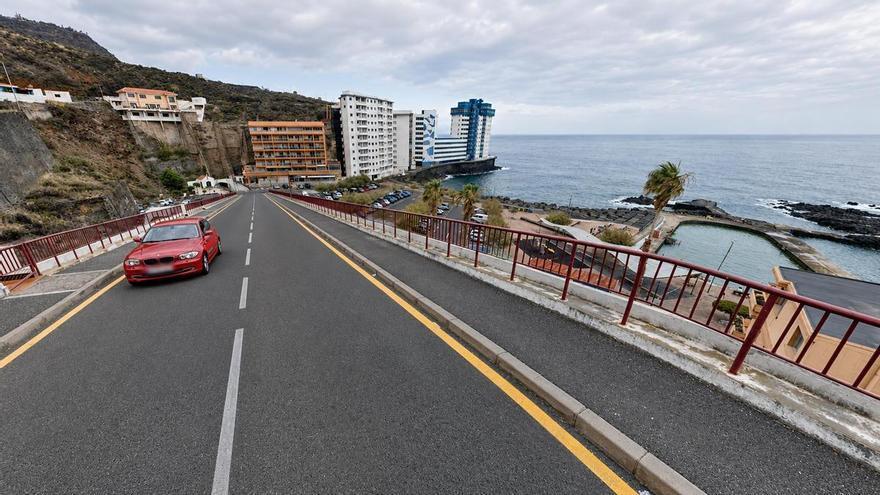
The problems began last March when storm Therese caused structural damage to the cliffs along the access road. To stabilize the slopes, authorities had to restrict road capacity and remove 50 parking spaces. This reduction, combined with the high number of beachgoers, has led to gridlock. To help, the City Council has introduced a free shuttle service using shared taxis. The service runs from a park-and-ride facility at the Agricultural Training School down to the coast, with Civil Protection officers on hand to manage parking. The shuttle runs three times down and five times up on Fridays, increasing to four and six trips respectively on weekends.
To protect local residents, the council is also issuing exclusive parking permits. Residents must provide proof of residency or a lease agreement to qualify, a move designed to prevent the surge of parking fines that occurred recently due to vehicles blocking public roads.
Work on the slopes is ongoing. While one project is nearing completion—which should allow some parking spaces to reopen soon—the process of reinforcing the road with concrete injections will continue throughout the summer.
The municipal government views this shuttle service as a pilot project. The Department of Mobility suggests this model could be used in other coastal areas, such as El Pris, as future infrastructure projects are planned. This shift reflects a growing trend in island urban planning: moving toward restricted access in vulnerable areas where the current infrastructure simply cannot handle the volume of private cars during the busy summer season.