
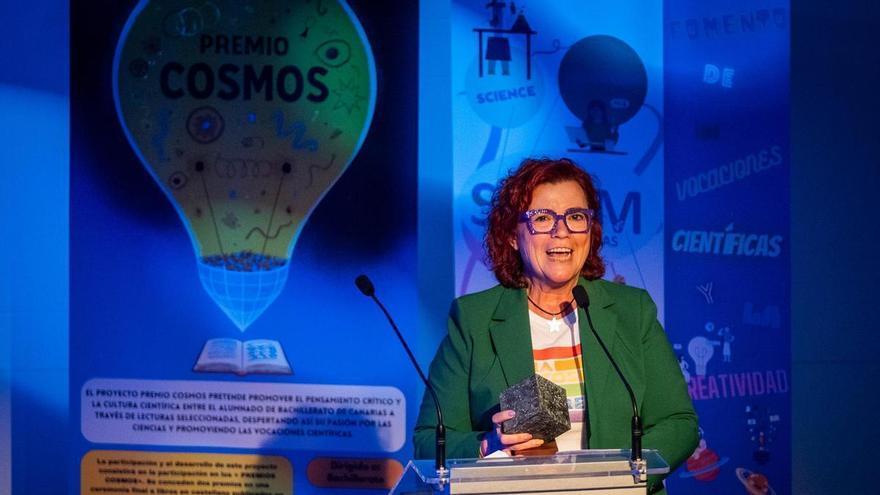
Tenerife Hosts Inaugural Spanish Cosmos Awards to Advance Scientific Literacy
The inaugural Spanish edition of the Cosmos Awards was held in Tenerife to promote scientific literacy and critical thinking through a collaboration between the CajaCanarias Foundation and UNESCO.
The first Spanish edition of the Cosmos Awards, held recently in Tenerife, marks a significant shift in how science is communicated across the country. Supported by the UNESCO International Decade of Sciences for Sustainable Development, the event was more than just an awards ceremony; it served as a vital forum for critical thinking in an era of widespread misinformation.
Hosted at the CajaCanarias Foundation Auditorium, the event brought together over a hundred students and experts. The awards, which are already well-established in countries like Italy, France, and the Netherlands, feature two main categories. The "Cosmos Student Award," judged by students from ten schools across Tenerife, La Palma, and Gran Canaria, went to mathematician Clara Grima for her book Con algoritmos y a lo loco. Meanwhile, an international committee of experts in astrophysics, biomedicine, and mathematics honored José López for La vida al borde del abismo and Lise Barnéoud for Las células errantes. The IES Marina Cebrián school also received a special mention for an audiovisual project showcased during the event.
Choosing the Canary Islands as the host site reflects the Institute of Astrophysics of the Canary Islands' (IAC) commitment to strengthening the local scientific community. Jorge Martín, director of the Spanish edition, noted that while the organization is local, the competition has a global focus. Although no Canarian authors were among this year’s finalists, the event has inspired local researchers and communicators to participate in future editions—a goal fully supported by the CajaCanarias Foundation, which plans to continue its partnership in the coming years.
Beyond the awards, the event featured round-table discussions on topics ranging from biological identity to the origins of the universe. By aiming to raise the standard of scientific outreach in Spanish, the initiative aligns with UNESCO’s global mission to use scientific culture as a tool for sustainable development. Through this effort, the Spanish scientific community is reinforcing its commitment to the next generation, ensuring that evidence-based knowledge remains a cornerstone of society.