
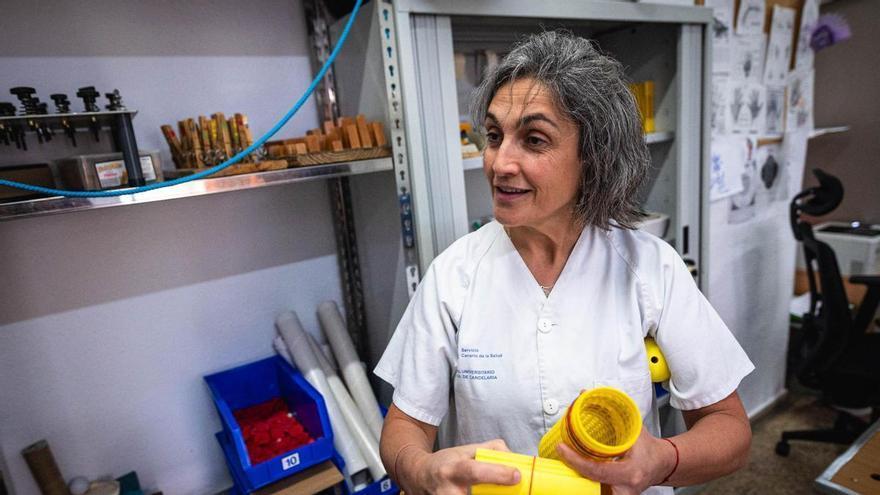
Tenerife Hospital Saves €65,000 Using 3D-Printed Medical Tools
The Nuestra Señora de La Candelaria University Hospital in Tenerife has saved 65,000 euros and doubled its occupational therapy capacity by using 3D printing to create customized, cost-effective rehabilitation tools and spare parts.
The Nuestra Señora de La Candelaria University Hospital in Tenerife is transforming its healthcare services by using 3D printing to produce its own occupational therapy tools. This initiative has not only improved patient care but has also saved the hospital 65,000 euros over the past two years.
This project, the first of its kind in the Canary Islands, relies on close collaboration between medical staff and the hospital’s IT department. By manufacturing tools in-house, the hospital has drastically reduced costs; a device that once cost 2,316 euros to purchase externally can now be produced on-site for just 56 euros—a 97.6% saving. So far, the team has created nearly thirty units across twelve different designs, primarily to help patients recovering from hand and wrist injuries.
The greatest benefit, however, is the ability to customize equipment for each patient. Unlike mass-produced tools, these 3D-printed versions are tailored to an individual’s specific anatomical and functional needs. For example, therapists can create scaled-down versions of standard rehabilitation boards to better target specific finger or joint injuries.
This new approach has also boosted efficiency. With tools readily available, occupational therapists have doubled their daily capacity, moving from seven patients to fifteen per shift. The process is straightforward: therapists identify a need, the IT team designs and prints the prototype, and the part is ready within five to eighteen hours.
The hospital is also using 3D printing for maintenance, creating hard-to-find spare parts like plumbing valves and furniture components, which helps avoid expensive repairs. Given this success, hospital management plans to expand production with new equipment and is proposing a national database of these prototypes to help other hospitals across Spain adopt similar methods.