
Tenerife Hamlet Fights Abandonment: One Man's Mission to Revive Las Fuentes
Las Fuentes, a once-thriving hamlet in Tenerife, now faces near abandonment, but a local resident is determined to revive its history and promote sustainable tourism by restoring its heritage and traditions.
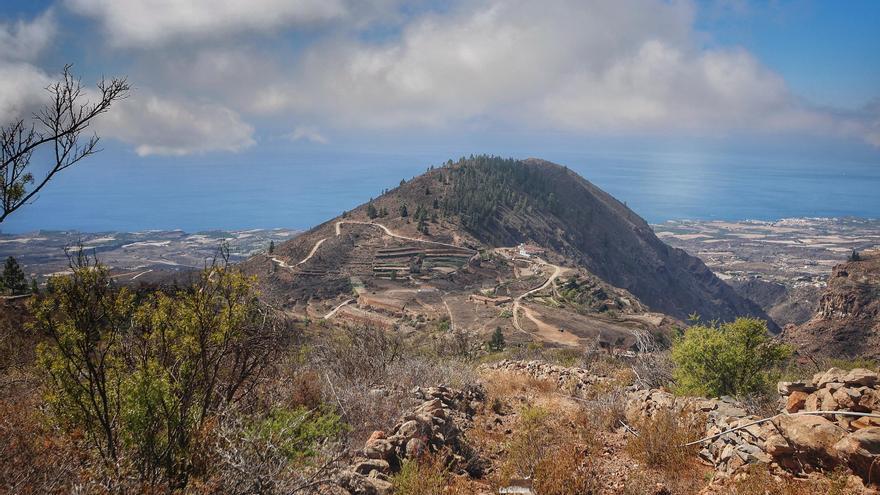
Tucked away behind the natural wonder of Tejina Mountain in Guía de Isora lies a tiny hamlet called Las Fuentes, or "The Fountains." Today, it's hard to imagine it was once a lively center for collecting water and farming in southern Tenerife. In the early 20th century, over a hundred people lived here, but now there are only five permanent residents. Among them is a couple: a Dutch woman and a man from La Palma, who moved to Las Fuentes two years ago after buying and fixing up one of the houses.
Meeting Félix Álvarez Vargas, the head of the local residents' association, reveals that Las Fuentes is full of history and memories. He's dedicated to keeping the stories of his great-grandparents, grandparents, parents, and most of the village's inhabitants alive. He steps out of his car, puts on a cap with the association's name, and adjusts his trousers. It's clear this tour will be a proper one, complete with a guide – a lucky break!
Earlier, a couple parked their SUV next to Félix's car. They're not from Las Fuentes, but they enjoy visiting the area. Antonio Morales Mora and Dori Álvarez Rodríguez join the tour, listening intently as Félix explains that he didn't live there himself, but points out the houses of his entire family.
Antonio and Dori own a small piece of land in El Choro, a hamlet just across from Las Fuentes, though they're from Acojeja. "I don't understand how people can abandon what's ours. I want to know about what's here," Antonio says sadly, putting on his cap. He doubts his son will continue working the land he inherited from his parents. This lack of younger generations taking over is a major reason why places like Las Fuentes are losing their population.
Roads also play a role. The road to Las Fuentes is paved, but it's very steep and winding. In 2019, the Tenerife Island Council spent over a million euros completely redoing the road. Before that, it was difficult to get there without a four-wheel-drive vehicle. "I remember when it rained, the road was a disaster, and we had to fix it ourselves," Félix recalls. "It could take almost an hour to get here, even though it's only four kilometers," he says, relieved by the improved road. Still, it's best not to meet another car coming the other way – it's a bit narrow.
Félix has embraced his role as a tour guide and created a route. Next stop: Clemente García Reyes. In 1991, Clemente bought a small plot of land and transformed it into a paradise: vineyards, fruit trees, a swing, a barbecue, a wine cellar, beehives made by his son, and an oven they built together. All this leads to a balcony with stunning views of the Guaría ravine. Now retired, Clemente is originally from Tegueste, but life brought him to southern Tenerife. He settled in Las Fuentes, and ever since buying his cave-house, he's been dedicated to taking care of his land. He's a man toughened by hard work, his plaid shirt and jeans fitting his slender frame perfectly.
Fortunately, Clemente's son is following in his footsteps. He has several potato fields outside the cave-house, standing out against the landscape. The green fields hang on the ochre, porous hillside, sparking the imagination. What would this hamlet be like if all its cultivated terraces were full of vibrant green? A true paradise for the senses.
The air might be filled with more sounds of daily life in the countryside. Félix, back in his role as tour guide, says that the last few times his mother visited Las Fuentes, he noticed tears in her eyes. "What's wrong, Mother?" he asked. She replied, "It's so quiet here now. Before, you could hear people, the joy of the neighbors, when they came to get water, children playing in the street... Now, it's so sad." Thanks to Félix's dedication, his mother's memories live on, and it's clear that Las Fuentes was once a place where its spring not only provided water, but also daily life.
Félix is clear about his goal and his plan to bring life back to the hamlet. He wants to revive goat herding, like his family used to do. He also wants the land to be farmed, as the soil in Las Fuentes holds water and moisture well. Clemente García's gourds are proof of how fertile the land is. Plus, he can boast about his wine.
Félix wants to promote rural and sustainable tourism. There are no vacation rentals or other types of accommodation that could occasionally revitalize the hamlet. Although the present looks somewhat bleak, Las Fuentes is well-preserved, both physically and in spirit. Abandonment doesn't seem to be part of its nature, and Félix's enthusiasm highlights this. Every ten minutes, he raises his arm, adorned with a silver watch, to point out something special or recall a piece of the hamlet's history.
One example is the hermitage of San José (Saint Joseph), which sits atop Tejina Mountain. Félix's uncle José contracted what seemed to be tuberculosis. Félix's grandfather promised San José that if he cured his son, he would honor him with a shrine. This promise eventually led to the construction of the hermitage, thanks to the efforts of all the residents of Las Fuentes. To reach the hermitage, you have to climb a steep slope, and its protected status limits what can be done to it. One of Félix's goals is to create better access to the church, which once housed the image of the saint. For safekeeping, the image is currently in Tejina de Isora.
The Álvarez Vargas family is deeply connected to the entire hamlet, like the water that's present in many corners of the area. The main spring and the area where people used to wash clothes is just below Clemente García's house. It can be reached by a steep, overgrown path. Félix wants to restore this path, which was so important in the past. In the 1930s, the spring became less important as more water tunnels were built. Now, it's a reminder of what water meant to the hamlet – an essential element that's even reflected in its name.