
Tenerife Guides Clash with Cabildo Over Access, Recognition
Tenerife mountain guide David Ledesma criticizes the local government's lack of recognition and restrictive access policies, which create significant operational challenges for highly qualified guides and contribute to unauthorized guiding in protected areas like Teide National Park.
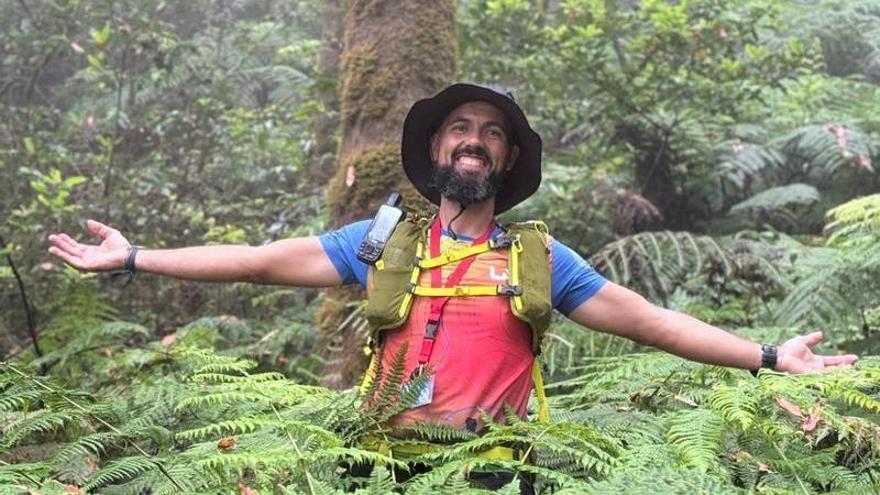
David Ledesma was born in Santa Cruz but spent his childhood in La Esperanza until he was 22. He feels a deep connection to the island's wild nature. He always loved the environment, but it was later in life that he discovered trail running and felt a special bond with Tenerife's unique mountains. This led him to become a guide. Until recently, his work in nature also had a charitable side: he donated the money he earned from races to the Pequeño Valiente Foundation.
When asked if there's a difference between his work and that of a regular tourist guide, David says, "Clearly, yes." He explains that they are sports technicians, not just guides who explain nature from a bus. They are trained to lead people in natural settings and also know about weather and rescue. They even take courses in remote areas to learn how to act in emergencies, rescue people, and most importantly, keep clients safe if an accident happens.
David and his colleagues are frustrated that the local government (Cabildo) doesn't recognize them, even though they are highly qualified. He says, "We are an obstacle." They've even been asked to form an association because they don't belong to any existing group. They've been trying for two years, but there's no clear path for their type of work. They rely on the Spanish Association of Mountain Guides (AGM), which provides legal services and holds meetings. Representatives from the AGM have even visited Tenerife to meet with the Cabildo to support them and raise awareness for mountain guides.
David believes the Cabildo needs to better understand their work and the reality of the situation. He gives an example: recently, a professional guide in the national park was fined. To control access to Teide peak via trail number 10 (Telesforo Bravo), the Cabildo sets aside only 40 daily spots for mountain guides and other professionals. This is out of 300 spots available each day, which fill up very quickly. Permits disappear instantly. "What happens if a client asks you to climb Teide tomorrow?" David asks. If a general public spot becomes available, a guide might take it to work. They use the required Tenerife On app, but when asked for official documents, they don't have permission to lead people. Guides can only use the professional spots, which are "totally insufficient." He also points out that only about 25 guide qualifications are issued each year. The Teide National Park's management plan states that you need a guide qualification, but David notes that "a carpenter, an electrician, or anyone else can obtain it."
David suggests that a solution would be to have an equal number of public spots and guide spots, or at least a fairer balance. Teide is one of Europe's most visited protected areas, with 5.2 million tourists annually.
He also mentions that there's a lot of "piracy" – people working as guides without proper authorization. He says some guides are even supported by public institutions and don't speak out because they don't want to jeopardize their connection to the administration. He adds that many unauthorized guides come from outside the island, taking public spots by pretending they are just a group of friends climbing Teide. "They say they are friends and go up calmly. That is happening."
David believes the current system is a "monopoly." He points out that the Cabildo already owns the cable car, which is one way to reach Teide peak. The next easiest routes are Montaña Blanca and Telesforo Bravo. He supports control and surveillance but not in the current way. He expects more problems when the Altavista Refuge reopens in January.
This issue isn't limited to Teide. David gives an example from Masca. As a guide, he knows there are three trails leading to the village. However, he can't take clients from Teno Alto, descend the ravine, and exit through Los Gigantes because he has to prove he didn't arrive in Masca by car. He's not allowed to do that activity as a guide. He questions why, if it's a protected area managed by a company paid by the Cabildo, he can't complete a traverse. He could do it, but where would he leave his car? People usually exit the ravine by boat, but guides are forced not to have their cars there, and he's unsure about public transport alternatives. At the entrance to the Masca ravine, visitors are asked for proof they arrived by bus or taxi. But if he leaves his car in Santiago del Teide, he can't walk the Cruz de Gala trail and descend Masca because he lacks parking justification. Like with Teide, he has to wait for the Cabildo's decisions to do his job.
David believes the restrictions are not so much about stopping locals, who don't visit the national park as often, but about limiting tourists who create vehicle traffic. However, it's hard to tell a car rental company that their clients can't access the national park. He suggests a system where visitors pay a fee at the airport when renting a car, which would authorize them to visit Teide. This could be controlled by license plate, requiring effort and management, but it's possible. However, he feels the current restrictions mainly affect locals like him. As a trail runner, he wants to run in Teide and will continue to do so, despite the access limitations.