
Tenerife Geothermal Project Confirms Potential for Renewable Energy Independence
Successful geothermal exploration in Tenerife has confirmed the island's potential for constant, renewable baseload power, prompting calls for a new regulatory framework to support Spain's transition away from fossil fuels.
The Canary Islands have taken a major step toward energy independence. The public-private group Energía Geotérmica de Tenerife recently announced positive results from surveys in Vilaflor, confirming that the island’s underground heat could be a viable source of electricity. After drilling 3,000 meters deep—a first for Spain—the project shows real promise in helping the islands move away from their long-standing reliance on fossil fuels.
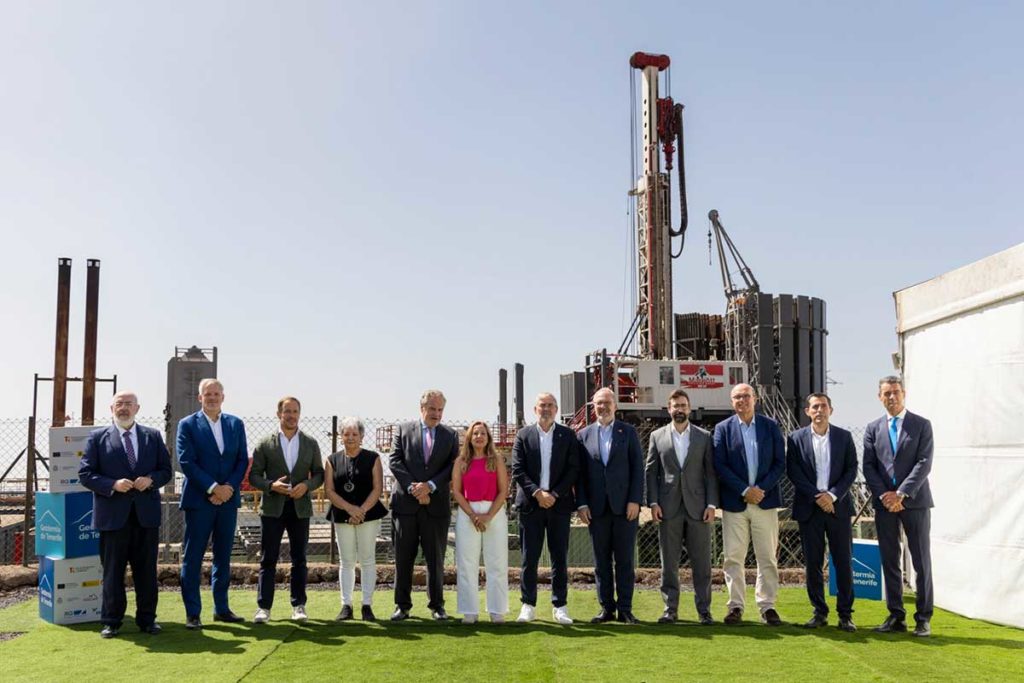
The project, half-funded by the Institute for Diversification and Saving of Energy (IDAE) using European grants, confirmed that the local geological conditions are suitable for geothermal energy. However, experts warn that moving from exploration to commercial use requires new regulations. At a recent event at the drilling site, industry leaders, including DISA’s Demetrio Carceller and Reykjavík Geothermal’s Magnus Ásbjörnsson, called for a clear legal framework and set tariffs to encourage investment, pointing to successful models in places like Germany and the Azores.
The project has strong backing from both regional and national leaders. Canary Islands President Fernando Clavijo and Secretary of State for Energy Joan Groizard Payeras both attended the event. Groizard noted that the government will use the data from Tenerife to help draft national regulations that will support the rollout of geothermal technology across the country.
Technically, this success is significant because geothermal energy provides "baseload" power—meaning it is constant and does not depend on the weather, unlike wind or solar energy. Local officials and international partners, including the Icelandic Ambassador to Spain, Kristján Andri Stefánsson, believe the project will do more than just provide power; it will also boost scientific collaboration and local economic development.
The next phase will focus on measuring exactly how much energy the site can produce. If successful, geothermal energy could move from a promising theory to a key tool in decarbonizing the Canary Islands, providing a much-needed boost to the energy security of this isolated region.