
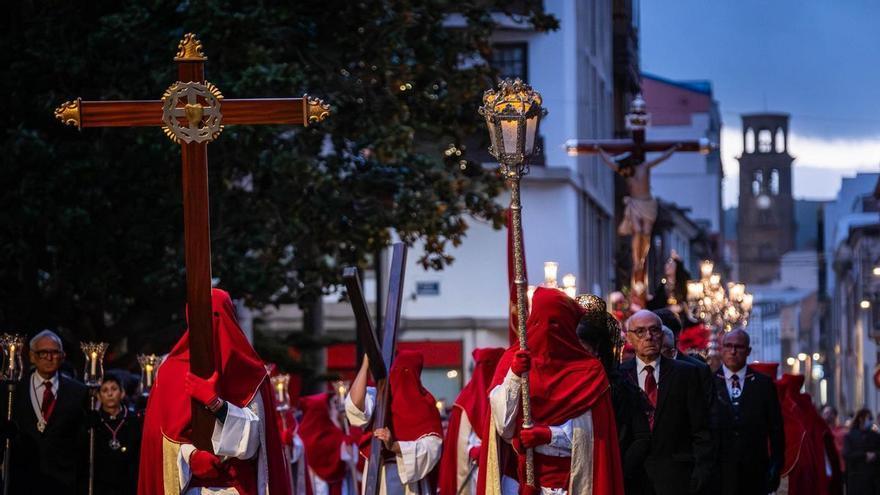
Tenerife Gears Up for Island-Wide Maundy Thursday Processions
Tenerife is marking Maundy Thursday with a series of island-wide religious processions and community events that highlight the region's deep-rooted cultural heritage and logistical coordination.
Maundy Thursday in Tenerife is set to be a major event, blending deep religious devotion with a massive logistical effort. Beyond the spiritual significance, the island’s busy calendar of processions highlights the vital role that local brotherhoods play in bringing communities together and preserving Tenerife’s cultural heritage.
The capital, Santa Cruz, and the historic city of San Cristóbal de La Laguna are the main hubs of activity. In Santa Cruz, processions begin at 6:15 p.m. with the Crucified Christ in San Andrés, followed by the Mandatum at 7:15 p.m. at Nuestra Señora de las Nieves, and the parade of Jesus Cautivo and the Macarena from La Concepción at 8:30 p.m. In La Laguna, a UNESCO World Heritage site, the focus is on the Mass of the Lord’s Supper at the Cathedral at 5:30 p.m. and the Holy Supper procession at 7:00 p.m., alongside a food drive in the Plaza de la Concepción and various services at local churches.
Across the north of the island, the schedule is equally packed. La Orotava holds its Mandatum at 5:00 p.m. and the Christ Bound to the Column procession at 10:00 p.m. Puerto de la Cruz will feature the Nazarene at 8:00 p.m., while Tacoronte hosts a 7:00 p.m. liturgy followed by a procession to El Calvario. Towns including El Sauzal, La Victoria de Acentejo, Santa Úrsula, Los Realejos, Garachico, and Los Silos are also hosting a variety of processions, featuring figures such as the Ecce Homo and the Christ of Humility and Patience.
In the south and the Güímar area, municipalities like Adeje, Arona, and Santiago del Teide are focusing on the Lord’s Supper and the Mandatum. Güímar has a particularly full schedule, including the transfer of the Blessed Sacrament and meetings of religious statues in the Plaza de San Pedro.
Managing these events requires close coordination between local brotherhoods and municipal security and traffic services. Ultimately, Holy Week in Tenerife has become much more than a religious observance; it is a central part of the island’s social life and community identity.