
Tenerife Forest Management Struggles as Traditional Pine Needle Collection Declines
Tenerife is struggling to maintain traditional pine needle collection as a wildfire prevention strategy due to a declining workforce and lack of interest in recent forest resource auctions.
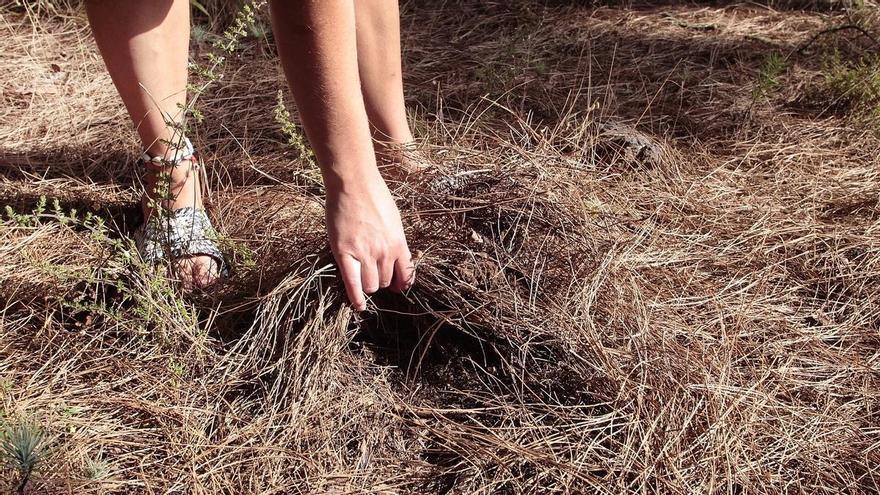
Forest management in Tenerife is facing a difficult paradox: while the island’s Council is stepping up fire prevention efforts by clearing forests, the traditional trade of collecting pine needles is fading away. A recent public auction for forest resources highlighted this decline, as a lack of interest from the industry suggests this age-old practice may no longer be a viable way to maintain the land.
The recent tender at the Santiago Martín Pavilion saw very little participation. The lot for the Vilaflor pine forest received no bids at all, leaving it vacant. Only two professionals—both with long family ties to the trade—stepped forward to secure rights in Arico and Icod de los Vinos, with winning bids of 645 and 900 euros, respectively. Meanwhile, the Paredes de Galindo lot, which had a starting price of 300 euros, failed to attract any interest and will need to be auctioned again.
The Council’s Natural Environment department emphasizes that collecting pine needles is more than just an agricultural activity; it is a vital part of forest safety. By removing dry needles from the forest floor, collectors reduce the fuel available for wildfires, a goal that has become even more critical following the major fire that hit the island in 2023. To support this, the Council is preparing new auctions for wood and wood chips from fire-affected areas, with plans to make it easier for local farmers in mid-altitude regions to collect these materials.
These activities are governed by the 2026-2027 Biennial Plan, which sets out clear rules and designated areas for extraction. Although the Council has modernized the process by introducing digital tools, such as geolocation for identifying lots and online payment systems, the trade is struggling due to a lack of new, younger workers.
The island’s administration now faces the challenge of finding new ways to encourage a practice that has historically helped both enrich the soil and protect the ecosystem. The upcoming auction for the Vilaflor lot will be a key test to see if the Council can successfully bridge the gap between preserving rural traditions and managing modern forest fire risks.