
Tenerife Food Banks Face Soaring Demand Amid Funding Shortfall
Tenerife food banks and charities are struggling to meet a 20% surge in demand, exacerbated by the loss of EU funding and insufficient local government support, leaving many organizations unable to accept new users.
Food banks and charities in Tenerife are seeing a big increase in demand, with requests up by about 20% this year. They're struggling to keep up with the number of new people needing help.
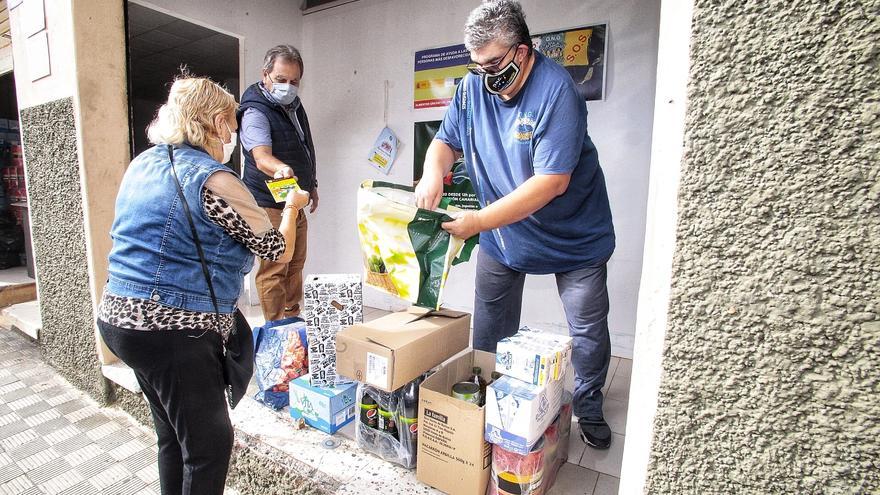
Luis Febles, who runs the NGO Sonrisas Canarias, says he's seen a 23% rise in people asking for food at his center after being referred by social workers. He expects to help over 15,000 people (around 4,700 families) this year, compared to 13,760 people (4,262 families) last year. Almost 15% of those they help are migrants, and this number is growing. Most of the demand is coming from La Laguna, Santa Cruz, Tacoronte, and Güímar.
The local government (Cabildo) is trying to help these groups after they lost funding from the EU, which used to provide food through the Spanish Agricultural Guarantee Fund (FEGA). However, the €2 million the Cabildo provides each year isn't enough, according to sources.
The Cabildo gives this money to organizations that distribute food on the island. Half goes to the Food Bank and the Red Cross (€1 million each). The other half is used to subsidize other NGOs based on their needs and the number of people they help. There are 75 registered charities on the island, but only about half are linked to the government's program.
Luis Febles appreciates the Cabildo's help, saying it's a "relief" after losing the EU funds. He and his team have been helping vulnerable people in the Valleseco neighborhood for 25 years.
Sonrisas Canarias is also using technology to improve its services. They've launched pilot cards with a chip that stores information about the families they help, such as their members, ages, and where they were referred from. This makes it easier to track statistics.
The provincial Food Bank, Bancoteide, distributes food to different organizations in Tenerife. Miriam Cañada, a spokesperson for the bank, says they're preparing for a big food drive on November 7th and 8th. They're hoping to get more than 250 volunteers, which is much more than the usual 15. This event, and the last few months of the year, are crucial for them as they wrap up projects and start planning for Christmas. She also notes that they're serving about 20,000 people a year through 95 NGOs, with a slight increase in demand in the south of the island during certain times of the year.
The Food Bank is working with the Cabildo on two projects: buying food and essential goods, and creating an inventory of goods. They've also been working to improve their facilities and become more sustainable.
Many of the 75 food distribution NGOs in Tenerife are located in Santa Cruz. One of these is the Kairós Association, which helps about 350 families (900 people) each month from the Los Gladiolos, La Salud, and Taco neighborhoods. However, they've had to stop accepting new users since February due to a lack of resources caused by the loss of EU funding. They now refer people to social workers who can direct them to other organizations.
Kairós receives €47,000 a year from the Cabildo, which helps them buy essential items like oil, eggs, and milk. However, this doesn't replace the EU funding they lost. They expect demand to increase during the Christmas season, and they'll do what they can to help, but the situation is getting worse.
A socialist councilor, Nauzet Gugliotta, withdrew his proposal to support social emergency care organizations because the local government weakened it. He believes the government isn't doing enough to help these organizations with their expenses or to involve them in decision-making.
The proposals included creating a program to support the organizations with technical, administrative, and training needs; establishing a local forum; increasing funding; providing subsidies for expenses; strengthening the online volunteering program; and promoting collaboration between different government agencies.