
Tenerife Farmer Warns Trade Deals Threaten Food Safety, Sovereignty
A Tenerife farmer warns that new international trade rules threaten Spain's food self-sufficiency and public health by allowing unsafe imported goods to undercut local organic produce.
A farmer from Icod de los Vinos, Tenerife, is deeply concerned about new international trade rules. She warns that food from outside Spain could pose health risks and threaten Spain's ability to feed itself.
Her story shows a strong connection to her family's farming past. The farm was started by her grandparents, and it's a special legacy that led her to agriculture after high school, even though her father wanted her to go to university.
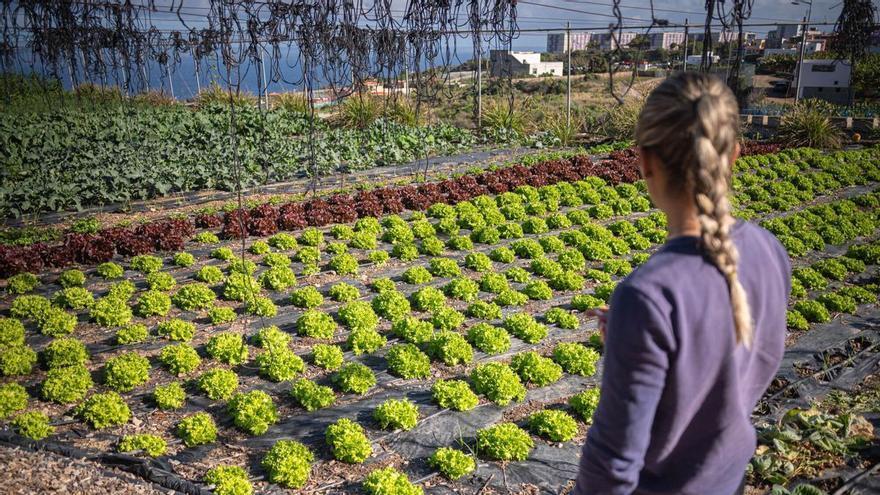
To save her farm from closing, she decided to switch from traditional farming to organic almost three years ago, with certification expected by April 2025. This change has been incredibly tough, a time she describes as having no income while the land healed and adjusted to new methods. It takes a lot of determination to make such a big shift, changing how soil and crops are managed to focus on natural microorganisms and the ecosystem, rather than quick chemical fixes.
Even with all the challenges, she finds great satisfaction in growing completely healthy food that benefits both people and the environment. She's concerned, however, that most people don't understand farming. This has led her to campaign for a new school subject on the basics of Canarian agriculture, meeting with various officials and politicians. She believes it's vital for younger generations to learn about this sector, which has always been a cornerstone of the Canary Islands' economy and culture.
She believes the biggest threat comes from unfair competition from imported goods. She points out that these products often don't meet the health standards required in the European Union and can contain chemicals that have been banned in Spain for decades. This, combined with the strict rules and red tape local farmers face, makes it impossible for them to compete on price. This situation puts the Canary Islands' and Spain's ability to produce their own food at risk. New trade agreements, like the one with Mercosur, only make things worse. She advises consumers to check product barcodes for the prefix 84.000, which indicates Spanish origin.
Sadly, iconic crops like the Canarian banana only survive thanks to European subsidies, as market prices (just 13 cents per kilo last year) don't cover what it costs to grow them. This, along with worries about water shortages – even though this winter saw more rain than recent years, it's still much less than historical levels like 2014 – creates a difficult outlook for farming. This 30-year-old farmer represents a new generation. Without seeking fame, she holds onto tradition and ecological principles to secure the future of Canarian agriculture, growing everything from bananas to a wide range of vegetables.