
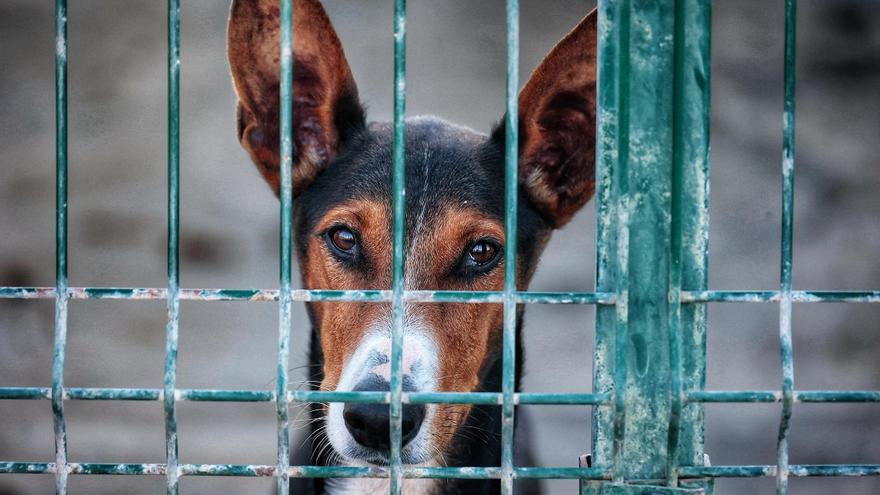
Tenerife Faces Animal Abandonment Crisis as Shelters Reach Triple Capacity
A new report from the Tenerife Island Council confirms that over 3,500 pets are abandoned annually, pushing local shelters to triple their capacity and prompting calls for both new infrastructure and stricter preventive policies.
Animal abandonment in Tenerife is no longer just a suspicion based on anecdotal reports; it is now an undeniable statistical reality. A recent report commissioned by the Island Council for the development of a new network of animal protection centers reveals that, on average, one dog is abandoned every three hours on the island. This totals more than 2,800 dogs and 700 cats every year. The data confirms what animal welfare groups have long warned: the problem is geographically uneven, with the north and the metropolitan area seeing the highest numbers, leaving local shelters operating at triple their intended capacity.
The report serves as a blueprint for the proposed "Tierra Azul" shelter in Presas del Campo, highlighting that current infrastructure is woefully inadequate. With over 300,000 registered pets—a number that doubles the island's population of minors—existing facilities are overwhelmed. In the metropolitan area, dog shelters are at 291% capacity, a level of overcrowding that threatens both animal welfare and the success of adoption efforts. The "Tierra Azul" project, designed to house 600 dogs and 400 cats, is intended as a necessary island-wide solution to relieve this pressure.
However, experts are cautious about the project. While the Minister of Animal Welfare, Valentín González, views the center as essential, organizations like the Association for the Defense and Protection of Animals in the Canary Islands (Adepac) warn that new buildings are not a cure-all. Adepac president Yahaira Thovar notes that abandonment is a complex issue, often linked to the hunting sector and a lack of oversight in rural areas. For shelters, the solution requires a broader approach, including mass sterilization, strict enforcement of microchipping, and better monitoring of ravines, where abandoned animals are particularly vulnerable.
The Island Council’s report highlights the urgent need for a shift in how the issue is managed. While municipalities are responsible for animal collection, the scale of the crisis has forced the island government to step in. The challenge is two-fold: building modern, humane facilities that go beyond the traditional "dog pound" model, while simultaneously implementing preventive policies to stop the constant flow of animals into shelters. As shelters continue to receive animals in desperate conditions, it is clear that while officials plan for new facilities, the daily reality of abandonment remains a significant test for Tenerife.