
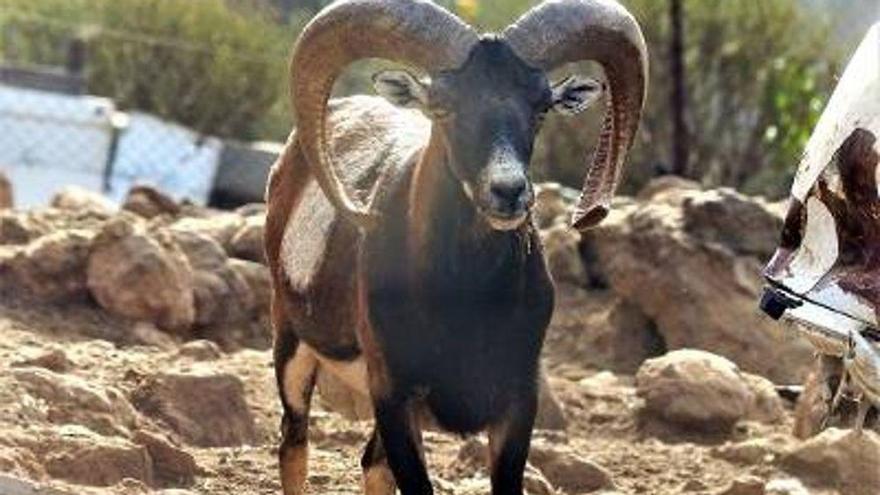
Tenerife Extends Invasive Mouflon Hunt, Closes Trails
Tenerife's Cabildo has added five extra days to the mouflon hunting season this January to control the invasive species threatening unique plant life, leading to the closure of some hiking trails and forest tracks.
Tenerife's local government, the Cabildo, has added five extra days to the mouflon hunting season this January. Mouflon are an invasive species that pose a threat to the unique plant life on Teide and other high areas of the island. As a result, some hiking trails and forest tracks will be closed. The Cabildo announced these affected routes yesterday in the Official Gazette of the Canary Islands (BOC), so hikers and other visitors can plan their trips accordingly.
The Tenerife Cabildo permits mouflon hunting during specific, carefully managed periods. These "wildlife control campaigns" aim to remove this wild sheep species (Ovis gmelini musimon), which was brought to Teide National Park and the Corona Forestal area in 1971 during the Franco regime. The original purpose was to allow big game hunting on the island. While there's no precise count of how many mouflon are left, as they are very hard to track, hunters estimate the population is under 200.
The last hunting campaign, where teams were authorized to catch mouflon, ran from October 1st to November 14th, 2025. However, the final three days were cancelled due to Storm Claudia. To make up for this lost time, and because removing these animals is a top priority for Teide National Park, the Cabildo has scheduled five additional hunting days this January 2026. Hunters with permits will be active on January 14th, 23rd, 26th, 27th, and 28th.
The Cabildo has a five-year deadline to completely remove the remaining mouflon from Spain's highest peak. This goal is outlined in the new Master Plan for Use and Management (PRUG) for Tenerife's natural treasure, which has recently become active. Mouflon are a major threat to Teide's plant life, which is notable for its 31 unique species found nowhere else.
Mouflon were brought to the island towards the end of the Franco dictatorship. The first 11 animals arrived from Corsica on a German plane in February 1971. This happened 17 years after Teide, a unique protected area, had been declared a national park. Despite this, the military regime ignored basic conservation rules, introducing these high-mountain sheep, native to Corsica and Sardinia, purely so that certain privileged individuals could enjoy big game hunting.
The first extra hunting day is this coming Wednesday, January 14th. It will take place in the West sectors (between Chiguergue, Las Fuentes, and Volcanes Negros) and Chacorche (between the path to Candelaria and Corral del Niño) within Teide and the Corona Forestal areas. This means 17 trails, listed on the 'Tenerife ON' website, will be closed. The following hunting day, Friday, January 23rd, will be in the Pico Viejo and Siete Cañadas sectors.
The remaining three hunting days are Monday, January 26th; Tuesday, January 27th; and Wednesday, January 28th. On the 26th, hunters will be in the Pico Viejo and Siete Cañadas sectors. On the 27th, they will be in Chacorche, and on the 28th, in the West and Southwest sectors. Overall, 34 trails and forest tracks on the summit will be closed to the public, as stated in the Cabildo de Tenerife's announcement, signed on December 29th and published yesterday in the BOC.
You can find detailed maps of the areas affected by these special mouflon control days on the Cabildo's open data portal.
'Tenerife ON', a digital app from the Cabildo that helps manage activities in the island's natural areas, is asking for public help "to protect the island's native plant life." Visitors should use the information provided by the app when planning outdoor activities. It's important to avoid the affected areas and their immediate surroundings during these mouflon control days in Tenerife's high regions.