
Tenerife Expands Fonsalía Desalination Plant to Boost Water Security
The Fonsalía desalination plant in Tenerife has completed a 4.3-million-euro expansion, increasing its daily water production capacity by 50% to bolster regional supply for agriculture and local communities.
The Fonsalía desalination plant in southwestern Tenerife is now fully operational following a major expansion, marking a significant step forward for the region’s water security. The Island Council (Cabildo) invested over 4.3 million euros to modernize the facility, ensuring it can better meet the needs of the area.
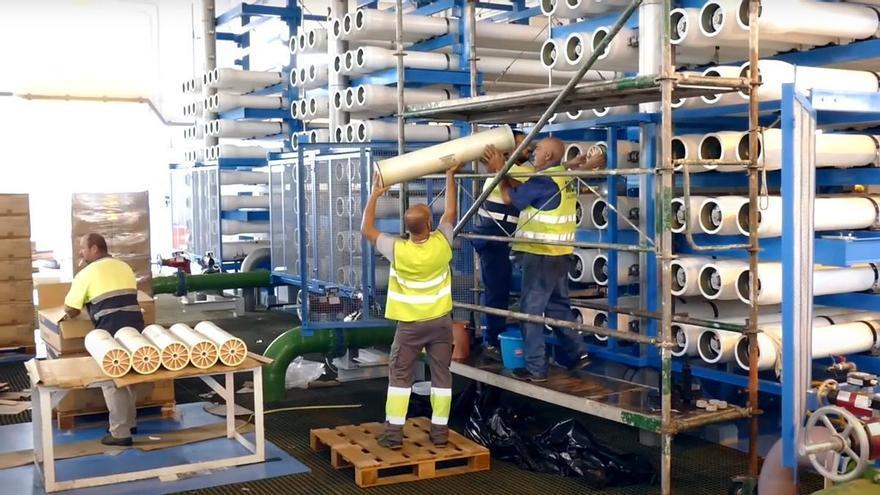
The plant’s daily capacity has increased by 50%, rising from 14,000 to 21,000 cubic meters. It also has a peak technical capacity of 22,600 cubic meters available for emergencies. This boost is vital for securing the water supply in Adeje, Santiago del Teide, and Guía de Isora. The upgrade was completed in two stages: a 3.2-million-euro project to install a fourth desalination module, followed by a 1.1-million-euro emergency investment to optimize filtration membranes after the island declared a water crisis in May 2024.
A large portion of this output—12,000 cubic meters—is dedicated to local agriculture, moving water from the Las Charquetas reservoir to the Lomo del Balo pond. This supply is essential for farmers in a region where traditional groundwater sources are under constant pressure. However, the actual amount of water delivered will still depend on factors like network maintenance and fluctuating demand from towns and irrigation groups.
The Cabildo’s Department of Natural Environment, Sustainability, Security, and Emergencies notes that while this expansion is not a permanent fix for the island’s water shortage, it significantly improves resilience against drought and depleted underground reserves. By reducing reliance on traditional water sources, the island can better support both its busy tourism industry and its agricultural sector. To ensure the plant’s equipment lasts as long as possible, the Island Water Council plans to maintain a steady output of 21,000 cubic meters per day rather than running the machinery at its absolute maximum.