
Tenerife Documentary Celebrates Roma History, Women's Role
Tenerife's Cabildo has released a documentary marking 600 years of Roma presence in Spain, which aims to promote inclusion, empower Roma women, and educate society about their rich cultural heritage.
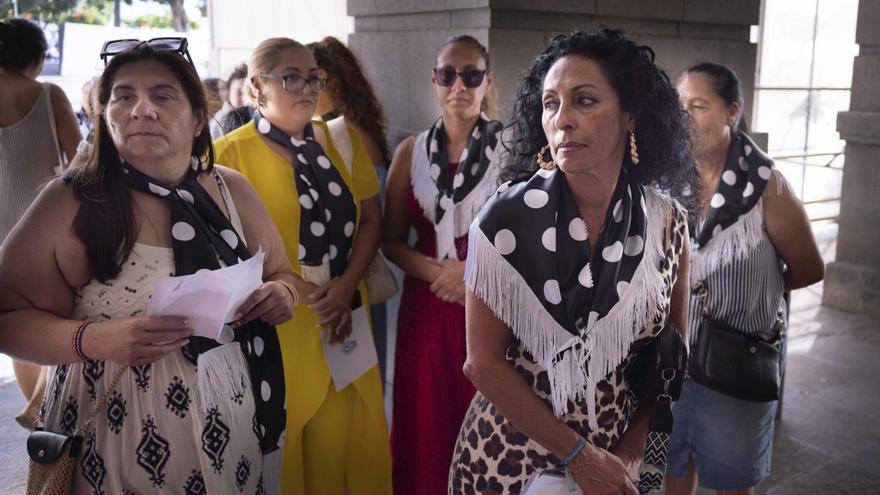
The Roma community is celebrating 600 years of presence in Spain. To mark this milestone, the Cabildo (Tenerife's island government) has released a documentary. While there's evidence of Roma in Tenerife dating back to the 17th century, the first established communities on the island arrived in the 1940s. The film also aims to highlight the crucial role of Roma women as drivers of change, helping to empower them.
Launched recently, the documentary doesn't just tell the story of the Roma people; it also seeks to educate society about their rich cultural and social heritage. This project, along with six portable displays that will tour public centers, is one of several initiatives from the Insular Table of the Roma People. This groundbreaking Canary Islands group works to boost the inclusion and involvement of the Roma community.
A key goal of the film is to empower Roma women by recognizing their vital role in driving change within their community and by helping to break down stereotypes and discrimination. This aligns with the purpose of important dates like International Roma Day on April 8th, and August 2nd, which commemorates the Samudaripen – the Roma Holocaust during World War II.
Tenerife's Roma community comprises over 3,000 people, spread across roughly 450 families. Major concentrations include La Cuesta (150 families), Granadilla-Arona (150 families), and Añaza (100 families). Various organizations represent them, such as the Socio Cultural Federation E Rroma Va, Socio Cultural Gitana Karipen, Socio Cultural Romí Emprendedoras, Roma Community of Tenerife, Socio Cultural Senda Flamenca, and Socio Cultural Crecer 7. While the Roma have their own distinct customs, they are, in essence, just like any other residents of Tenerife.
According to the Virtual Museum of the Roma People of Catalonia, Roma ancestors arrived in the Canary Islands centuries ago. Historical records from the Holy Office (the Inquisition) support this, showing two cases from the Canary Islands Tribunal. In 1629, María de Gracia, wife of coppersmith Pedro Morales, was prosecuted for "superstitious practices" and ordered to "listen to a mass." Later, in 1666, Gaspar Ortiz, a Roma man, faced charges of "lies and sorcery." These are the only two recorded cases involving Roma people during nearly three centuries of Inquisition tribunals.
Today's Roma families in Tenerife often carry surnames like Heredia, Carmona, Montoya, Santiago, Vargas, Fernández, Soto, Cortés, and Vicente. Many of their grandparents first came to the island from Malaga and Melilla in the 1940s for military service. Finding Tenerife a good place to live, they decided to settle and brought their families to join them.
Compared to other parts of Spain, the Roma community's establishment in the Canary Islands is relatively recent. Historically, many worked in "lote" sales, distributing goods door-to-door on foot. Most Roma men and women who settled across the islands come from interconnected family lines.
During the 1980s and into the late 1990s, their main commercial activity shifted from "lote" sales to almost entirely street vending. The late 1990s brought the biggest changes, as the growth of services and tourism drew more Roma families to the islands, some even migrating from as far away as Rosario, Argentina.
Águeda Fumero, the Cabildo de Tenerife's Councilor for Social Action, emphasized that "this documentary aims to further promote the inclusion of the Roma people on our island."
Josefa Santiago, president of the Romí Camela Nakerar Association, stated that "this experience gives a voice to the history of the Roma people in the Canary Islands." She also thanked the Cabildo de Tenerife for supporting the community, which, she noted, "often feels its legacy is overlooked by society."