
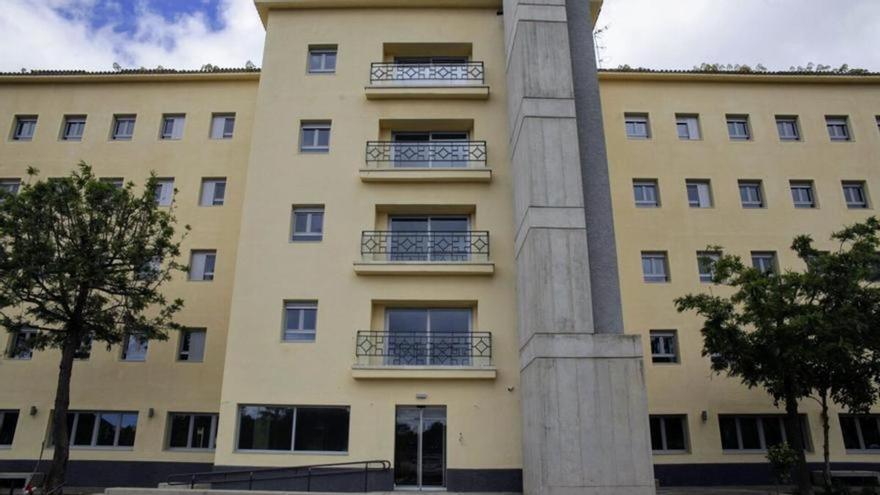
Tenerife Diocese Explores Using Buildings for Social Housing
The Diocese of Tenerife is exploring the use of some of its properties for social housing and student accommodation, acknowledging challenges such as their poor condition and limited numbers.
The Diocese of Tenerife is looking into whether some of its buildings could be used for social housing or homes. This idea comes at a time when it's hard to find affordable housing, especially for university students. Bishop Eloy Santiago of Tenerife said the Church is keen to help, but he also pointed out that many of their buildings are old and need a lot of work, which limits what they can do.
Speaking to reporters, the Bishop explained that the diocese keeps a detailed list of all the properties it receives, whether through inheritance, donations, or other means. All this information follows the latest transparency rules.
He reminded everyone that a transparency law requires them to report on their assets, and he confirmed that the Diocese's finances and properties are properly recorded. He also noted that the number of donations made during people's lifetimes has dropped significantly in recent years, which makes it harder for the Church to take on new projects.
All the diocese's properties are listed and registered. Some have even caught the eye of public bodies, like the University of La Laguna (ULL). The Diocese is currently talking with the university to see if some buildings could be used, particularly for student accommodation.
However, Bishop Eloy Santiago made it clear that many of these buildings are in poor shape, making it difficult to hand them over right away. "Several properties need significant repairs," he stated, adding that looking after historical buildings is a huge financial burden for the diocese.
Despite this, he mentioned that some of the Church's own living spaces might be available for short, specific periods if the circumstances are right. He stressed that these would be limited solutions, not something that could apply to all the Diocese's properties.
The Bishop recalled that the Church has already given up some of its spaces for social causes. A notable example is the diocesan seminary, which was freely given to the Government of the Canary Islands to help with the migrant crisis. An independent charity now uses and manages this building, working with local authorities.
Additionally, the diocese rents out some homes at affordable rates, and other properties are managed by social groups like Cáritas and various charities that support vulnerable people.
The Bishop admitted that, having only recently taken office, he doesn't know all the buildings in detail yet. However, he did mention a few specific properties belonging to the diocese. These include a building on Anchieta Street in La Laguna, another in Buenavista del Norte, and other sites they are discussing with organizations like San Juan de Dios and Restituciones.
Even so, Eloy Santiago wanted to make it clear that the diocese doesn't own a huge number of buildings, and their ability to hand them over is limited. "We're not talking about an immense quantity of properties," he said.
The Bishop concluded by repeating that the Diocese is genuinely willing to use its assets to serve both the Church and society, whenever possible and as long as it aligns with preserving their historical heritage. "We try to do so to the best of our abilities, although maintaining old buildings entails a great effort," he confirmed.