
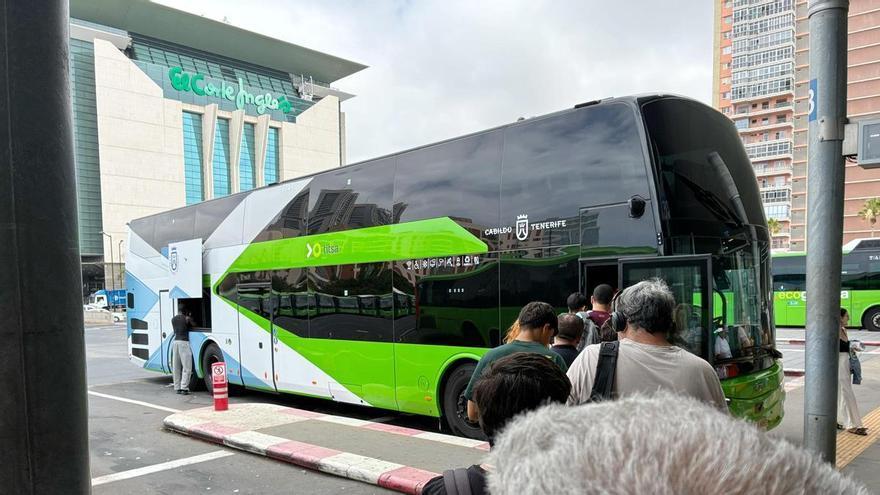
Tenerife Deploys Double-Decker Buses to Boost Capacity on Busiest Routes
Tenerife’s transport operator Titsa has introduced new double-decker buses to its fleet to increase capacity on high-demand routes and address record-breaking passenger numbers.
Titsa has introduced new double-decker buses to its fleet to serve the busy routes between Santa Cruz de Tenerife and the tourist areas of Costa Adeje and Los Cristianos. This move is a key part of the island’s plan to manage the growing number of passengers on its busiest corridors.
The need for these larger vehicles is clear: last year, line 110 carried over 1.15 million passengers, a nearly 15% increase from the previous year. By using these new buses, manufactured by Carrocerías Ayats, Titsa can increase seating from 59 to 85 per trip—a 44% boost in capacity. This is a vital step, as Tenerife’s public transport network saw a record 87 million passengers in 2025.
While the new buses have generated interest, they have also sparked public debate. Passengers have pointed out that capacity is only part of the solution; they are also calling for more reliable schedules and better alignment with the needs of daily commuters. Some have raised concerns about how these taller vehicles will handle the island’s strong crosswinds, while others are pushing for more frequent service, especially at night and on routes connecting to the north and the metropolitan area.
The Tenerife Island Council plans to add thirteen of these double-deckers to the fleet throughout the year. After their initial deployment on the TF-1 motorway, they will be introduced on line 108, which connects the capital to Icod de los Vinos. The administration expects this to add two million seats annually to the main road network.
Ultimately, while these double-deckers offer a practical way to move more people, their success will depend on how well they fit into a wider transport strategy. To truly reduce traffic congestion and reliance on private cars, the island must continue to focus on punctuality and ensuring the network meets the everyday needs of its residents.