
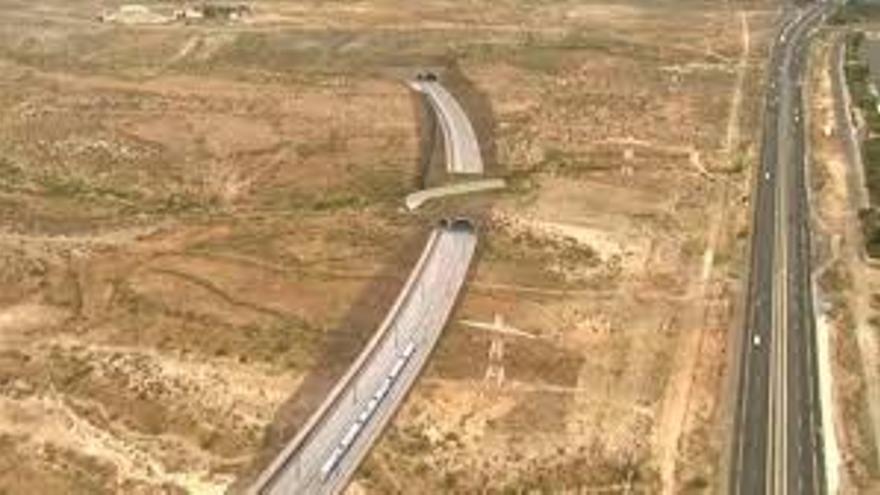
Tenerife Demands Spain Fund Southern Train Project
Tenerife is urging the Spanish government to include funding for its €2.5 billion Southern Train project in the 2026 national budget or through emergency laws to alleviate the island's severe traffic congestion.
Tenerife is urging the Spanish government to include funding for its Southern Train project in the 2026 national budget. If that budget isn't approved, they want the funding secured through emergency laws.
The local government on the island, made up of the CC and PP parties, will formally propose this on Friday. They want money for the Southern train and also highlighted the need for funding for a Northern train. These parties insist that this funding must be guaranteed, even if the budget is simply extended, by using special decree-laws.
They point to an agreement signed on September 4 by the Canary Islands Government, the Ministry of Transport, and the Tenerife Island Council. This agreement recognized Tenerife's unique situation and opened the door for national and European funding for rail projects. These projects aim to improve travel along the island's east-south corridor, connecting Santa Cruz de Tenerife with Tenerife-South Airport, and towns like San Isidro, Los Cristianos, and Costa Adeje – essentially, the Southern Train route.
The agreement also prioritizes improving connections between the Canary Islands and mainland Spain, developing tourism and energy infrastructure, and supporting key environmental projects through long-term agreements.
Spain's new Sustainable Mobility Law, which was approved by Congress and is awaiting Senate approval, specifically addresses railway development in the Canary Islands. It states that because the Canary Islands are a remote, isolated "Outermost Region" of the European Union, the Spanish government will help fund railway projects that meet certain criteria.
This national investment will be topped up by contributions from the Canary Islands Government and the Tenerife Island Council. They will also seek European funds because the project is very expensive, estimated at around 2.5 billion euros. The island council is currently updating the construction plans and environmental reports for the Southern line. The first section to be built, from San Isidro to Adeje, is the most advanced and is expected to cost about 950 million euros. The goal is to start bidding for construction work in early 2028.
Rosa Dávila, the island president, highlighted the severe traffic problem in Tenerife, noting that the island has almost one vehicle per person, making it one of the most motorized regions globally. This underscores the urgent need for better public transport. The Southern Train is projected to become Spain's third busiest commuter rail network, after Madrid and Barcelona, with an estimated 175,000 passengers per kilometer.
The first phase, costing 950 million euros, will build the 30-kilometer section from San Isidro to Tenerife South Airport and Adeje. This journey will take 25 minutes, reducing half a million car trips daily and cutting carbon dioxide emissions by 72,000 tons per year. Once fully completed, the train will connect the Metropolitan Area with the south in 39 minutes, significantly cutting travel times and reducing reliance on private cars.
This section will not only ease road congestion but also link important locations like the Las Chafiras industrial area, Tenerife South Airport, Los Cristianos port, and El Mojón hospital. In September 2024, the Island Council awarded a contract to update the project's Environmental Impact Study, which is expected to take eight months.
Tenerife's Sustainable Mobility Plan, looking ahead to 2035, proposes a complete island-wide railway network with four main regional lines. Besides the Southern train (Santa Cruz-Adeje), which is the most developed, and the Northern train (Santa Cruz-Los Realejos) – which might be an elevated system decided by a design competition – there would also be a Western line connecting Icod and Adeje, and an underground line between Güímar and La Orotava. The total cost for these guided transport systems is estimated to be around 5.735 billion euros.