
Tenerife Deaths Highlight Coastal Safety Responsibility Row
A jurisdictional dispute among Canary Islands government bodies over coastal safety responsibilities leaves smaller municipalities like Santiago del Teide to manage dangerous areas alone, a situation tragically highlighted by recent tourist deaths after ignored warnings.
Santiago del Teide's local council is currently alone in monitoring its coastline. A disagreement between different government bodies over who is responsible for coastal safety means that smaller towns, those with fewer than 20,000 residents, are left to manage dangerous situations by themselves, often leading to tragic deaths from recklessness.
Emilio Navarro, the mayor of this southern municipality, accuses the Tenerife Island Council (Cabildo) of avoiding its duties for coastal safety. The Cabildo, however, says it's not their job and points to the Canary Islands Government. The regional government, in turn, passes the buck back to local councils. Despite this, a law (Article 26 of the Local Regime Basic Law) does allow smaller councils like Santiago del Teide to ask for help from larger regional bodies for civil protection if they need it.
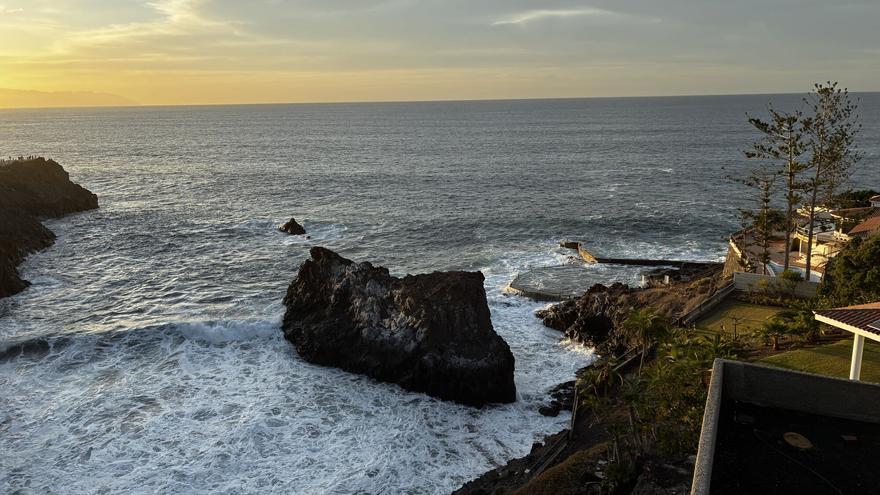
This issue has been brought into sharp focus by a recent tragedy. On Saturday, December 6, four people died at the Isla Cangrejo natural pool after ignoring safety warnings and barriers put up by the council. This incident has prompted the mayor to repeat a request he made to the Cabildo "many months ago" about beach safety, a request that has so far gone unanswered.
Back in 2018, the Canary Islands Government introduced a "beaches decree" that placed coastal monitoring and safety duties on local councils. However, the Canarian Federation of Municipalities (Fecam) challenged this. In 2023, the Supreme Court ruled that "civil protection is not the responsibility of municipalities with fewer than 20,000 residents," as Mayor Navarro explains, which applies to Santiago del Teide.
Following the Supreme Court's decision, Mayor Navarro argues that the responsibility still lies with the Canary Islands Government, which should then delegate it to the Cabildo. This situation remains unresolved. The regional Minister of Territorial Policy, Manuel Miranda, announced last September that a new decree is being drafted to clear up this legal uncertainty surrounding coastal responsibilities in the Canary Islands.
Navarro feels isolated. "When it comes to these issues, everyone tries to avoid responsibility or step aside," he says. He describes how the council puts up construction fences, secured with zip ties, to block access to the natural pool. "But people bring something sharp to cut them and get in," he adds. Local Police and Civil Protection officers respond when needed, but "they can't be there all the time, otherwise we'd have to station them along the entire coast." He gave an example from Tuesday, December 9, when someone ignored a police cordon at Playa de La Arena beach, even though the sea was rougher than it had been during the weekend tragedy.
Navarro stresses that the council's safety measures are driven by a "commitment to public service, safety, and protecting people." He points out that last Saturday's severe weather alert was specifically for Tenerife's northern coast. "Even so, we decided to fence off and close the area because we knew the sea would be rough," he explains. "We know that when the sea hits the northwest, it's dangerous," he adds, referring to Santiago del Teide's location on the island's southwest coast.
Beyond the four confirmed deaths at Isla Cangrejo, there was initial concern about a possible fifth missing person. However, Mayor Navarro confirms there are no missing person reports, so a fifth fatality is not expected. A search was still carried out on Tuesday morning, December 9. Including a recent death in Lanzarote, there have been nine coastal deaths in the Canary Islands in just one month, all of them tourists.
Navarro has doubts about a proposed new Civil Protection law from the Canary Islands Government. The law suggests adding specific safety information for tourists in various languages. "That won't help," he argues, "because we already have international signs in several languages, and people still ignore them."
He also reports that lifeguards and civil protection officers face aggression "when they tell people they need to leave a dangerous area." Navarro praises the lifeguards who were the first responders in the recent rescue, using jet skis. "One of them was hospitalized, and another was hit," he says. "Both lifeguards and local police officers risk their lives to rescue reckless individuals from the sea."
The mayor notes that he can't recall any locals being involved in sea incidents in recent years. "I used to visit these swimming spots when I was younger, and we never had a problem," he recalls. He acknowledges that the coastline "used to be mainly known by locals and residents. Now, thanks to social media and the desire for picturesque photos, it's much more widely known and visited by tourists." He adds, "We never have problems with residents in these areas because they completely respect the signs."
Access to the Isla Cangrejo natural pool is straightforward, with a staircase leading down to the swimming area from a narrow street. Navarro explains, "We have a project to improve and maintain all our coastal areas, but that doesn't mean we're making every spot suitable for swimming." He emphasizes, "We have the island's natural landscape and terrain, and what's essential is to respect the signs put up by the authorities to prevent tragedies like the one last weekend."
Shock and sadness have affected Santiago del Teide in recent days. The council declared two days of official mourning on December 8 and 9 for the four coastal deaths. "People are sad. A significant number of people have died, and it's not pleasant. We don't like to be in the news for these incidents," Navarro says. He believes that "given what happened, people understand that we are doing things correctly. We provide information, we have signs, fencing, and we monitor the areas. That's why people are reassured that their local government has responded."