
Tenerife Council Unveils Economic Strategy to Counter Middle East Instability
The Tenerife Island Council has launched a strategic plan to protect public services and residents from the economic impact of Middle East instability by establishing contingency funds and increasing support for energy and transport sectors.
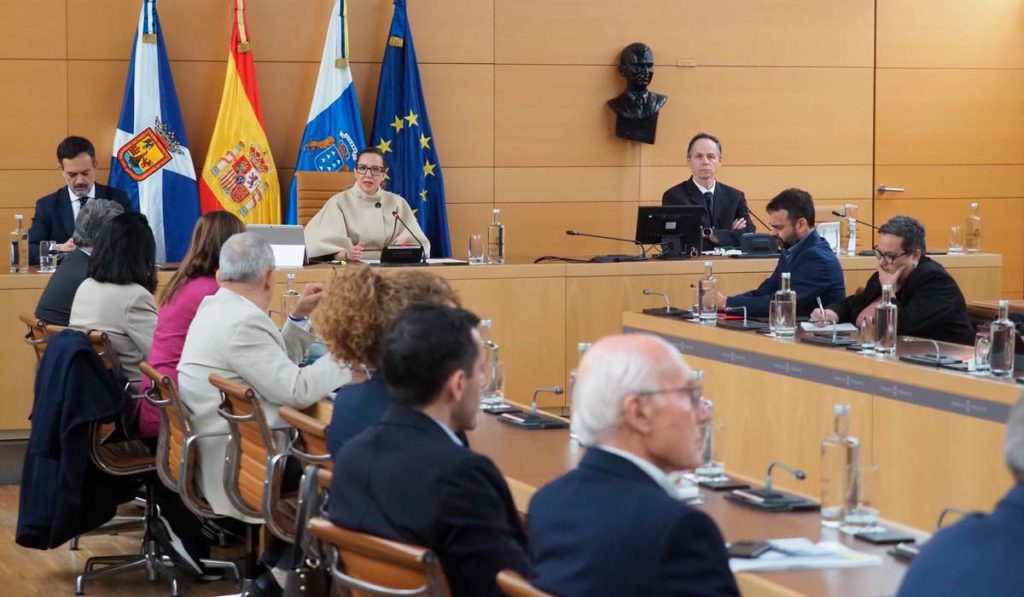
Managing the economic fallout from instability in the Middle East has become the top priority for the Tenerife Island Council (Cabildo de Tenerife). During an extraordinary plenary session requested by the Socialist group, Council President Rosa Dávila outlined a strategy to protect essential public services from volatile energy prices, highlighting how vulnerable the island’s economy is to global market shifts.
The council’s plan includes creating contingency funds for the Island Water Council and the transport company, Titsa. The goal is twofold: to prevent rising fuel and energy costs from being passed on to residents and municipalities, and to ensure that desalination, water treatment, and free public transport services continue uninterrupted. By monitoring economic data closely, the council aims to adjust its response to keep inflation from driving up the cost of living and logistics.
Beyond managing costs, the plan includes increased funding to combat energy poverty and housing insecurity. There is also a new aid program to help modernize freight transport fleets, which aims to reduce reliance on fossil fuels and support the primary sector.
The plenary session also highlighted disagreements between the government and the opposition. While President Dávila has urged the Spanish government and the European Commission to allow more flexibility in fiscal rules to protect investment, Socialist spokesperson Aarón Afonso criticized the government's slow response. The Socialist group argued that the executive has been too slow to coordinate with local municipalities and called for the removal of the "forest tax."
President Dávila stated that any further mobilization of resources will depend on an evaluation of measures already taken by the Canary Islands Government. She also called for a new economic monitoring forum involving all levels of government and social groups. This push for coordination reflects the challenges of managing a global supply crisis on an island, where the government argues that the central administration must show greater sensitivity to the unique needs of the archipelago.