
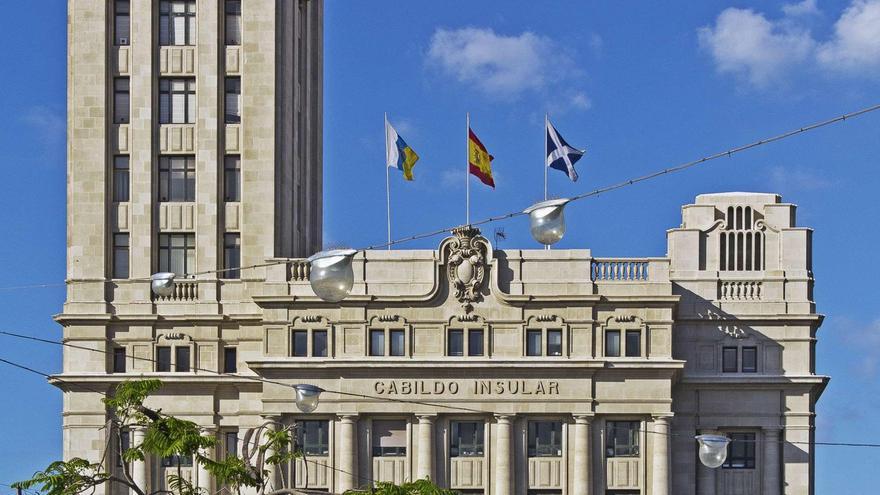
Tenerife Council Sells Research Bitcoins for €10M Profit
Spain's Tenerife Island Council is working to sell 97 bitcoins, originally purchased for €10,000 in 2012 by its research institute ITER, which have now surged in value to around €10 million, with the proceeds earmarked for new technology projects.
The Institute of Technology and Renewable Energies (ITER), part of the Tenerife Island Council, bought 97 bitcoins in 2012 for 10,000 euros as part of a research project. Thirteen years later, these bitcoins could be worth around 10 million euros – a thousand times their original price.
The Tenerife Council is now trying to sell these digital currencies, hoping to succeed this time after facing many problems in previous attempts. This is a complicated and unique process for a public organization in Spain.
Juan José Martínez, the Councillor for Innovation at the Tenerife Council, whose department oversees ITER, expects to complete the sale in the next few months. The nearly 10 million euros will then be used for research projects at the technology center, located on the coast of Granadilla de Abona.
Martínez shared that ITER officials are currently talking with a Spanish financial company. They are also working on the necessary paperwork to finally benefit from these cryptocurrencies, which have significantly increased in value since ITER bought them.
The island council cannot use regular banks because most, especially in Europe, do not deal with bitcoins. Banks are worried about the risks, such as a lack of rules and the extreme ups and downs in the digital currency's value. While bitcoins are not illegal, they still create uncertainty. The Council can only make this sale through financial companies approved by the Bank of Spain and the National Securities Market Commission (CNMV), which oversee financial transactions in the country. The company they are talking to meets these requirements.
The 97 bitcoins held by the Tenerife institute have reached a value of over 11 million euros. Despite initial doubts, bitcoin has steadily grown in value, particularly since 2017. Created in 2008, some investors believe it will be a common currency in the near future. It has become known not just as a rare digital asset but also as a symbol of financial independence and an alternative to traditional money systems. Major international banks like JPMorgan, Citibank, and Wells Fargo are even starting to accept it as security for loans.
A big boost for bitcoin came in January last year when the US Securities and Exchange Commission (SEC), similar to Spain's CNMV, approved financial investments in bitcoin. This was a moment many cryptocurrency supporters had been waiting for.
Martínez clarified that ITER's 10,000-euro bitcoin purchase was not meant as an investment. As part of its research and development work, ITER bought these 97 bitcoins for a technology project. The goal was to understand how blockchain, the technology behind virtual currencies, works.
"It was one of many investigations ITER carried out to understand and experiment with different technological systems," explained the councillor. He added that, for example, the institute is currently studying quantum technology, which uses principles of quantum physics to create advanced devices.
This ITER operation has not been without criticism. Pedro Martín, who was the president of the Council for the PSOE party in the last term, criticized it for the "secretive" nature of cryptocurrencies. Juan José Martínez (CC) explained that since the bitcoins were bought for an experiment, "it makes sense to try and sell them now that they have increased so much in value and invest the money back into ITER's own projects."
Blockchain, the technology behind cryptocurrencies, is like a huge online ledger that, according to Deepak Daswani, a senior computer engineer and cybersecurity expert from the University of La Laguna, "everyone can look at but no one can change." What makes it different from other storage systems, Daswani explains, is that it doesn't have a central network. Instead, millions of entries are spread across high-powered computers around the world.
Its uses go beyond just cryptocurrencies. It can store all sorts of information – like medical records, logistics data, food tracking details, or voting information. However, it is best known for being the system that allowed digital currencies to exist by removing the need for intermediaries and securely storing transactions.
An ITER computing team researched how to use bitcoin. They were interested in "mining," which involves checking and grouping transactions on the network into blocks. Each block contains several transactions and must be approved by solving a complex mathematical problem using random calculations. Solving this problem ensures that transactions are real and that bitcoins are not spent more than once, preventing fraud.