
Tenerife Council Commits €1.2 Billion to Environment, Public Safety
The Tenerife Island Council released its 2024-2025 Activity Report, outlining a 1.2 billion euro investment and comprehensive plans to protect the island's natural environment, enhance public safety, and advance towards a sustainable future.
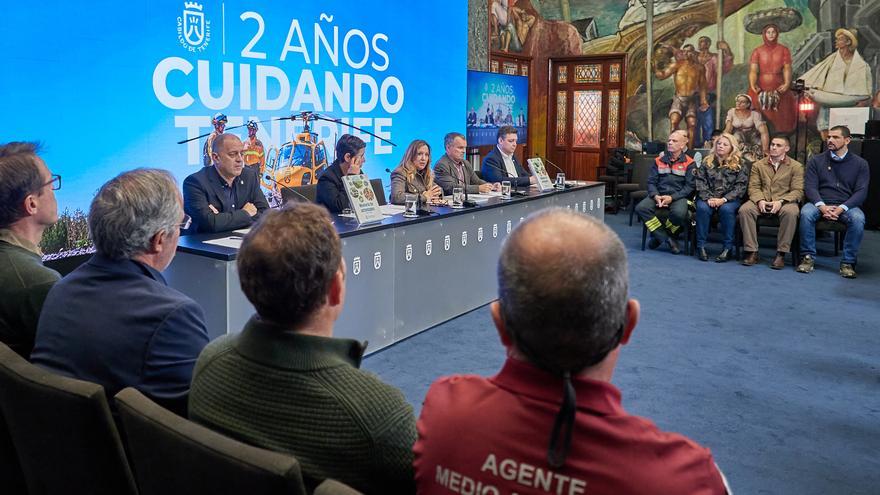
On Monday, the Tenerife Island Council released a summary of its 2024–2025 Activity Report. This report covers two years of hard work by the Department of Natural Environment, Sustainability, Security, and Emergencies. It outlines their plan to protect the island, improve public safety, and move towards a more sustainable, strong, and fair future for Tenerife.
Rosa Dávila, the President of the Island Council, said this period shows a strong dedication to protecting Tenerife's natural environment, keeping its residents safe, and preparing for big climate and social challenges. She noted that the investment in these areas, including the 2026 budget, totals 1.2 billion euros. This amount is almost as much as the island's entire annual budget, showing a significant commitment. President Dávila added that the report is more than just a technical record; it reflects a governing style that is forward-thinking, thorough, and responsible. She stressed that every action proves that protecting the land and ensuring public safety are key to Tenerife's well-being.
Blanca Pérez, the Island Councilor for the department, highlighted the human effort behind all these achievements. She stated that none of the report's contents would be possible without the daily, often unseen, work of the department's staff. Their dedication, professionalism, and quick response have ensured that projects are carried out effectively, even during tough times like fires, water shortages, or major security operations.
Pérez specifically thanked the technical, operational, and administrative teams, along with the cooperation from local councils, volunteers, and other government bodies. She said this teamwork has been crucial in turning public funds into real benefits for the people.
For the Natural Environment, the Island Council has established a unified management system for natural areas. This includes important work in Teide National Park, the rural parks of Anaga and Teno, and other protected sites across the island. Major achievements include restoring over 150 hectares and planting 90,000 plants after the 2023 fire – the largest post-fire restoration in Tenerife's history. They also invested over 11.2 million euros in forestry projects and improved crucial infrastructure for preventing and fighting fires.
Pedro Millán, the Island Director of Natural Environment, noted that the past two years have brought significant improvements in conserving and restoring Tenerife's ecosystems. He mentioned more careful planning, increased investment, and a strong focus on prevention and shared responsibility for caring for the land.
Additionally, rules for public use have been tightened. This includes using digital tools like Tenerife ON and the VENTE viewer, introducing an eco-tax in sensitive places such as Masca and Teide National Park, and significantly boosting environmental monitoring. More staff have been hired, leading to better control of rule-breaking and more effective penalties.
Regarding Security and Emergencies, the Department has pushed forward the "Tenerife Safer Island" strategy. This plan focuses on predicting risks, improving cooperation between different authorities, and prioritizing citizens' safety. In 2024 and 2025, the Island's Emergency Plan was put into action multiple times, and specific plans, like the one for volcanic risk, were further developed.
A key highlight was the international EU-MODEX Tenerife 2025 drill, Spain's first volcanic eruption exercise. It involved over 600 participants and international teams. Other advancements include modernizing CECOPIN, setting up early warning systems like ES-Alert, and increasing equipment and staff for Civil Protection and the Fire Consortium.
Iván Martín, the Island Director of Security and Emergencies, stressed that Tenerife is moving towards a more coordinated, modern, and prepared system. He said prevention, training, and technology are vital for protecting residents from any danger, making Tenerife a safer island.
For Sustainability and Waste, the Island Council has made record investments to update the Tenerife Environmental Complex and turn waste transfer stations into logistics hubs. This global investment could top 700 million euros in the coming years. New facilities for waste treatment, resource recovery, and sustainable energy production have been developed, greatly cutting carbon emissions and working towards energy independence.
At the same time, efforts have been boosted for separate waste collection, community composting, and "Circular Composting Communities." Innovative projects like "Sustainable Tenerife Fashion" have also been supported, strengthening a circular economy model with growing public participation.
Alejandro Molowny, the Island Director of Sustainability and Waste, reminded everyone that "the best waste is the waste that isn't created." He also noted that the changes in waste and energy management in Tenerife are a major turning point, setting the island firmly on a path towards a circular economy and a real reduction in emissions.
Regarding climate change and energy, Tenerife has joined European climate action groups, improved its Climate Change and Energy Observatory, and encouraged local energy communities and an island-wide network of electric vehicle charging stations.
Water management was another key focus during this time. This included declaring and extending a water emergency, putting over 75 immediate measures into action to ensure water supply, and making record investments in water infrastructure, desalination, purification, and water reuse.
Thanks to new management approaches, water that was previously lost in Tenerife has been recovered. The island has also met 85% of the measures suggested when the water emergency was first announced.
Investments in regional water systems in areas like Granadilla, Arona-Adeje, Valle de Güímar, and La Orotava will help Tenerife achieve zero wastewater discharge before 2030.
Additionally, significant progress has been made in creating the new Tenerife Hydrological Plan for 2027–2033 and in improving how flood risks are managed.