
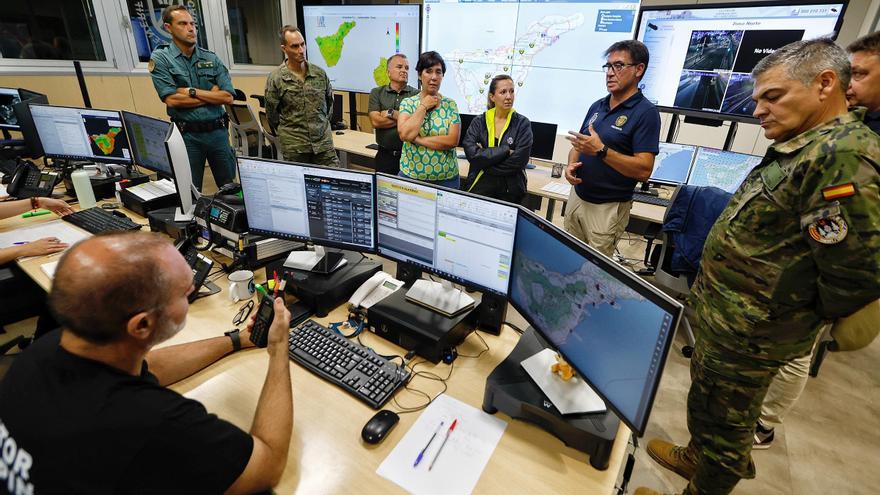
Tenerife Council Boosts Emergency Response with €3.6M Gesplan Contract
The Tenerife Island Council has awarded Gesplan a €3.6 million, three-year contract to manage the Island Operational Coordination Center (Cecopin), significantly enhancing emergency response and civil protection services across the island, with special support for smaller towns.
The Tenerife Island Council has given the public company Gesplan a contract worth 3.6 million euros to manage the Island Operational Coordination Center (Cecopin). This three-year agreement, which started on January 1st, will run until December 2028. It includes special support for towns with fewer than 20,000 residents. Through Cecopin, the island's Civil Protection Service will also improve how it handles emergencies, adding more staff and equipment to deal with crises like forest fires, extreme weather, sea incidents, or geological events.
Under the supervision of the Council's Civil Protection Service, Gesplan's responsibilities include overseeing all emergency-related activities, managing resources, planning and analyzing tasks, handling information and communication, and coordinating volunteers.
In the summer, the team managing fire operations will be especially strengthened, particularly at night. This is when the risk of fires remains high, and a quick response is always crucial.
The contract also sets up a Planning Unit. This unit will directly help towns with fewer than 20,000 residents – and especially those with fewer than 5,000 – to create, review, and update their local emergency plans.
The total value of this new contract with Gesplan is 3,642,938 euros for the next three years. Payments are set at 1,206,362 euros for 2026, and 1,218,288 euros for each of the fiscal years 2027 and 2028.
This new effort is part of a bigger project to restructure, modernize, expand, and strengthen the island's civil protection service. It marks a significant improvement in how emergencies are managed. This includes increasing staff at Cecopin and in the Security and Emergencies department, as well as introducing new automated procedures and applications to make handling incidents easier.
The island's Security and Emergencies department will introduce major changes, including new technology. This will involve an emergency information system for local councils, creating centralized tasks and clear procedures. With support from Cecopin managers and Civil Protection technical staff, this system will enable a swift response to any emergency on the island, setting up simple, direct guidelines for every situation.
Rosa Dávila, President of the Tenerife Island Council, stressed that "the safety of citizens is an absolute priority for this island government." She added that this new contract for Cecopin shows "a clear commitment to the island's towns" and to "constantly improving emergency management."
Dávila also highlighted that "working together with local councils, especially those with fewer technical resources, is essential to make the island better prepared for any emergency." She reminded everyone that "this is a promise we made directly to the municipalities of Tenerife, and we are now starting to deliver on it."
Blanca Pérez, the Island Councillor for Natural Environment, Sustainability, Security, and Emergencies, said that "our goal is to guarantee people's safety." She described Cecopin as "an essential service for managing any type of emergency on the island." The new contract with Gesplan, she explained, "will strengthen emergency prevention systems and improve the direct handling of incidents over the next three years."
Iván Martín, the Island Director of Security and Emergencies, commented that "this agreement is more than just paperwork; it's a clear commitment to anticipating, coordinating, and planning for emergencies." Martín emphasized that "this new commitment strengthens a working model that helps us foresee risks, make better decisions, and improve coordination among all involved government bodies and services."
The main goal of this initiative, especially for an island with challenging terrain and many different risks, is to use anticipation as a key way to protect people, property, and the land. The Island Council aims to manage each emergency better than the last, using more information, better coordination, and a stronger ability to respond. The Security and Emergencies department concluded, "This contract strengthens our efforts and moves us closer to a shared goal: making Tenerife a safer island every day."