
Tenerife Conducts Major Volcanic Emergency Drill to Test Response Protocols
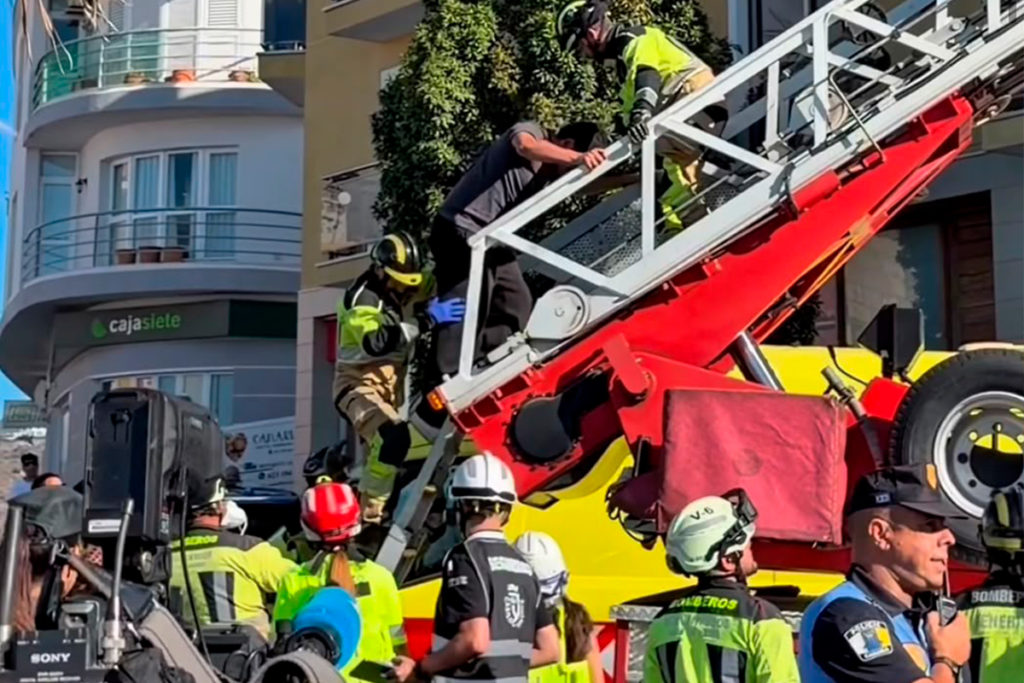
Tenerife recently conducted "Volcanex 2026," a large-scale civil protection exercise involving 1,500 personnel to test emergency response protocols and evacuation strategies for a simulated volcanic eruption.
The recent "Volcanex 2026" civil protection exercise in Tenerife has underscored the logistical challenges of managing a volcanic emergency on an island. Coordinated by the Tenerife Island Council, the operation tested the response to a simulated eruption in the island's southwest, involving over 1,500 personnel from 70 different organizations.
As one of Europe’s largest emergency drills, the event brought together security forces, the military—including the Military Emergencies Unit (UME) and the Spanish Army—emergency services, and humanitarian groups. Operations were directed from an Advanced Command Post in Guía de Isora. The team used the ES-Alert mobile warning system to manage crisis phases, which included evacuating the towns of Chirche and Aripe and mobilizing resources in Santiago del Teide and Adeje.
Technically, the simulation evaluated how scientific experts and political leaders coordinate during a disaster. The scenario involved signs of volcanic activity, such as shallow earthquakes, ground movement, and gas emissions, requiring the team to carry out priority evacuations for vulnerable residents and those with limited mobility. The use of 33 drones and the involvement of over 400 students highlighted the initiative's multidisciplinary approach to building a culture of prevention against the Canary Islands' natural volcanic risks.
The exercise also addressed practical operational hurdles, such as how to manage pets during evacuations and how to maintain essential infrastructure, including the preventive closure of Teide National Park. Island Council President Rosa Dávila emphasized that these drills are vital for making informed decisions that protect the public before a real emergency occurs.
Following a similar exercise in Garachico last year, this deployment is part of a broader island-wide strategy. Future tests are planned for Vilaflor de Chasna, with a specific focus on protecting historical heritage in San Cristóbal de La Laguna. By integrating simulations with real-time decision-making, the island is professionalizing its emergency protocols—a critical priority for public safety in a volcanic region.