
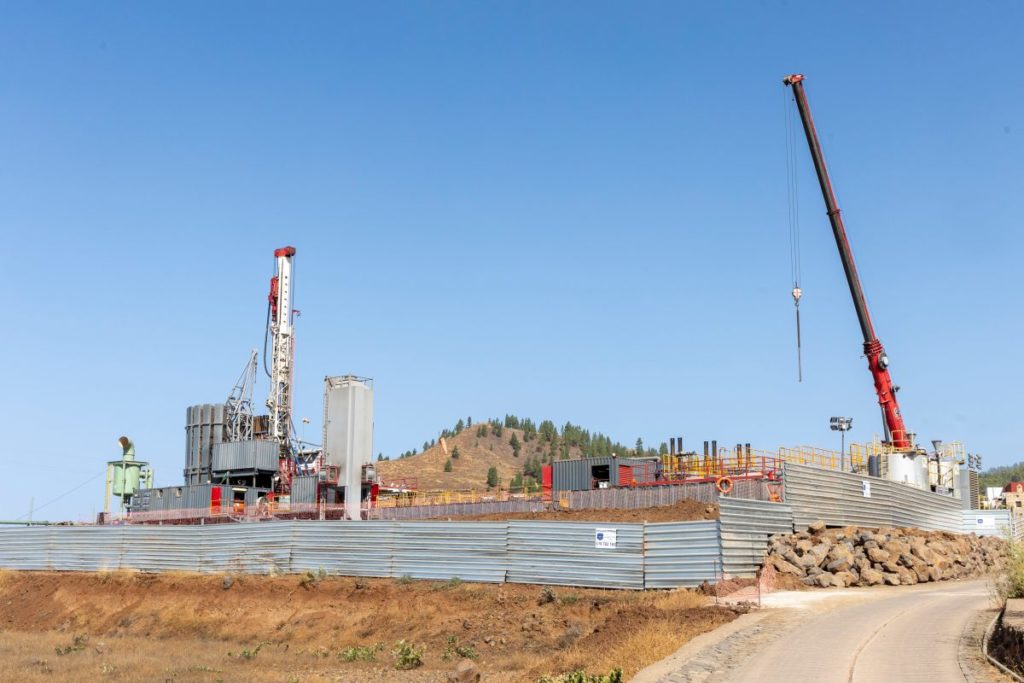
Tenerife Completes Spain’s First High-Enthalpy Geothermal Borehole
Tenerife has successfully completed Spain’s first high-enthalpy geothermal borehole, marking a significant milestone in the Canary Islands' transition toward a reliable and independent renewable energy supply.
The Canary Islands have reached a major milestone in their transition to renewable energy. Spain’s first high-enthalpy geothermal borehole has been successfully completed in Vilaflor de Chasna, Tenerife. According to the Tenerife Geothermal Energy (EGT) consortium, drilling over 3,000 meters deep has confirmed the presence of the three essential elements for geothermal power: heat, water, and permeable rock.
This discovery, presented to regional and state officials on September 16, could change how the islands manage electricity. Unlike wind or solar power, geothermal energy provides a constant, 24-hour supply of electricity. It is also highly efficient, requiring up to 22 times less land than equivalent wind or solar farms.
The project is a partnership between the Tenerife Island Council (through ITER and Involcan), the company DISA, and the Icelandic firm Reykjavík Geothermal. The team is now working with the Ministry for the Ecological Transition and the European Commission to create a financial framework that supports the 43.2 million euro investment. They have proposed a "Contract for Difference" system, which would stabilize long-term energy prices and reduce the financial risks associated with this new technology.
This breakthrough is significant for the islands' energy independence. Currently, the Canary Islands rely heavily on imported fossil fuels, leaving them vulnerable to global market price swings. EGT estimates that if 300 megawatts of geothermal capacity were installed, the island’s electricity system could save 130 million euros.
Beyond cost savings, geothermal energy offers a more secure and reliable power supply for the archipelago, which has historically struggled with grid stability. Both the regional government and the Tenerife Island Council view this as a vital step toward decarbonization and energy sovereignty. The project’s success now depends on integrating this technology into the national energy grid, turning a successful research trial into a permanent, strategic asset for the islands.