
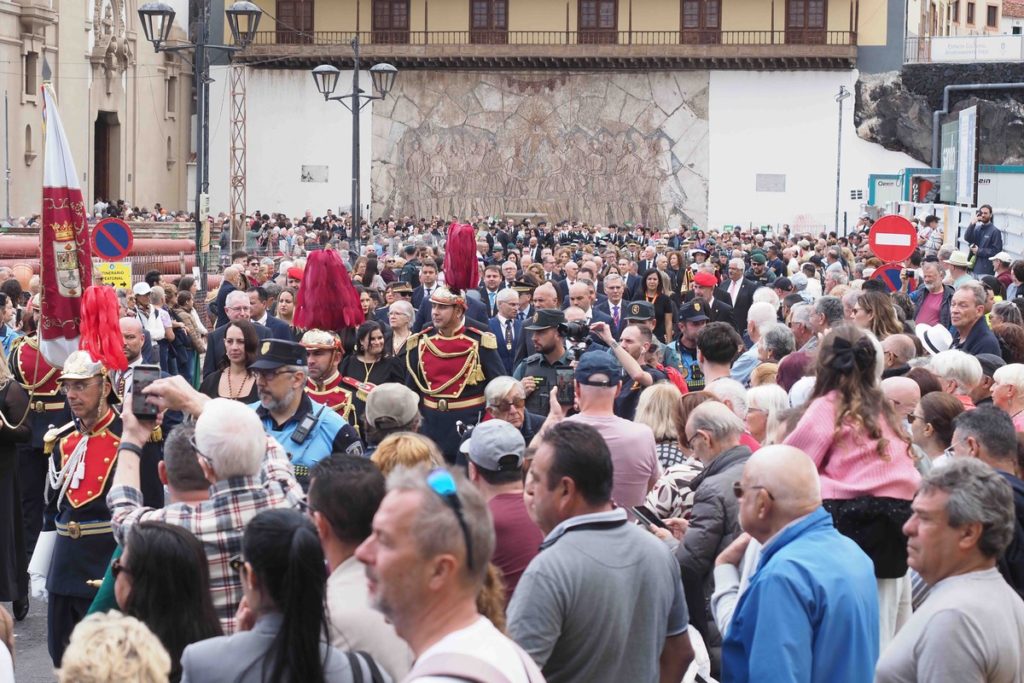
Tenerife Citizens Protest Council’s Choice of Official Island Day
A citizens' group in Tenerife has launched a petition and sought ecclesiastical support to protest the local council's decision to designate February 2nd as the island's official day, arguing it conflicts with the long-standing religious feast of the Virgin of Candelaria.
The Tenerife Island Council’s recent decision to mark February 2nd as the island’s official day has triggered a backlash from a citizens' group called the "2 de Febrero" Civic Platform. The group has launched an online petition urging the council to reconsider the date, arguing that it clashes with a holiday of deep historical and religious significance.
The conflict stems from the fact that February 2nd is already the feast day of the Virgin of Candelaria, the patron saint of the Canary Islands, a tradition dating back to 1497. Alfredo Arencibia, the group’s spokesperson, clarified that they do not oppose the creation of an island day, but rather the choice of date. He believes the overlap undermines a heritage that holds global importance, noting that devotion to the Virgin of Candelaria is shared by the Canarian diaspora in over a thousand locations worldwide.
The platform has taken its campaign beyond local politics. After failing to secure a meeting with the Island Council, the group reached out to ecclesiastical authorities, including the Pope and local bishops. They are asking these leaders to emphasize the cultural and spiritual importance of the date, fearing that the new political holiday will overshadow a tradition that has lasted for over five centuries.
The group, which describes itself as non-partisan, argues that the council’s choice lacks foresight. They are calling on the administration to find a different date that honors Tenerife without interfering with a 529-year-old celebration. With no official response from the council, the platform plans to continue its protests through social and cultural events, aiming to spark public debate and protect the island's historical identity.