
Tenerife Carnival Murgas Contest Returns Next Week
The Tenerife Carnival Murgas Contest, a century-old tradition of satirical singing groups commenting on social issues, returns next week to Santa Cruz.
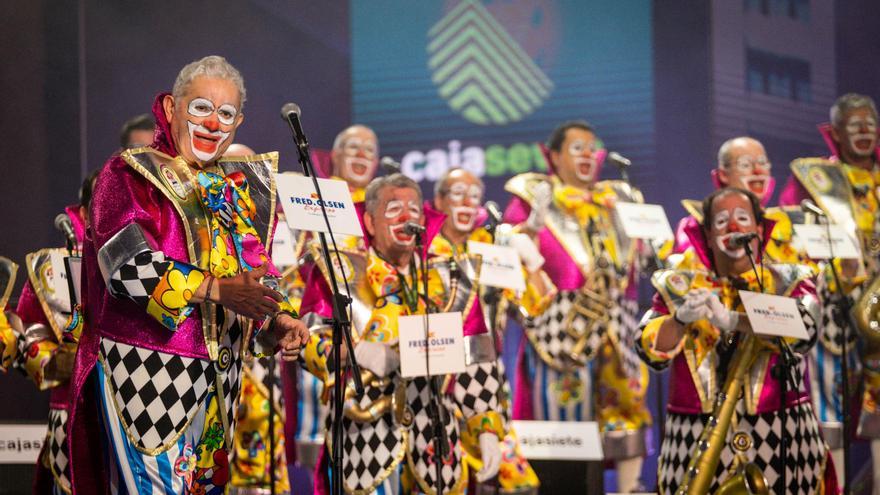
Next week, the Tenerife Carnival Murgas Contest is back! This is one of the most eagerly awaited events for the people of Santa Cruz. Starting next Monday, these satirical singing groups will perform again at the Tenerife Exhibition Centre, continuing a long-standing tradition that truly captures the spirit of the Carnival. It's an especially significant event because the Canary Islands' oldest murga group originated in Tenerife and is still active today.
Many see the Murgas Contest at the Santa Cruz de Tenerife Carnival as more than just a music competition. It's considered the social voice of Tenerife's people, a place where, every February, thoughts many share but few dare to speak are sung out loud.
For over a century, murgas have used irony, humor, and sharp criticism to comment on the political, economic, and social issues of the Canary Islands. This tradition has made them a vital part of the archipelago's living culture.
The murgas tradition began in 1917. That year, the crew of the 'Laya', a gunboat from Cádiz, took part in the Santa Cruz Carnival. They performed satirical songs similar to Cádiz's 'chirigotas'. This impromptu show immediately captivated the people of Tenerife.
A year later, 'Los Bigotudos' formed. This group is seen as Tenerife's first murga and the direct ancestor of today's Afilarmónica NiFú-NiFá, the oldest and most respected group in the contest. From then on, the Carnival was transformed, with satirical songs becoming central to the festivities.
Unlike the groups in Cádiz, Tenerife's murgas developed their own distinct style, using strong percussion and cane whistles to create a louder, more recognizable sound.
A big change happened in 1961 when the Santa Cruz City Council held the first Official Murgas Contest in the Bullring. From that point, the competition became an official event and quickly grew in quality, participant numbers, and popularity. That same year, the Afilarmónica NiFú-NiFá, led by Enrique González Bethencourt – a hugely important figure in Carnival history – made a powerful debut.
The murga's origins can be traced to the 1950s. During Franco's dictatorship, the Carnival survived under the name 'Winter Festivals'. At that time, a group of friends called 'Los Bigotudos' sang satirical songs that managed to evade censorship. It was in 1961 that this group, which still exists today, was officially formed.
According to the murga's website, the group got its historic name during a rehearsal, following what's known as the 'bass drum incident'. The members had painted a company's name on their instrument. The owner was not pleased and demanded they remove it at once, famously saying: "Put whatever you want, put Ni Fú Ni Fá, but take my name off."
Enrique González loved this phrase and decided it would be the murga's permanent name. And so, the Afilarmónica NiFú-NiFá was born. This group went on to win the contest every year from 1961 to 1965, establishing the groundwork for what would become one of the Carnival's most anticipated events. Since then, they have opened the competition annually, a testament to their long history and respected status.
The very next year, in a remarkable act of generosity, they chose to step back from competing. Instead, they participated outside the competition, a role they still hold today as the Carnival's masters of ceremonies. 'La Fufa' (referring to the group) also created 'el Cubanito', one of the Tenerife Carnival's anthems, which is still performed in new versions today.
After its founder passed away, the group faced a challenging period of adjustment, but it continues to thrive. They have updated parts of their performances while staying true to their core style: clear singing, a steady rhythm, and refined humor. Indeed, when the Afilarmónica NiFú-NiFá sings, it's the history of the Tenerife Carnival itself that resonates.