
Tenerife Cabildo Staff Shrinks 29% Amid Outsourcing Dispute
Tenerife unions accuse the Cabildo of deliberately outsourcing public services, citing a 29.3% staff reduction and a €4.5 million contract to Gesplan for recreational areas despite available qualified internal staff, a strategy the governing coalition defends as a transitional necessity.
Unions representing staff at the Cabildo de Tenerife believe that the ongoing reduction in employee numbers is due to the "outsourcing of public services." They point out that in just four years, the workforce has shrunk by 29.3% – from 750 employees registered for elections four years ago to 530 for the upcoming elections in April. This contrasts sharply with the number of civil servants, which has significantly grown to 1,058. For the staff representatives, this isn't a random occurrence but a deliberate strategy.
The Works Council highlights that there are vacant positions with allocated budgets and active lists of qualified candidates. They argue that this situation should prompt the Cabildo to reconsider its management approach before making long-term outsourcing contracts permanent.
Elesbaan Rodríguez, from the Comisiones Obreras (CCOO) union, stresses that the most recent outsourcing deal comes at a time when the Cabildo is cutting staff and has many unfilled jobs. He refers to the 4.5 million euro contract given to the public company Gesplan to manage the island's twenty recreational areas. Rodríguez points out that there are qualified workers available who "passed a tough selection process, including knowledge of local flora and fauna." He explains that 57 of these workers secured permanent positions, with another hundred remaining on a reserve list. He calls it "unfair and contradictory" that these highly qualified individuals cannot access this employment. He highlights that this approach breaks an agreement made at the Negotiation Table, which aimed to hire these staff members to prevent further outsourcing.
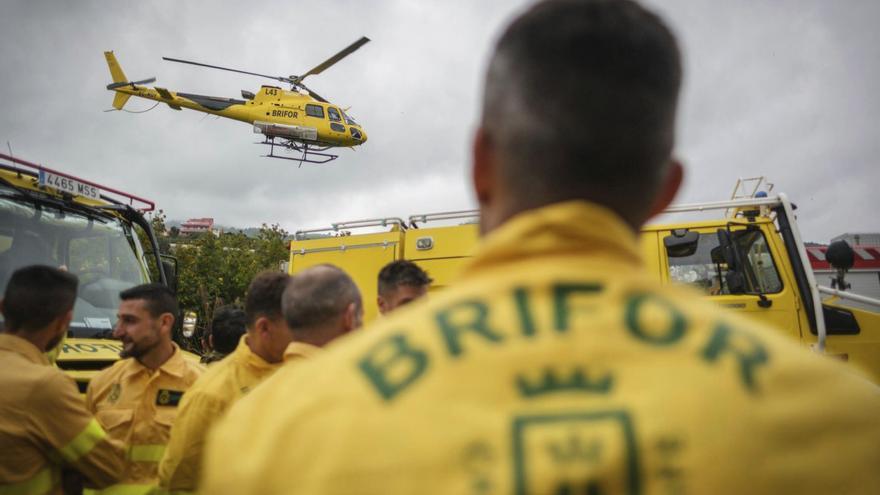
Rodríguez emphasizes the importance of the recreational area warden role, which requires qualifications in areas like education, languages, or expertise in protected natural areas, trails, and various nature-based leisure activities in Tenerife. This work was typically handled by environmental operators who, due to a new Forest Firefighters Law, could no longer solely work in fire prevention and needed a "second activity." CCOO proposes adopting a model similar to Gran Canaria's, using public employees rather than temporarily subcontracting workers who may have little or no experience.
Alejandro Dorta, representing the General Confederation of Workers (CGT), adds to this criticism. He reveals that the official job list indicates the staff workforce should be 814. However, with only 557 actual staff – including those on leave or in higher-level positions – just two-thirds of the planned workforce is currently covered. Dorta criticizes the outsourcing model, particularly through Gesplan in the Natural Environment sector, noting that a similar situation, involving a wider range of companies, also exists in the Roads department.
At Friday's plenary session, the Socialist Group in the Cabildo de Tenerife put forward a motion calling for the use of "available in-house staff" to manage recreational areas and camping zones, a task that has been given to Gesplan for four years. The governing coalition (CC and PP) rejected this motion. Blanca Pérez, the Minister of Natural Environment, explained that creating "a new Job List (RPT) is a priority" to reflect operational changes needed after the 2023 fire and the new Forest Firefighters Law. She stated that the purpose of the Gesplan contract, which she described as "transitional," "has not been understood." Pérez asserted that the measure resulted from negotiations during the previous administration (when the PSOE led this department) and clarified that "the contract for recreational areas was extended as a temporary measure, but it has been in place since 2011." She added that after the fire, "we negotiated a more robust design change with the workers, even modifying schedules and increasing the size of the teams."
This led to an increase to 150 staff last year and 180 planned for next year. Pérez also pointed out that current regulations must be followed, explaining that "second activities cannot be carried out in recreational areas without the necessary operational staff." She recalled that "there is no official Job List (RPT) for forest fire operations," so once it's updated, staff will be available for recreational areas; but in the meantime, the service must be reliably covered, she emphasized. Pérez announced, "We are going to sit down with the unions to negotiate, and not a single position will be eliminated." The Negotiation Table is set to meet on the 10th, a meeting that had already been planned.