
Tenerife Business Group Calls for 'Mobility Emergency' Over €2bn Road Shortfall
Tenerife business group Alisios Norte, backed by the Chamber of Commerce, is urging the declaration of a "mobility emergency" to address a €2 billion road investment shortfall and accelerate critical infrastructure projects, particularly in the island's poorly connected North.
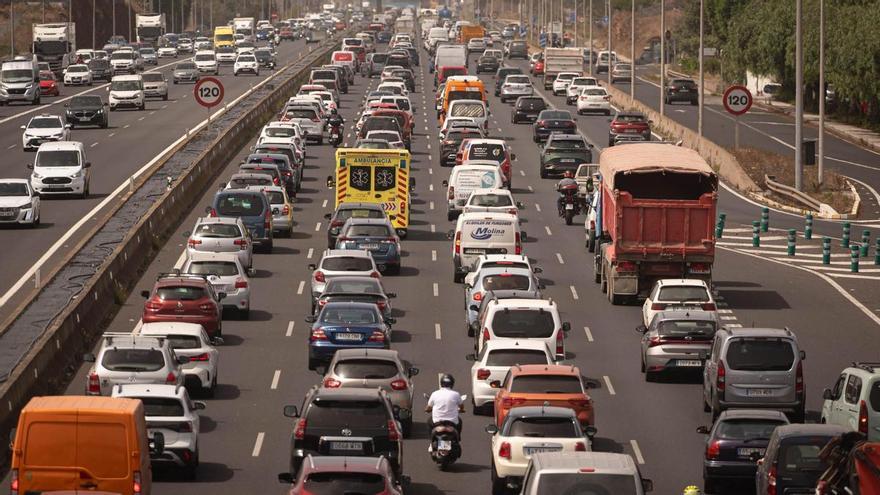
The business group Alisios Norte has once again stressed the urgent need to fix Tenerife's long-standing problem with road investments, which is now more than 2 billion euros short. The group welcomed the recent news that the Chamber of Commerce will also support their call for a "mobility emergency." They explained that this special status would help speed up projects, like improvements to the TF-5 highway, which is currently the source of most traffic issues.
Alisios Norte stated that the Chamber of Commerce's decision shows a widespread agreement among the public that government bodies must quickly put in place the tools needed to start these overdue projects.
Focusing on the North of the island, Alisios Norte highlighted that its 15 municipalities are home to over a quarter of a million people. This makes it one of the most important population centers in the Canary Islands, yet it remains one of the most poorly connected.
The business group pointed out that road investment in recent years has been very poor, both from the national government and the regional government. Not only has little money been invested, but even less of the planned work has actually been completed.
The association of North Tenerife entrepreneurs finds it worrying that there are still no plans or projects to finish the Insular Ring Road between Los Realejos and San Juan de La Rambla. Similarly, there's no project underway for a second lane between Icod and El Tanque. They warned that without these, once the Erjos tunnel is finished, it will create a bottleneck, leading to the same traffic jams people experience today.
They stated that it's "more than proven" that the money allocated for transport in the North isn't enough to meet demand. Therefore, they argue, acknowledging this long-standing shortfall and declaring a mobility emergency is absolutely necessary.
Recognizing the lack of investment in transport for this part of Tenerife would allow for a significant increase in funding. This money could then be used with the right tools and systems to complete projects on time, much like how the "water emergency" was handled, involving the local council (Cabildo), the regional government, and the national government.
Alisios Norte also called for "more supporting measures." They gave examples of ongoing efforts to improve connectivity in the North, such as staggered entry times at the University of La Laguna, promoting public transport, moving some administrative services out of the main city, and improving the North Hospital to prevent people from having to travel unnecessarily to the metropolitan area.
The entrepreneurs questioned why projects planned over the last five years haven't been completed. They suggested that "administrative difficulties, procedural guarantees, and other issues" have been key factors, and that "new approaches" are now needed to overcome them.
To solve some of the transport problems on the North's main road, the TF-5, Alisios Norte suggested several solutions. These include better cooperation between different government bodies, more public-private partnerships, granting concessions for services, taking on justified debt, and giving more powers to the authority responsible for awarding contracts.