
Tenerife Boosts Sustainable Travel with Bus Stop Overhaul and New Fleet Investment
Tenerife is investing €125 million in its public transport system, including the addition of 95 new buses and a €3 million contract to maintain and improve its 2,251 bus stops, as part of a broader strategy for sustainable mobility and the island's green transition.
Tenerife's local government is boosting sustainable travel with two key projects to improve public transport. They're launching a new service to look after the island's 2,251 bus stops and adding 95 new buses to the TITSA fleet. This is part of a plan to modernize and strengthen public transport between 2024 and 2026. These new buses, along with 247 already bought, represent a total investment of 125 million euros.
These efforts highlight public transport as vital for the island's green transition, aiming for a service that's more accessible, modern, and efficient. This is especially important as bus passenger numbers are expected to hit a record 86 million in 2025.
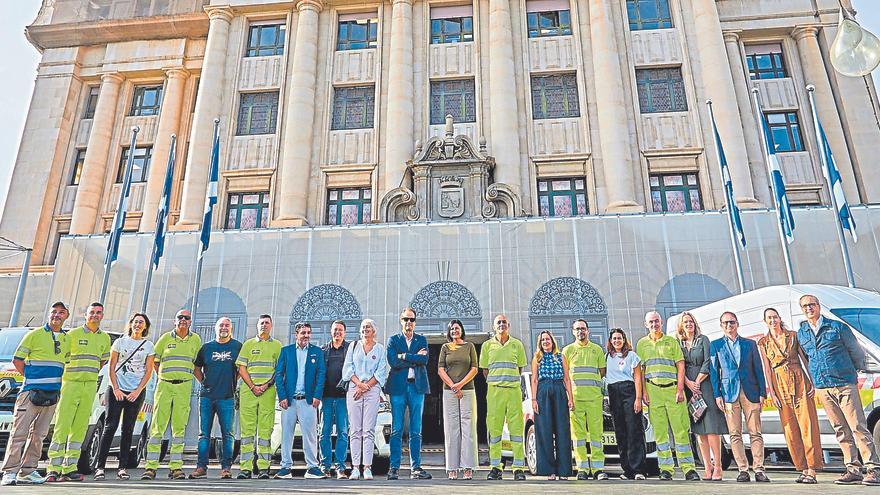
A significant part of this is a new contract worth around 3 million euros to maintain and improve bus stops. This includes a special fleet of four vehicles designed for inspecting, cleaning, repairing, and replacing damaged parts.
The goal is to make bus stops more comfortable, safe, and accessible, with particular attention to the needs of the elderly and those with mobility issues. The work will involve both regular upkeep to prevent damage and quick fixes for any incidents or vandalism.
Rosa Dávila, the President of the Cabildo, emphasized that "every bus stop is a meeting point that is part of the daily lives of thousands of people." She added, "Its maintenance is a matter of dignity and public service. We want users to perceive the improvement in their immediate surroundings with a clean and accessible bus stop. Sustainable mobility is also built from the details."
The contract is divided into two areas, North and South, and has been awarded to Envera Empleo, S.L.U. and Compañía de Eficiencia y Servicios Integrales, respectively. The northern contract, covering 1,179 bus stops, is specifically for special employment centers, helping people facing employment challenges.
Eulalia García, the Insular Councilor for Mobility, pointed out that the new service brings "professionalized management, with quality control, a digitized inventory, and an incident tracking system that will allow for rapid and efficient action." She stated, "Our challenge is that no bus stop is left behind. With planning, technology, and qualified personnel, we are taking a leap in efficiency and citizen service."
García also stressed that this initiative goes beyond just maintaining the physical infrastructure. It aims to "generate a culture of care for public spaces linked to collective transport." She believes that "public transport must be a symbol of quality and trust, and that begins at every bus stop."
Tenerife has 2,251 bus stops managed by the Cabildo, with 1,179 in the north and 1,072 in the south. These serve over 180 TITSA routes, connecting residents and tourists daily and playing a crucial role in ensuring access to services and connectivity across the island.
President Dávila reiterated, "Tenerife is one of the islands with the largest number of bus stops in the Archipelago, which represents an enormous responsibility. Maintaining this network in optimal condition requires planning, technical resources, and institutional commitment."
The service also includes keeping the bus stop records up-to-date, managing incidents digitally, and implementing a quality control system for continuous improvement. This will allow the Cabildo to prioritize work, use resources effectively, and monitor the network's condition in real-time. Dávila described it as "a modern, transparent, and sustainable management model that places Tenerife at the forefront of public infrastructure maintenance."
In parallel, the Cabildo has finalized the purchase of 70 new intercity buses, costing 28.2 million euros, as part of the same 2024-2026 plan. These buses will replace older ones, helping to cut emissions and improve the passenger experience.
Among these 70 new buses are 8 fully electric models, the first of their kind for intercity travel in the Canary Islands, making Tenerife a leader in electric mobility. Additionally, 13 will be double-decker buses, seating 93 passengers, designed for busy routes. All new buses will feature energy-efficient systems, be fully accessible, and offer digital connectivity, including USB ports, smart climate control, and ramps for passengers with reduced mobility.
Rosa Dávila stated, "With these new buses, Tenerife is at the forefront of sustainable mobility. We are committed to cleaner, more accessible, and comfortable public transport that responds to growing demand and contributes to reducing emissions on the island." She added that this renovation "not only improves the fleet but also reinforces the Cabildo's commitment to the ecological transition and to creating a competitive and attractive public transport model."
She concluded, "Every new bus, every renovated bus stop, every improvement to the network is part of the same purpose: to transform Tenerife's mobility into an example of sustainability, equity, and public service."
An additional 25 buses are currently being tendered and are expected to be awarded by the end of the year, bringing the total of new vehicles to 95, to be added between 2026 and 2027.
Both the improvements to bus stops and stations, and the fleet renewal, are part of a wider island strategy for sustainable mobility, combining investment in infrastructure, clean technology, accessibility, and job creation.
The Cabildo of Tenerife is continuing its plan to create more efficient, competitive, and environmentally friendly public transport.
Rosa Dávila concluded, "Our commitment is clear; it is based on offering citizens quality, sustainable, and accessible public transport. Tenerife is moving towards a mobility model that improves people's lives and cares for the island we share."