
Tenerife Bolsters Forest Fire Defenses with Major Resource and Technology Upgrade
Tenerife significantly bolstered its forest fire prevention and response capabilities for the 2025 season with increased resources, advanced technology including drones and a simulator, and a large-scale collaborative effort involving over 1,000 personnel from various agencies.
Tenerife's government has made a major push to better protect its forests and natural areas. During the 2025 fire season, which ran from June 2nd to November 2nd, the island significantly increased its resources, technology, and staff to prevent, monitor, and fight any fires in its woodlands.
This coordinated effort, involving various authorities and a substantial investment in equipment and people, shows the island's dedication to safeguarding its environment and keeping residents safe.
Tenerife's government has adopted a thorough strategy that focuses not only on putting out fires but also on preventing them and protecting the most vulnerable spots. "Prevention is our best tool," says Rosa Dávila, president of the Tenerife government. "Every decision and every euro spent has been aimed at protecting what matters most to us: our people and our forests."
The island saw an unprecedented amount of resources deployed, including new high-tech vehicles, advanced aerial equipment, and sophisticated monitoring systems for its forests. These measures were vital for spotting risks early and protecting areas most prone to fires, especially those near towns or with challenging terrain.
Tenerife's firefighting vehicle fleet has been significantly updated. Among the key additions are 4x4 forest fire trucks, designed to handle rough and hard-to-reach areas. These trucks can carry 3,500 liters of water, allowing for a quicker initial response to fires, which is crucial for stopping them from spreading.
In addition to 14 heavy-duty fire trucks, the government also acquired 2 water tankers holding 9,000 liters each and 2 smaller fire trucks with a 1,800-liter capacity between 2023 and 2025. This represents an investment of over 6 million euros. "These fire trucks have greatly improved our ability to respond. They can reach places that were previously inaccessible and allow us to act fast in the early stages of a fire," Dávila noted.
With these new resources, the government can respond more quickly and effectively to small fires, protecting at-risk areas and acting within the first few minutes to prevent them from growing. The smaller trucks and vehicles are essential for initial responses, while the heavier equipment provides greater coverage.
Aerial support has also been crucial in protecting Tenerife's natural spaces. Throughout the fire season, the government kept two of its own helicopters operational, each capable of carrying 1,000 liters of water. These helicopters are equipped with GPS systems for precise intervention in affected areas.
The aerial support was further boosted by 6 helicopters from the Canary Islands government and an Air Tractor aircraft based in La Gomera, which were vital for rapid response to larger fires. Additionally, the Army provided night-vision helicopters, significantly enhancing the ability to conduct operations and interventions after dark, which is critical for preventing fires from spreading uncontrollably.
The ability to operate at night, one of the most difficult times during any fire campaign, proved decisive in containing fires before they became unmanageable.
Tenerife's fire-fighting efforts extend beyond equipment and technology. Operation Prometeo, a joint initiative with the Army, was a cornerstone of the campaign. This operation involved over 2,300 military personnel and conducted 920 patrols over three months.
The goal was to strengthen surveillance in vulnerable areas, particularly where forests meet urban areas, which are at higher risk due to their proximity to towns.
The Army, with the help of night-vision helicopters and daily patrols, worked alongside Tenerife's teams, Forest Brigades (BRIFOR), Gesplan, and other security forces like the Civil Guard and Civil Protection. This collaboration led to more effective interventions and better detection of early-stage fires, significantly reducing risks in areas most exposed to fire.
"Prevention is key, and working together with other agencies, like the Army, has been essential in improving our response capabilities," stated the president of the government.
Operation Prometeo has served as a model for effective cooperation, with its success evident in the reduction of fires and improved safety for the island's residents.
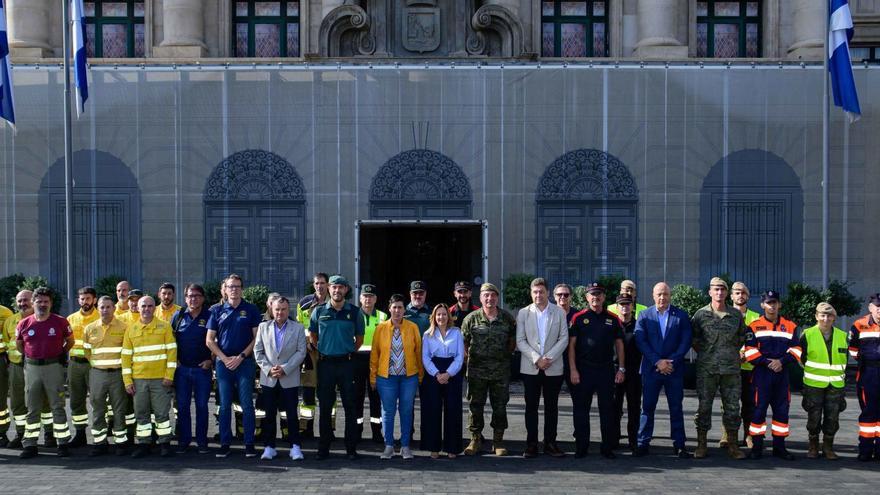
The effort by the Tenerife government to ensure the safety of its natural areas and population has been a prime example of planning, investment, and teamwork. Over 1,000 personnel, including Forest Brigades (Brifor), Gesplan, Civil Guard, Army, Civil Protection, the Firefighters' Consortium, Red Cross, the UME, and Teide National Park, participated in protecting the island during this campaign. This figure highlights the commitment of all involved agencies and professionals.
The 2025 fire campaign was not only successful in terms of response and prevention but also showed that Tenerife is more prepared than ever to face the environmental challenges of climate change.
With public support, inter-agency cooperation, and a strong commitment to advanced technology, Tenerife has improved its safety and taken a significant step towards a more secure and sustainable future for its forests and natural landscapes.
"The most important thing is that we have shown that with proper preparation and teamwork, Tenerife is ready to protect what we love most," concluded Dávila, reinforcing the government's dedication to preserving the island's natural heritage.
One of the most innovative aspects of the fire prevention strategy implemented by the government has been the use of drones equipped with thermal and visual cameras for real-time surveillance. These drones can monitor ground conditions and detect early-stage fires, even in poor visibility. Using these unmanned aerial vehicles allows for faster and more accurate interventions, improving the effectiveness of responses to any threat. Furthermore, the government has invested in a forest fire simulator, an advanced tool that models fire behavior under various weather and geographical conditions. This simulator helps predict how fires spread in different areas, aiding in the planning of more effective intervention strategies tailored to specific terrains. "This technology allows us to anticipate events and make informed decisions to protect our most sensitive areas. It's not just about putting out fires, but about preventing them and predicting their spread," explained Dávila.