
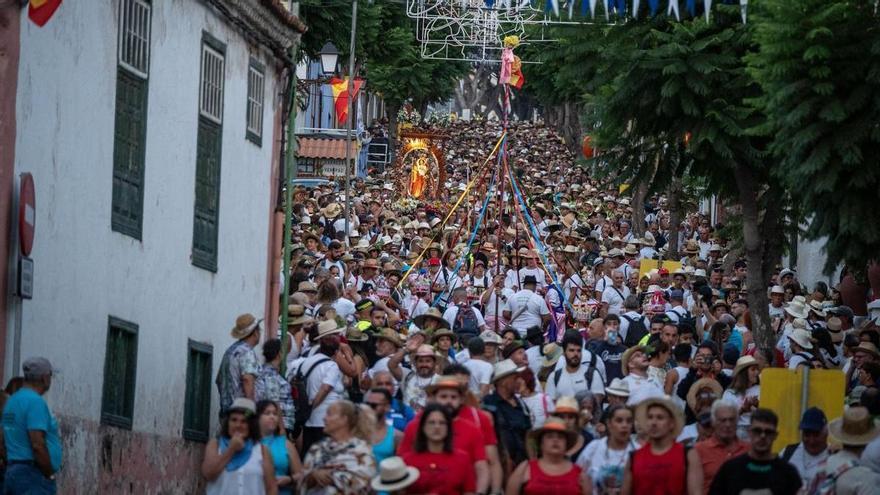
Tenerife Bans Pilgrims from Montaña Grande Slopes to Protect Natural Reserve
Local authorities have banned hikers from crossing the slopes of Montaña Grande during the El Socorro Pilgrimage to prevent erosion and protect the geological integrity of the Malpaís de Güímar Special Natural Reserve.
Protecting Tenerife’s natural landscape remains a top priority for this year’s El Socorro Pilgrimage. Local authorities have officially banned hikers from crossing the slopes of Montaña Grande during the event to prevent erosion. By requiring pilgrims to stay on designated paths, officials hope to preserve the geological integrity of the Malpaís de Güímar Special Natural Reserve.
This restriction follows long-standing environmental guidelines that identified climbing the volcanic cone as harmful to the area. The practice became popular among young people in the 1960s and 70s, eventually growing into a mass activity with over 5,000 people trekking across the mountain in a single day. This heavy foot traffic on unstable volcanic soil caused deep erosion and damaged local vegetation, forcing the Island Council to install barriers and signage to restrict access.
The decision is significant because it balances environmental protection with one of the Canary Islands' oldest traditions. The Bajada de la Virgen de El Socorro, held every September 7th, is a culturally vital event that travels from the Church of San Pedro Apóstol to the coastal hermitage. The route itself has been recognized as an Asset of Cultural Interest since 2011.
Ultimately, the goal is to manage the space so that the tradition—which dates back to the 16th century—can continue without damaging the unique lava flows and volcanic formations of Montaña Grande. While the mountain remains a landmark of the Güímar landscape, it is no longer open for recreational hiking, ensuring that the pilgrimage leaves behind a legacy of faith rather than permanent scars on the land.