
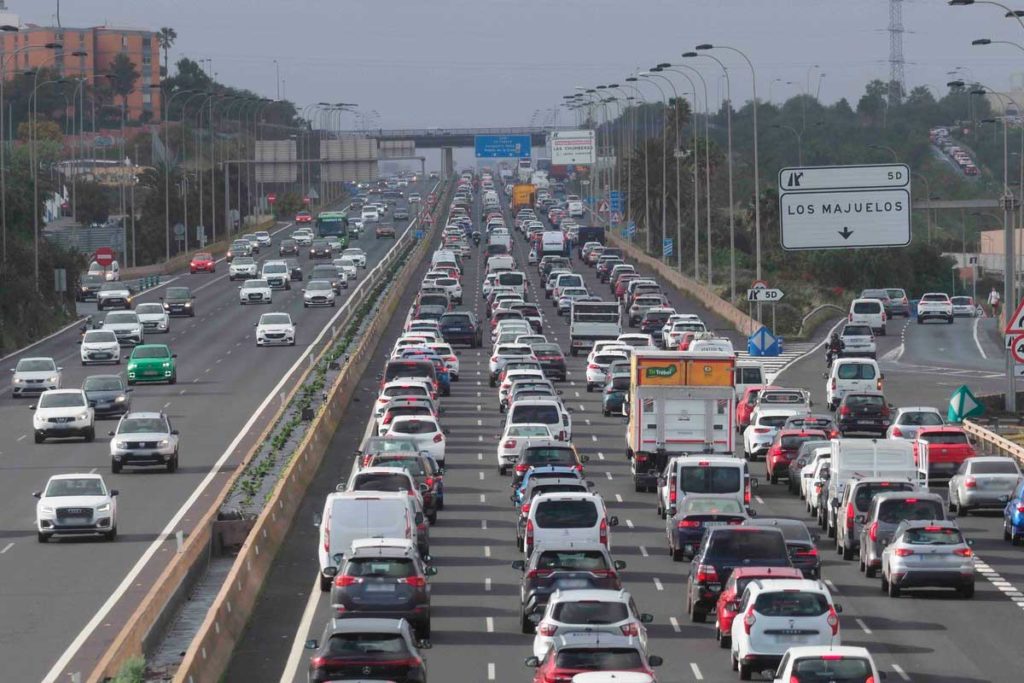
Tenerife Approves 20-Year Mobility Plan Featuring Potential Congestion Charges
The Tenerife Island Council has approved a 20-year sustainable mobility plan that proposes the introduction of dynamic congestion charges on major roads by 2033 to reduce traffic and fund public transport infrastructure.
The Tenerife Island Council has officially approved the Sustainable Mobility Island Plan (PIMSIT), sparking a major debate over how to manage the island's traffic. The plan, ratified on September 23, outlines a 20-year strategy that includes the potential introduction of congestion charges on key roads.
This proposal is part of a broader 5.097-billion-euro investment strategy running through 2035. However, it is not an immediate change. Current laws do not allow for road-use charges, meaning the regional government and Parliament would need to pass new legislation first. The Council estimates that if the plan moves forward, these charges could be implemented between 2032 and 2033, with an initial budget of 10 million euros shared between the island and regional authorities.
Rather than traditional flat-rate tolls, the plan proposes a dynamic pricing model. Costs would vary based on the time of day, and the system would include social equity measures, adjusting fees based on a driver’s income and the public transport options available in their area. The technology would monitor traffic in real-time, with regular audits to track improvements in air quality and traffic flow.
The proposed zones for these charges include the main routes into Santa Cruz de Tenerife (TF-1), access points to La Laguna (TF-5 and TF-2), and the stretch of the TF-1 between San Isidro and the tourist areas of Adeje and Arona. The goal is to reduce private car use during rush hour and reinvest all revenue into public transport and cycling infrastructure.
The Island Council acknowledges that this measure is likely to face significant public opposition. While the idea of road pricing has appeared in previous transport plans, this is the first time it has moved from a theoretical study to a concrete operational schedule. It is now part of a larger mobility package that includes expanding the tram network, creating high-occupancy vehicle (HOV) lanes, and upgrading the TITSA bus fleet.