
Tenerife Airport Disruptions: Fog Causes Flight Diversions and Delays
Radiation fog caused by light rain and cooling temperatures disrupted flights at Tenerife North airport, leading to delays and diversions, while creating striking scenery across the island's mountainous landscapes.
The rain that the State Meteorological Agency (Aemet) predicted arrived late Friday night, though it was light. This weather has led to "radiation fog" in the Canary Islands – a fog that forms when the ground cools down at night.
Because temperatures dropped slightly overnight and there were some light showers in Tenerife, Saturday morning dawned foggy, especially on the island's peaks.
This fog has mainly affected Tenerife North airport, where fog is common. This morning, the reduced visibility at Los Rodeos airport caused some disruptions.
AENA reports that there have been flight delays and three planes had to be diverted. Two flights from Gran Canaria were affected; one returned to Gran Canaria, and the other was sent to Tenerife South. A flight from Madrid was also diverted to Tenerife South.
While the situation has improved at Tenerife North airport, ENAIRE, Spain's air navigation authority, recommends that anyone flying from Los Rodeos today check their flight status with their airline.
This type of fog can form and disappear quickly, which also contributes to the muggy feeling that people in Tenerife have experienced recently. Aemet data shows that relative humidity reached 100% in some areas, including Los Rodeos airport.
Generally, the coastal areas in northern Tenerife are experiencing humidity levels between 80% and 99%, with slightly lower levels in the south. Although the temperature is around 25 degrees Celsius, the humidity makes it feel like 28-29 degrees Celsius.
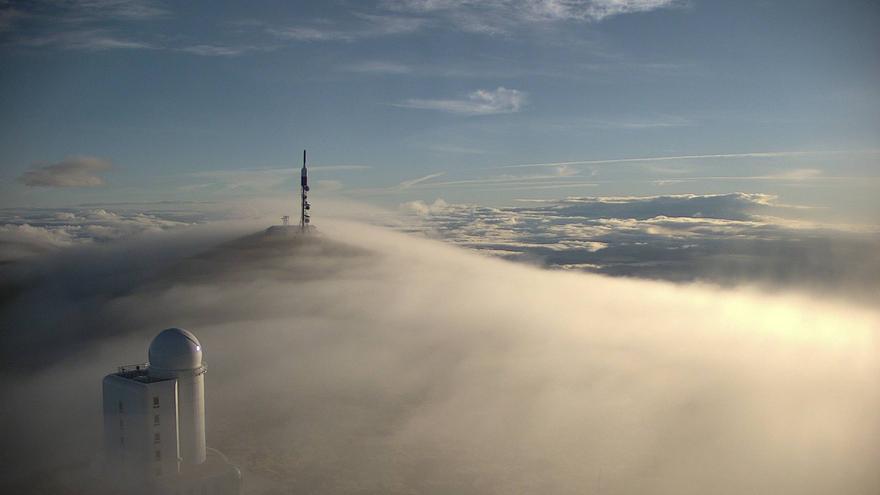
Aside from the effects on travel, radiation fogs often create stunning scenery, especially in mountainous areas. In Tenerife, the landscape combined with the fog results in some truly remarkable views.
These fogs are relatively common on the island's peaks, particularly around Teide National Park, due to the terrain. Staff at the Meteorological Center and the Astrophysical Institute of the Canary Islands (IAC) observatory in Izaña often witness these beautiful scenes.