
Tenerife Air Disaster: 25 Feet of Altitude Could Have Prevented 1977 Tragedy
Forty-nine years after the Tenerife airport disaster, aviation experts reflect on how improved communication protocols and safety standards have transformed the industry following the deadliest collision in history.
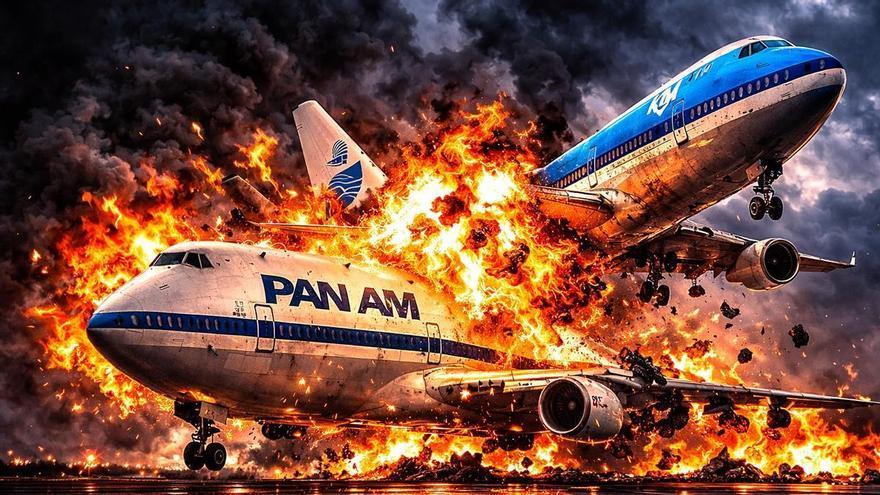
Nearly 50 years after the Los Rodeos air disaster, technical analysis continues to highlight how fragile aviation safety can be. In a recent interview with El Día, Iberia captain Ramón Vallés noted that the deadliest accident in commercial aviation history—which marked its 49th anniversary on March 27—could have been avoided with just 7.62 meters (about 25 feet) of extra altitude. That small margin, roughly the length of a utility pole, would have allowed the KLM Boeing 747 to clear the Pan Am aircraft it struck on the Tenerife runway.
The collision, which claimed 583 lives, was caused by a series of human and technical errors now studied in aviation schools as a classic example of systemic failure. Official investigations concluded that the KLM captain, Jacob van Zanten, began his takeoff without explicit clearance from the control tower. This error, compounded by near-zero visibility due to sudden fog, led to the head-on collision. According to Vallés, such an accident is statistically unlikely today, thanks to major improvements in communication protocols and situational awareness.
The crisis began when a terrorist attack at Gran Canaria Airport forced flights to divert to Tenerife North. The airport was overwhelmed by the influx of large aircraft it wasn't designed to handle. This pressure, combined with crew fatigue and unclear radio communication—specifically the use of ambiguous terms like "OK"—created the perfect conditions for disaster.
Vallés points to "simulitis" as a contributing factor, suggesting that the KLM captain’s heavy focus on simulator training may have dulled his operational instincts in a real-world emergency. Furthermore, there was a lack of assertiveness in the cockpit; neither the co-pilot nor the flight engineer successfully stopped the takeoff, despite warnings that the Pan Am plane was still on the runway.
The 1977 tragedy was a collective trauma for the Canary Islands and a turning point for global aviation. It forced the industry to standardize international flight terminology and improve Crew Resource Management (CRM). These changes, centered on clear communication and strict procedural discipline, have been the pillars that prevent such a disaster from happening again. The lesson of Los Rodeos remains clear: air safety depends not just on individual skill, but on absolute clarity and rigid adherence to safety protocols.