
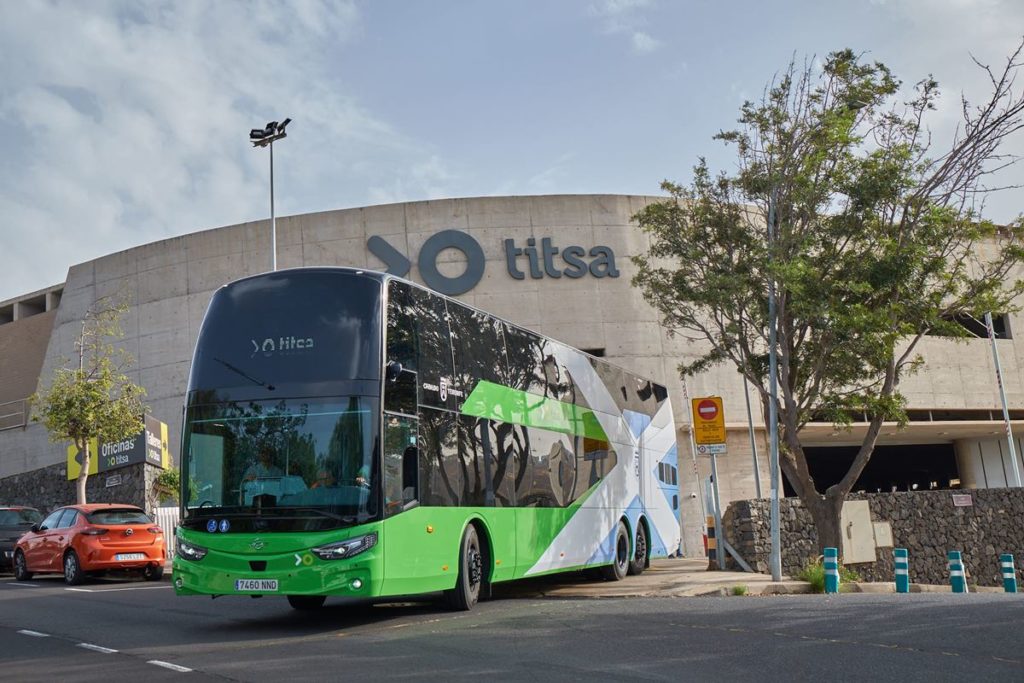
Tenerife Adds 13 Double-Decker Buses to Ease Motorway Congestion
Tenerife has introduced 13 new high-capacity double-decker buses to its TITSA fleet to alleviate traffic congestion and accommodate record-breaking passenger demand on the island's major motorways.
Tenerife has completed its public transport upgrade with the arrival of 13 new double-decker buses. The Island Council introduced these vehicles to handle the growing number of commuters on the busy TF-1 and TF-5 motorways, where rising demand has put significant pressure on the TITSA bus network.
Built by the manufacturer Ayats, the new buses offer 85 seats each—a 44% increase in capacity compared to the 59 seats in standard models. This expansion is vital as the island’s bus network hit a record 87 million passengers in 2025. The new fleet is expected to accommodate up to six million additional trips per year on key routes, including lines 100, 108, 110, and 112.
The upgrades are particularly important for the north of the island, where line 108 serves a high volume of daily commuters. To keep up with demand, TITSA has added 46 more daily trips to its schedule compared to three years ago. In the south, the focus remains on connecting the capital with major residential and tourist areas like Costa Adeje and Los Cristianos.
The new buses are equipped with modern safety and accessibility features, including autonomous braking, lane departure warnings, blind-spot detection, and an "Alcolock" system that prevents the engine from starting if the driver has been drinking. They also feature side-view cameras instead of traditional mirrors, seven interior security cameras, Wi-Fi, USB charging ports, and double ramps for passengers with reduced mobility.
This rollout is part of a modernization plan launched in 2023, which has seen 351 new buses added to the fleet at a cost of over 125 million euros. Island Council President Rosa Dávila and Mobility Minister Eulalia García hope these improvements will make public transport a more attractive alternative to driving, helping to reduce the heavy traffic congestion on the island’s main roads.